







Hue Vietnam Tour
Hue is one of the most historic and culturally rich destinations in Vietnam. With ancient royal palaces, peaceful rivers, and unique cuisine, the city offers a travel experience unlike any other. Joining a Hue Vietnam tour is one of the best ways to explore this former imperial capital and understand its fascinating heritage. In this guide, Joytime will help you discover the best places, cultural highlights, and travel tips for your journey.
1. Why choose a Hue Vietnam tour?
Why choose a Hue Vietnam tour?
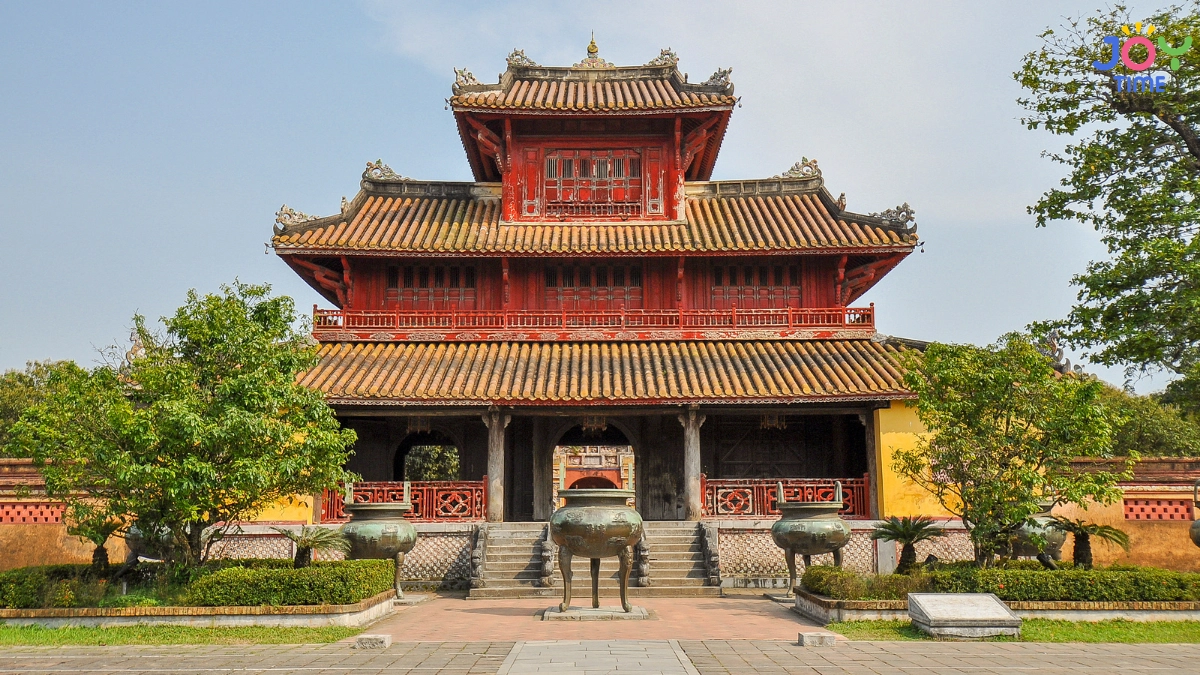
Hue holds a special place in Vietnamese history. From 1802 to 1945, the city served as the imperial capital of the Nguyen Dynasty, the last ruling dynasty of Vietnam. During this period, Hue became the political, cultural, and religious center of the country. Many of the royal palaces, temples, and historical landmarks built during that time still stand today, offering a fascinating glimpse into Vietnam’s royal past.
According to the United Nations Educational, Scientific and Cultural Organization (UNESCO), the Complex of Hue Monuments was officially recognized as a World Cultural Heritage Site in 1993. This recognition confirmed the global importance of Hue’s historical architecture and cultural traditions. Today, the preserved citadel, royal tombs, and ancient temples attract millions of travelers every year.
A well-organized Hue Vietnam tour allows visitors to explore these iconic landmarks while learning about their historical significance. Instead of visiting each site independently, travelers benefit from guided explanations, convenient transportation, and carefully planned itineraries that highlight the most important cultural sites.
Another reason many travelers prefer a Hue Vietnam tour is the opportunity to experience the city at a relaxed pace. Hue is not a fast-moving destination filled with crowded entertainment areas. Instead, it offers peaceful walks through royal courtyards, quiet moments by the river, and immersive cultural experiences that reveal the depth of Vietnam’s traditions.
2. Cultural experiences in Hue
Cultural experiences in Hue
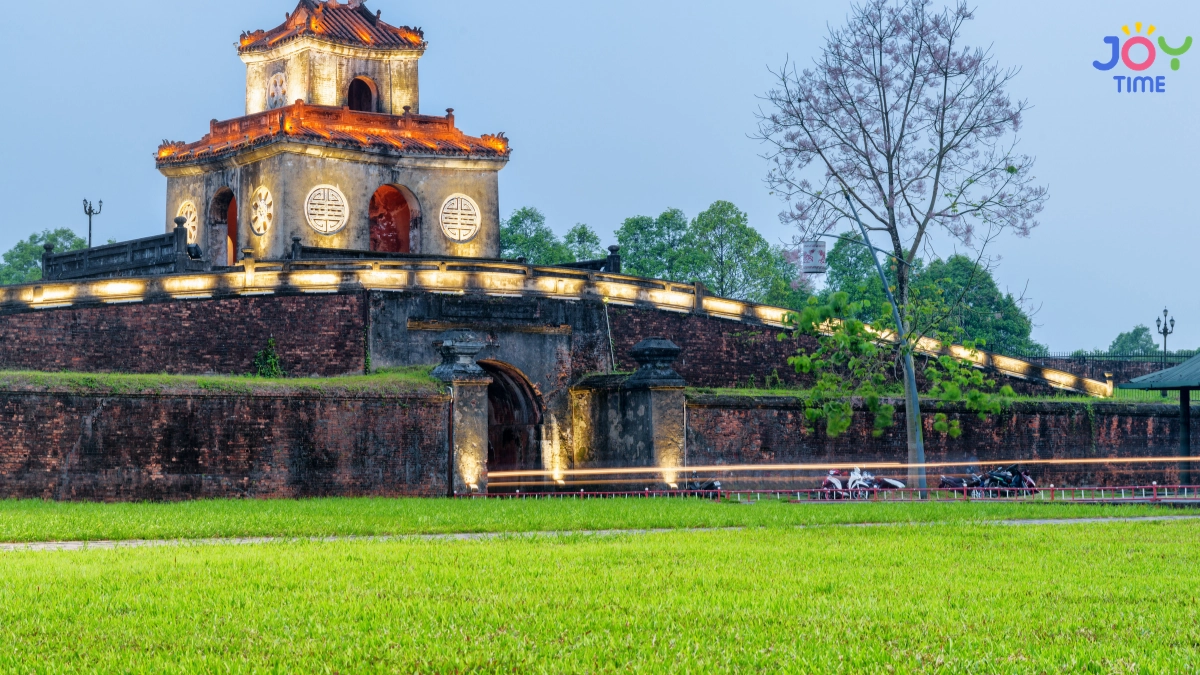
One of the most rewarding aspects of joining a Hue Vietnam tour is the chance to explore the rich cultural traditions of the former imperial capital. Hue is not only a historical destination but also a living cultural center where many ancient customs are still preserved.
During the Nguyen Dynasty, Hue was the heart of the country’s political and cultural life. Royal ceremonies, artistic performances, and scholarly traditions all developed within the walls of the imperial court. Even today, many of these traditions continue to influence the city’s identity.
Travelers participating in a Hue Vietnam tour can observe traditional architecture, visit ancient temples, and learn about the complex rituals that once defined life in the imperial court. From royal palaces to sacred pagodas, each site tells a unique story about Vietnam’s past.
Many tours also include visits to local craft villages, where artisans continue to produce traditional products such as conical hats, incense sticks, and embroidered textiles. These experiences provide insight into the everyday culture of the region while supporting local communities that preserve traditional skills.
- Food Tour Hue Vietnam: Explore Iconic Local Dishes
- Is Hue Vietnam Worth Visiting? 6 Reasons Why Yes (2026 Update)
3. Top attractions in a Hue Vietnam tour
Top attractions in a Hue Vietnam tour
3.1 The imperial city of Hue
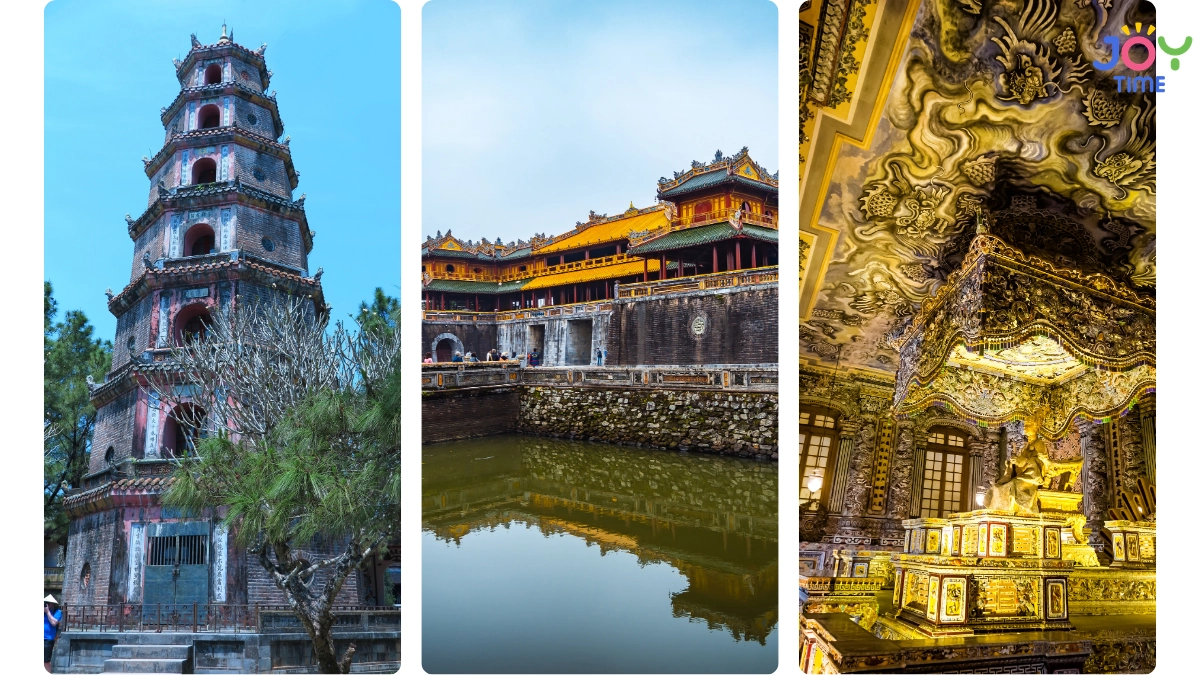
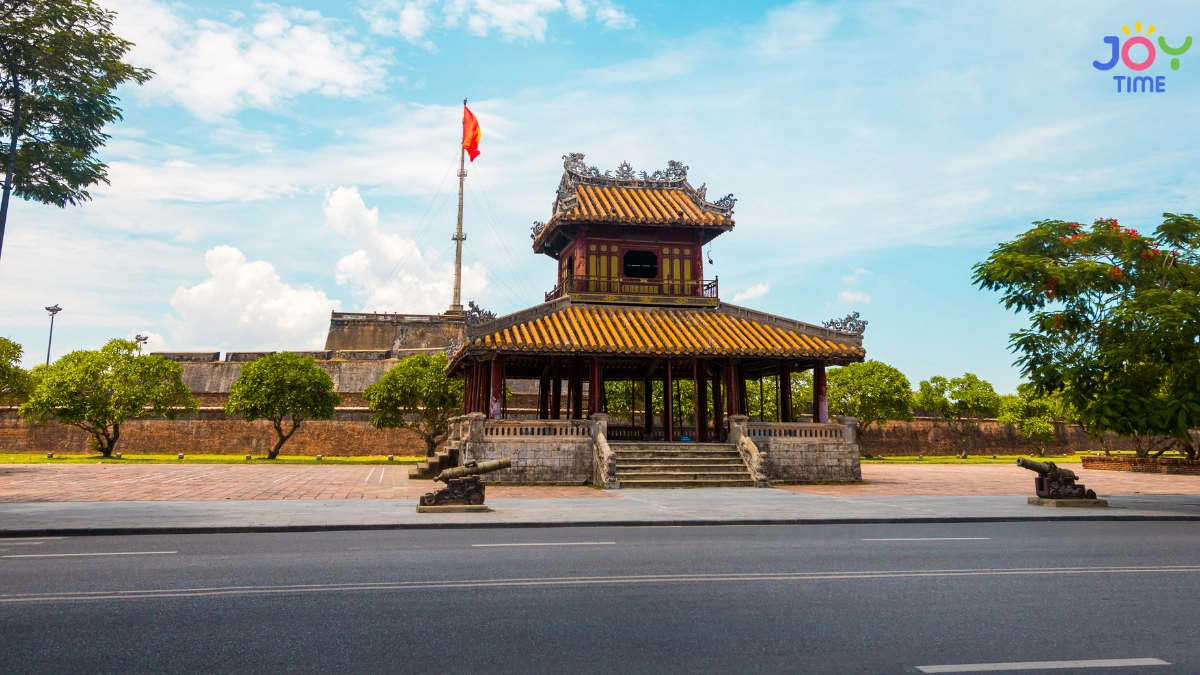
The Imperial City is the most famous landmark included in almost every Hue Vietnam tour. Located within a massive fortress surrounded by thick stone walls and a protective moat, the complex served as the political and ceremonial center of the Nguyen Dynasty for more than a century.
Visitors entering the Imperial City typically begin their journey at Ngo Mon Gate, the grand southern entrance once reserved for the emperor and royal court. Passing through this gate leads travelers into a vast complex filled with palaces, temples, and ceremonial courtyards.
One of the most important buildings inside the citadel is Thai Hoa Palace, where emperors once held official ceremonies and received foreign diplomats. The palace’s ornate wooden columns, decorated with golden dragons and intricate carvings, reflect the grandeur of imperial architecture.
Another fascinating section of the complex is the Forbidden Purple City, which served as the private residence of the emperor and the royal family. Although parts of this area were damaged during historical conflicts, restoration efforts have helped preserve its historical significance.
The Hue Monuments Conservation Center reports that millions of visitors explore the Imperial City each year, making it one of the most visited historical sites in Vietnam. Walking through the ancient courtyards and palace halls allows travelers to imagine what life was like during the height of Vietnam’s imperial era.
3.2 Thien Mu Pagoda
Another iconic destination featured in many Hue Vietnam tour itineraries is Thien Mu Pagoda. This historic Buddhist temple is located on Ha Khe Hill along the banks of the Perfume River and is considered one of the oldest religious sites in central Vietnam.
The pagoda’s most recognizable feature is the Phuoc Duyen Tower, a graceful seven-story structure that has become one of Hue’s most photographed landmarks. Built in the 19th century, the tower stands as a symbol of spiritual devotion and architectural beauty.
The peaceful setting of Thien Mu Pagoda makes it a favorite stop for travelers seeking quiet reflection. The surrounding gardens, ancient stone statues, and panoramic views of the Perfume River create a tranquil atmosphere that contrasts beautifully with the grandeur of the Imperial City.
3.3 Royal tombs of the Nguyen Emperors
The royal tombs scattered around Hue are another highlight of a typical Hue Vietnam tour. These impressive complexes were designed not only as burial sites but also as symbolic landscapes representing the philosophies and personalities of the emperors who built them.
Each royal tomb blends architecture with nature, creating peaceful environments that reflect traditional Vietnamese beliefs about harmony between humans and the natural world.
|
Royal Tomb |
Main characteristics |
Architectural style |
Visitor experience |
|
Tomb of Minh Mang |
Known for its balanced and symmetrical layout, surrounded by forests, lakes, and stone pathways. The design reflects Confucian ideals of harmony and order. |
Traditional Vietnamese imperial architecture that emphasizes harmony between nature and human construction. |
Visitors walk through a sequence of gates, courtyards, and pavilions before reaching the emperor’s resting place, creating a peaceful and reflective atmosphere. |
|
Tomb of Khai Dinh |
Famous for its unique combination of Vietnamese and European influences. Built in the early 20th century using materials such as concrete and iron. |
A mix of traditional Vietnamese design and Western architectural elements. The interior is decorated with colorful ceramic and glass mosaics. |
Travelers can admire the extremely detailed interior decorations, which create one of the most visually impressive royal tombs in Hue. |
|
Tomb of Tu Duc |
Often described as the most poetic royal tomb. It was designed as a peaceful retreat where Emperor Tu Duc could relax and write poetry. |
Elegant traditional architecture integrated with natural landscapes such as pine forests and lotus ponds. |
Visitors experience a tranquil park-like environment with beautiful pavilions and lakes, making it one of the most picturesque stops in a Hue Vietnam tour. |
4. Cultural and culinary experiences
Cultural and culinary experiences
4.1 Hue’s unique cuisine
Hue is widely recognized as one of Vietnam’s most important culinary centers. The city’s cuisine developed under the influence of imperial court traditions, which emphasized elegance, balance, and artistic presentation.
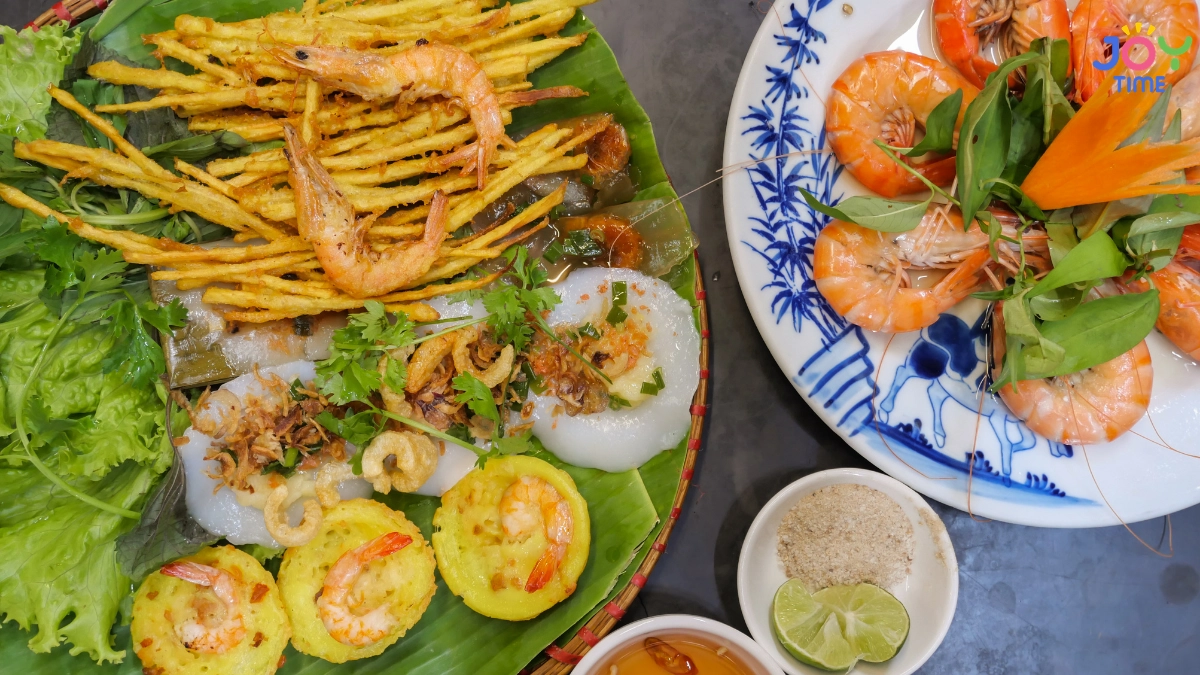
During a Hue Vietnam tour, visitors often have the opportunity to taste famous local dishes such as bun bo Hue, a flavorful beef noodle soup known for its rich broth and aromatic spices. Another popular delicacy is banh beo, small steamed rice cakes topped with shrimp and crispy pork.
Other traditional dishes include banh nam, a soft rice cake wrapped in banana leaves, and banh khoai, a crispy pancake filled with shrimp, pork, and bean sprouts.
According to Vietnam Tourism, Hue cuisine stands out because of its delicate flavors and visually appealing presentation. Many dishes were originally prepared for royal banquets, which explains the attention to detail in both taste and appearance. Some restaurants in Hue even recreate traditional royal meals, allowing visitors to experience dining traditions inspired by the imperial court.
4.2 Listening to Hue Royal court music
Another unforgettable experience included in many Hue Vietnam tour programs is listening to traditional Hue music while cruising along the Perfume River.
During this activity, travelers board beautifully decorated dragon boats and enjoy performances of classical Vietnamese music played on traditional instruments. The melodies often accompany poetic lyrics that celebrate nature, love, and history.
Hue royal court music, known as Nha Nhac, was recognized by UNESCO as an Intangible Cultural Heritage of Humanity. This recognition highlights the cultural significance of the musical tradition that once entertained emperors and royal guests. Listening to these performances while drifting along the river under the evening sky creates a magical moment that many travelers remember long after their trip ends.
5. Discover Hue in one day with Joytime
Discover Hue in one day with Joytime
If you want to experience the cultural charm of Hue in a short time, this one-day tour with Joytime Travel Agency is a great choice. The tour “Explore the Culture and History of Hue Imperial City and Experience Making Traditional Hue Conical Hats” takes visitors through historical landmarks, traditional crafts, and meaningful cultural activities in just one day.
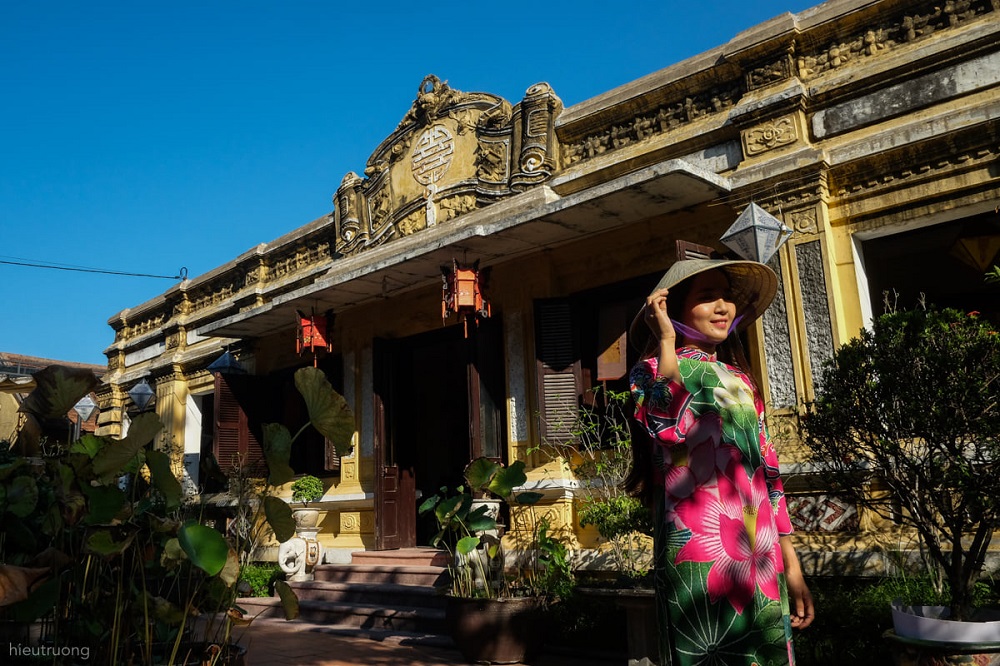
The journey starts at 08:00 AM with pick-up in Hue city center. The first destination is Phủ Vĩnh Quốc Công, a historic residence located near the beautiful Perfume River on Kim Long Street. The site is known for its elegant golden three-gate entrance and its connection to the Nguyen Huu noble family.
In the morning, visitors continue to the Luc Bo Cultural Space to explore traditional crafts of Hue. Here you can learn about iconic handicrafts such as conical hat making, Hue kites, Thanh Tien paper flowers, and lanterns. Guests also enjoy a unique tasting experience with royal tea and royal wine accompanied by traditional Hue ginger jam.
At 11:00 AM, the tour includes lunch at a local restaurant featuring traditional Hue specialty cakes, allowing visitors to enjoy the refined flavors of central Vietnamese cuisine.
In the afternoon, the tour visits House of Flowers Hue, where travelers can learn simple sign language and try making handmade paper flowers while supporting a community project for people with disabilities. The journey continues to the colorful Thuy Xuan Incense Village for photos and insights into the incense-making tradition.
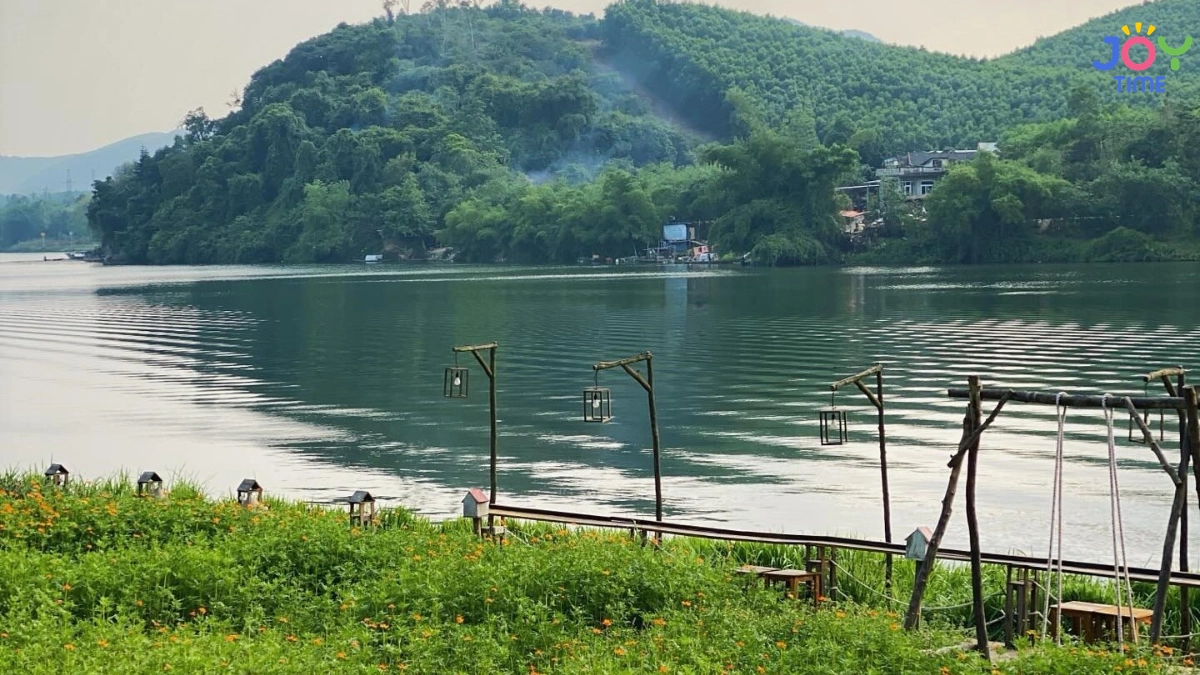
The final stop is Vong Canh Hill, where visitors can admire panoramic views of the Perfume River and enjoy a short walking meditation before returning to the city at 05:00 PM.
The tour includes transportation, entrance tickets, two meals, water, cold towels, and a professional guide. Personal expenses and drinks are not included. See full details and book your ticket here:
6. Best time to join a Hue Vietnam tour
Hue experiences a tropical monsoon climate with distinct wet and dry seasons. Choosing the right time to visit can greatly enhance the travel experience.
For most travelers, the ideal time for a Hue Vietnam tour is between February and August, when the weather is relatively warm and dry (Hue Vietnam Weather). During this period, the city’s gardens and riverside landscapes appear especially vibrant. Spring is particularly charming, as flowers bloom throughout the city and the mild temperatures make outdoor exploration comfortable.
Another exciting time to visit is during the Hue Festival, an international cultural event held periodically in the city. The festival features traditional music performances, artistic exhibitions, cultural parades, and street celebrations that attract visitors from around the world. According to the Vietnam National Administration of Tourism, the Hue Festival plays a significant role in promoting the cultural heritage of central Vietnam.
7. Travel tips for your Hue Vietnam tour
Travel tips for your Hue Vietnam tour
Before starting your journey, it’s helpful to know a few practical tips that can make your tour smoother, more enjoyable, and truly memorable:
-
Plan your itinerary in advance: Because many historical attractions in Hue are located in different areas of the city, planning ahead is essential. A well-organized Hue Vietnam tour typically includes transportation, entrance tickets, and knowledgeable guides who provide historical explanations. Guided tours help travelers better understand the significance of each site and ensure that important landmarks are not missed.
-
Wear comfortable clothing: Exploring Hue often involves walking through large historical complexes and gardens. Comfortable shoes and lightweight clothing are highly recommended, especially during the warmer months. When visiting temples or pagodas, travelers should wear modest clothing that covers the shoulders and knees to respect local cultural customs.
-
Respect cultural heritage: Hue’s monuments and temples represent centuries of Vietnamese history. Visitors should follow local guidelines when exploring these sites and avoid touching fragile artifacts or climbing on historical structures. By respecting these cultural treasures, travelers help preserve them for future generations.
Hue offers a rare combination of royal history, cultural traditions, and natural beauty. From the majestic Imperial City to the peaceful Perfume River and the artistic flavors of Hue cuisine, the city provides a travel experience that is both meaningful and unforgettable. Joining a well-organized Hue Vietnam tour allows visitors to explore the true spirit of Vietnam’s former imperial capital while enjoying its timeless charm and cultural richness.
|
Joytime Travel Agency - Travel JOY, TIMEless Vietnam Safe, Seamless, Satisfying, Sustainable Follow us for travel tips, local insights, and exclusive offers:
|
Danish Nguyen
Danish Nguyen is a renowned travel blogger in Vietnam with over 5 years of experience sharing unique travel experiences. With a passion for exploring new places, Danish captures incredible moments and provides readers with valuable tips to discover the beauty of his homeland.