








Perfect Vietnam Travel Itinerary 10 Days Ideas
Ten days is just the right amount of time to experience Vietnam’s cultural diversity and stunning natural beauty. To make the most of your journey, preparing a detailed Vietnam travel itinerary 10 days is essential. Below is a suggested itinerary across Northern, Central, and Southern Vietnam, featuring some of the most unique experiences Joytime Travel would like to share with you.
1. Day 1 – Day 4 (Northern Vietnam): The Charm of the Capital and Natural Heritage
The 4 four days of your journey will showcase the very best of Northern Vietnam, from Hanoi’s nostalgic charm to the majestic beauty of Ha Long Bay and the rich historical heritage of Ninh Binh.
1.1. Day 1: Arrival in Hanoi – Experience the Capital’s Culture on a Vintage Vespa
After checking in at your hotel in Hoan Kiem District, you will set off on a vintage Vespa ride through the hidden corners and narrow streets of Hanoi’s Old Quarter. It is one of the most authentic ways to experience the rhythm of local life.
St. Joseph’s Cathedral and Long Bien Railway Station
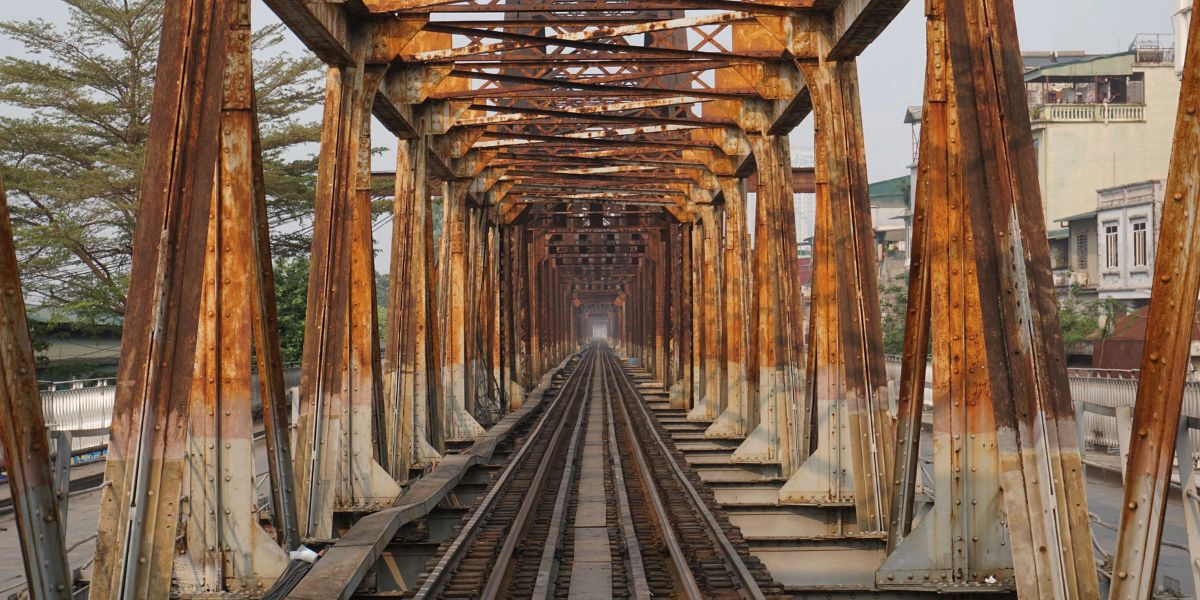
Long Bien Railway Station - Source: Duong Nguyen
Your first stop is 40 Nha Chung Street, where you can admire St. Joseph’s Cathedral. The building showcases distinctive medieval Gothic architecture, with weathered grey stone walls and intricate rose windows imported from France. In the lively cathedral square, take a seat on a small pavement stool and enjoy a refreshing glass of iced lemon tea while chatting and watching local life unfold.
The Vespa then continues to Long Bien Railway Station. Here, you can walk along the historic wooden railway sleepers of the more than 120-year-old steel bridge. From the bridge, take in panoramic views of the lush Red River islet as the sky glows with the colors of sunset.
Old Quarter Cuisine and Giang Café
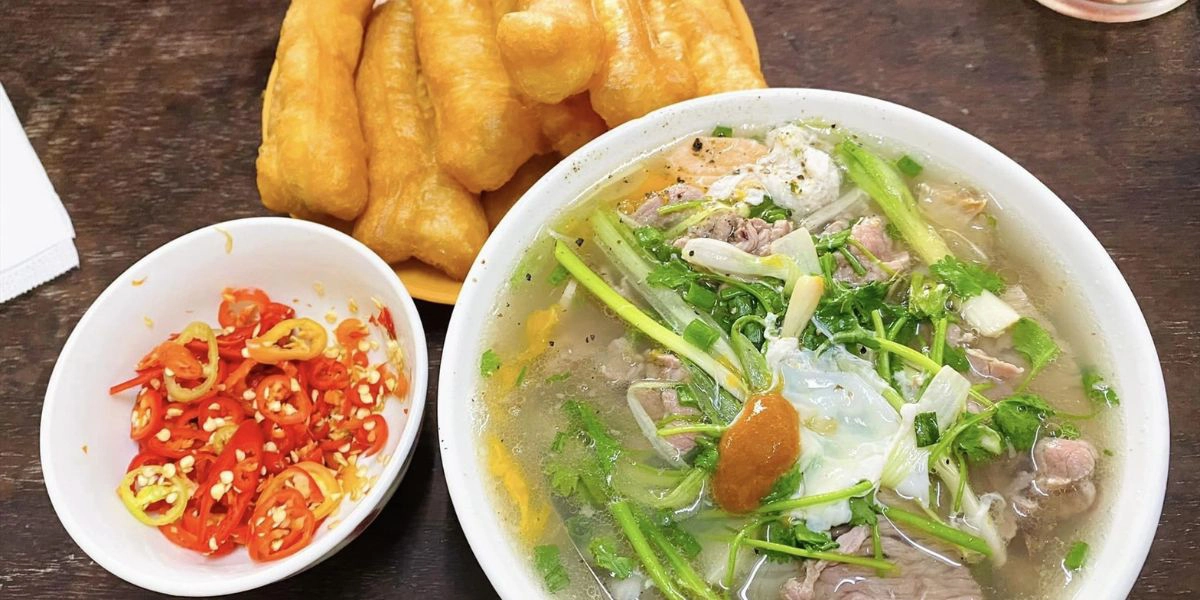
Iconic Bat Dan pho - Source: Pho Bat Dan
Dinner is the perfect time to satisfy your appetite with the finest flavors of Hanoi’s traditional cuisine. At 49 Bat Dan Street, you will experience the distinctly local custom of patiently queuing for a popular bowl of pho. Carry your own steaming bowl of traditional beef pho to the table and savor its light, naturally sweet broth, slowly simmered from beef bones, along with firm and pleasantly springy beef heel muscle.
No meal would be complete without one of Hanoi’s signature treats. Head deep into the narrow alley at 39 Nguyen Huu Huan Street and try the famous egg coffee at Giang Café. The rich, fragrant whipped egg cream blends perfectly with the smooth bitterness of authentic Vietnamese drip coffee, creating a flavor you will remember long after your visit.
Ta Hien Street and Tam Thuong Alley at Night
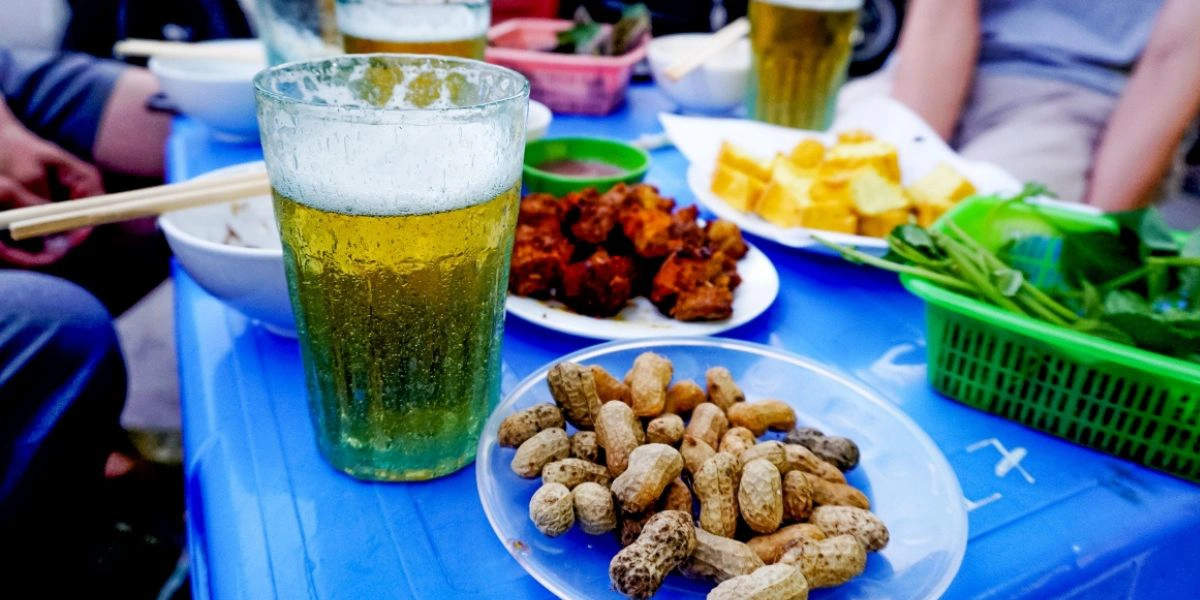
Hanoi draft beer - Source: vov.vn
In the evening, the Ta Hien–Luong Ngoc Quyen intersection, often called Hanoi’s “international crossroads", becomes one of the liveliest gathering places in the city. Surrounded by energetic street music in a compact and bustling setting, you will sit shoulder to shoulder on small plastic stools and raise a glass of cold, golden Hanoi draft beer.
A glass of draft beer is best enjoyed with Hanoi’s irresistible street snacks. Try a platter of crispy fried fermented pork rolls, a specialty of Tam Thuong Alley. Fragrant quail grilled with aromatic mac mat leaves and served with spicy chili sauce is another memorable culinary experience in the heart of the capital.
>> Explore more: Top 10+ Must-Try Desserts Hanoi Old Quarter
1.2. Day 2: Hanoi – Ha Long Bay – A Premium Cruise Retreat
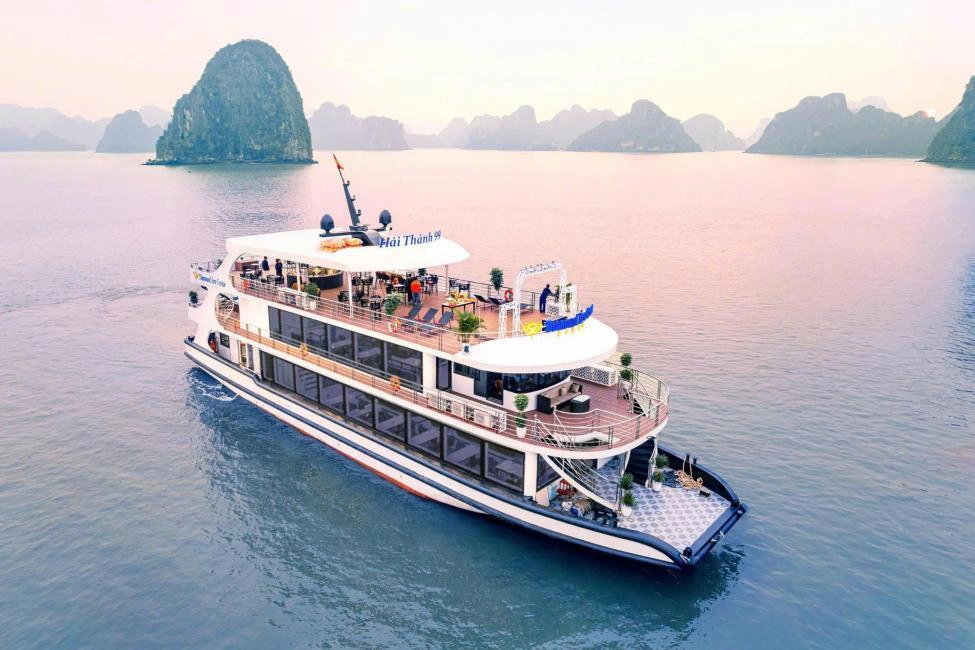
Leaving the capital behind, you will travel by limousine along the expressway to Tuan Chau Harbour. In the heart of Ha Long Bay’s heritage core zone, you will be welcomed aboard a luxury cruise with a feast of fresh seafood.
Dinh Huong Islet and the Fighting Cocks Islet
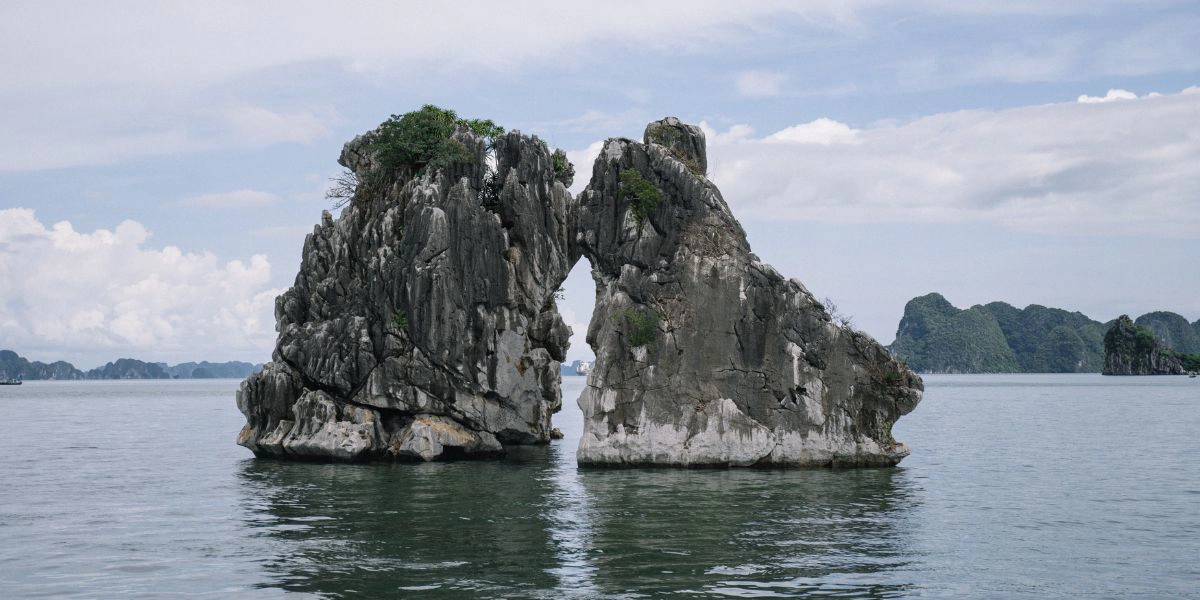
Fighting Cocks Islet - Source: Anna Tarazevich
As the cruise glides gently through the bay, passing thousands of limestone islands in unusual and striking shapes, this is the perfect moment to step onto the breezy deck and admire Dinh Huong Islet. This massive rock formation rises proudly from the sea. Don’t forget to bring a VND 200,000 banknote so you can compare it with the iconic image printed on it.
A little further along the route, you will come across the Fighting Cocks Islet, also known as the Kissing Rocks. This natural rock formation resembles two giant chickens leaning toward each other above the emerald waters, symbolizing the timeless beauty and romance of Ha Long Bay.
Exploring Luon Cave by Kayak
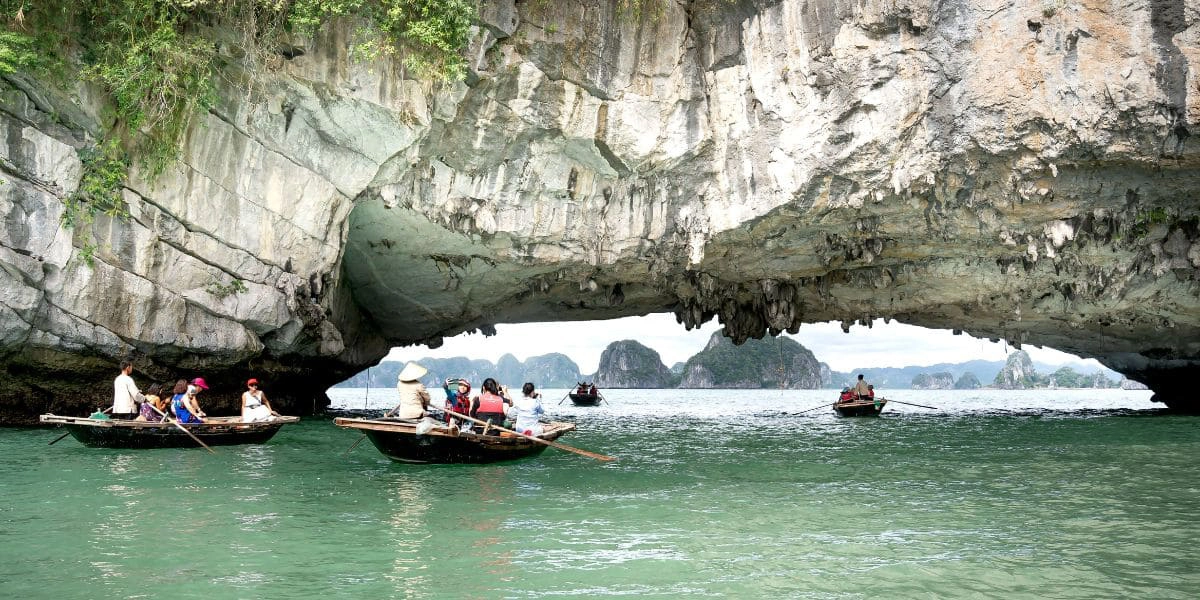
Luon Cave by Kayak - Source: Quang Nguyen Vinh
Luon Cave is a limestone arch about three meters high, opening into a calm, round brackish lagoon. The lagoon is surrounded by steep cliffs and dense greenery, creating a peaceful and secluded setting. Here, you will paddle your own kayak close to the rock walls and make your way through the narrow cave entrance.
Drifting across the still water, with only the soft sound of your paddle breaking the silence, brings a true sense of peace. You may also have the chance to see wild golden-furred monkeys. These monkeys are quite bold and often climb along branches stretching out over the water, hoping to find food from passing visitors.
Conquering the Summit of Ti Top Island
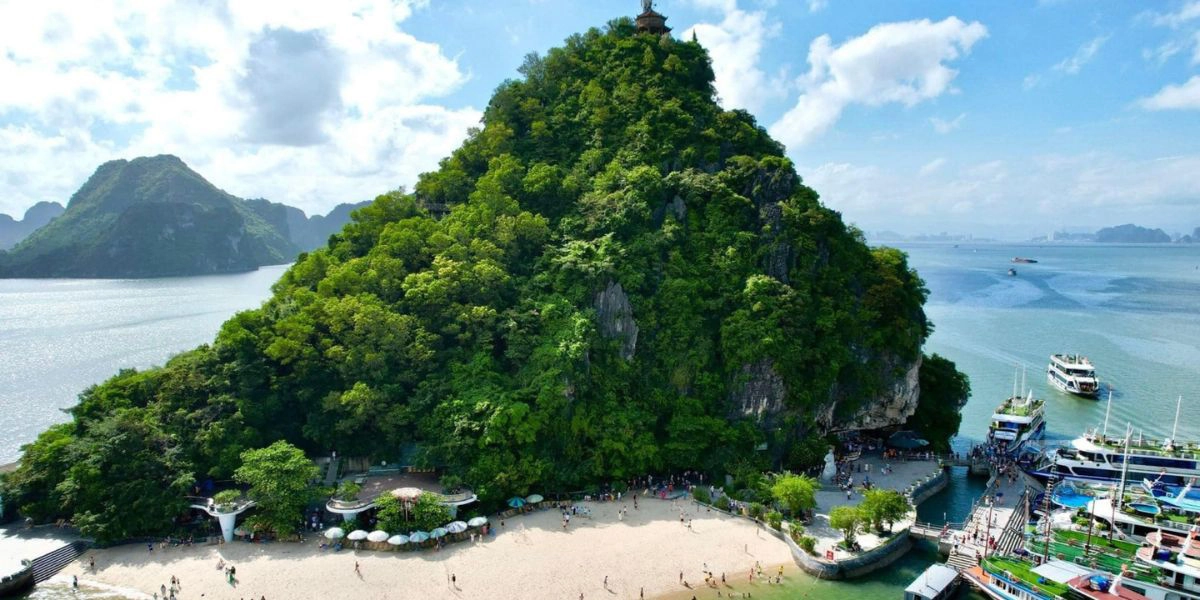
Ti Top Island - Source: Hoang Oanh
Ti Top Island is one of the few islands in Ha Long Bay that has been well planned for tourism, with a gently sloping beach and a crescent-shaped stretch of soft white sand. Right at the pier stands a prominent marble statue of cosmonaut Gherman Titov. Here, you are free to swim and relax in the clear, calm seawater.
The most rewarding activity on Ti Top Island is the climb up 427 steep stone steps to the summit. Once you reach the viewing pavilion at the top, you will be rewarded with a breathtaking 360-degree panorama, like a traditional ink-wash painting, capturing the full majesty of Ha Long Bay.
 (2).webp)

1.3. Day 3: Ha Long Bay – Ninh Binh – Explore the Spiritual Complex of Bai Dinh
After a sunrise Tai Chi session and an early lunch, you will disembark from the cruise. In the afternoon, the journey continues across the Red River Delta toward Ninh Binh, Vietnam’s ancient capital region.
Exploring Sung Sot Cave
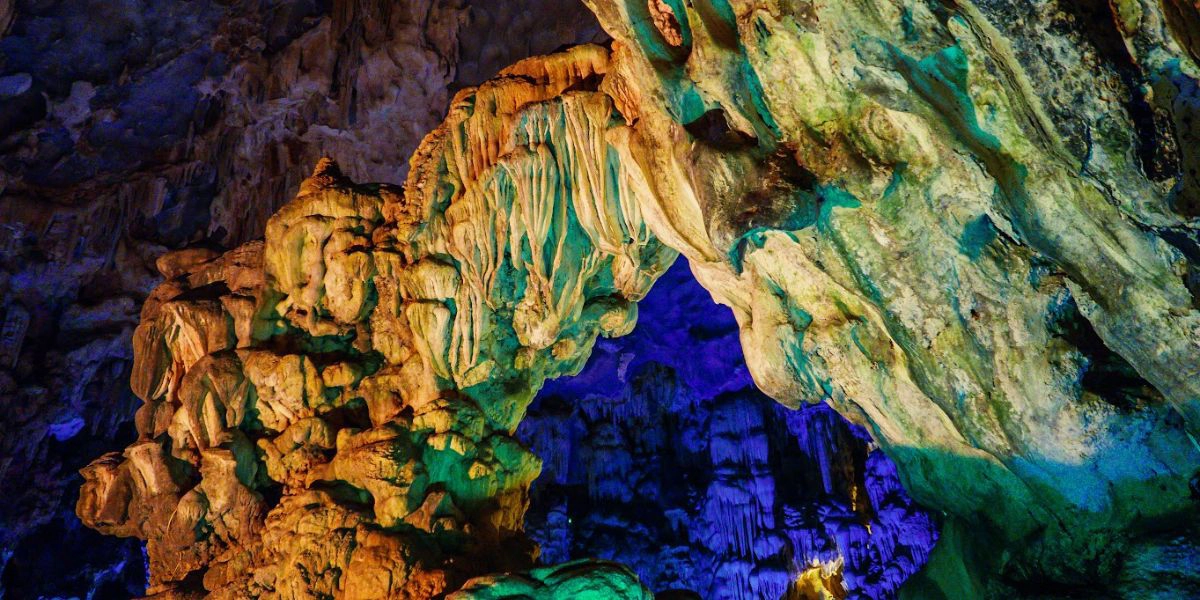
Sung Sot Cave - Source: Vietjet Air
Before leaving the bay, you will visit the largest and most beautiful cave in Ha Long Bay. Sung Sot Cave is divided into two main chambers. The outer chamber resembles a vast natural theatre, while the inner chamber reveals a magical world of stalactites and stalagmites. One of its most remarkable formations resembles a sacred stone turtle, whose head visitors often touch in the hope of receiving good luck.
Looking up at the cave ceiling, you will see countless unique, naturally formed honeycomb-like indentations. Combined with the multicolored lighting system, these geological features create a sparkling effect reminiscent of a star-filled sky, illuminating even the small patches of vegetation growing within the cave.
Bai Dinh Pagoda and Phap Chu Hall
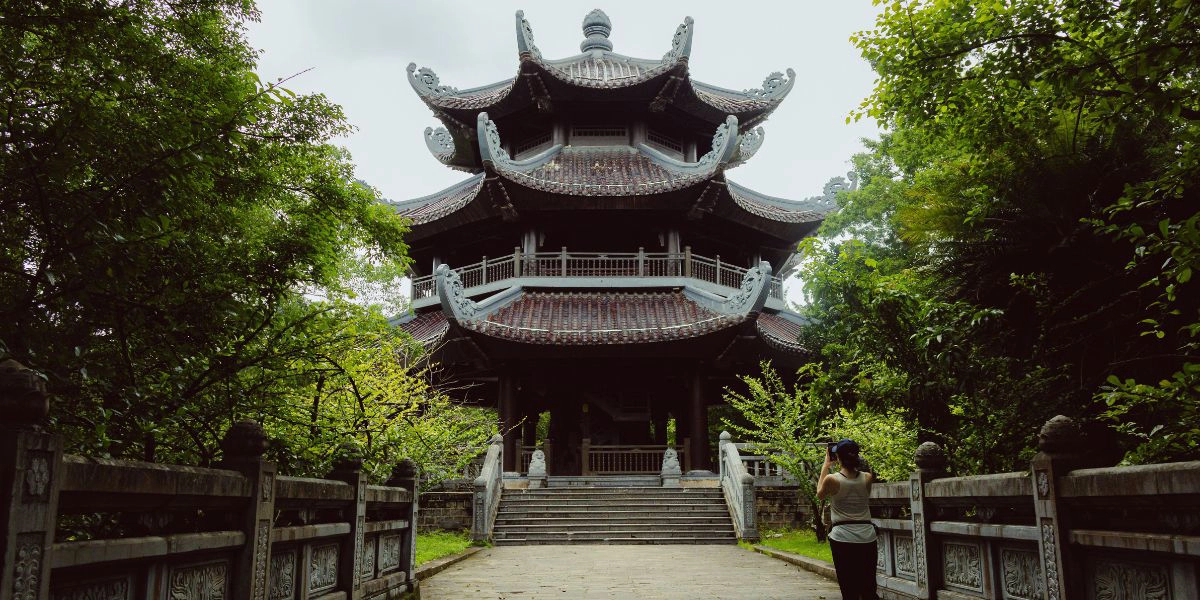
Bai Dinh Pagoda - Source: Zaonar Saizainalin
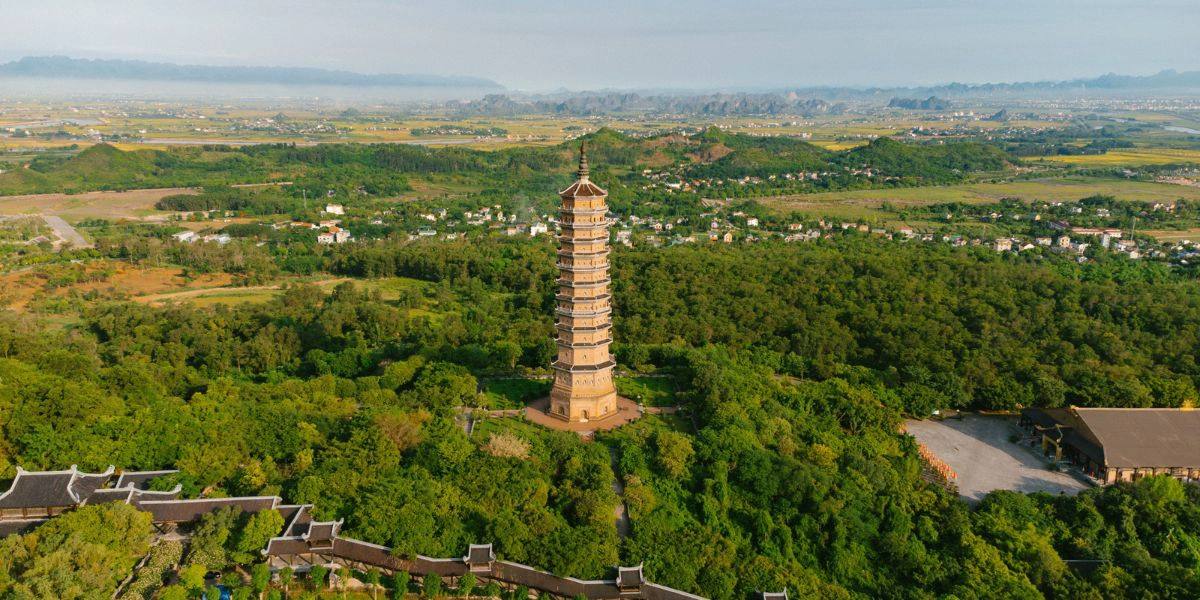
Upon arriving in Ninh Binh, you will immediately be impressed by the immense scale of the 539-hectare Bai Dinh Pagoda complex. As you travel around the grounds by electric buggy, you can enjoy the peaceful atmosphere of the Truong Yen mountains. The Buddhist structures here are solidly constructed from massive blocks of blue stone and high-quality solid timber.
The grandeur of Bai Dinh becomes even more striking as you venture deeper into the complex. Inside Phap Chu Hall stands a magnificent 10-meter-high statue of Shakyamuni Buddha, cast from 100 tons of solid bronze. This remarkable work showcases the exceptional skill of Vietnamese bronze-casting artisans.
The Arhat Corridor and Bell Tower
Bell Tower - Source: HONGSON
Another impressive highlight is the nearly three-kilometer-long stone corridor. Along the way, you can admire 500 Arhat statues, each standing more than two meters tall. Every statue has its own distinctive posture and facial expression, vividly portraying a different range of human emotions.
At the end of the tour, you will visit the three-story Bell Tower, whose gracefully curved roofs rise against the blue sky. Inside hangs an intricately decorated bronze bell weighing 36 tons. This peaceful setting is an ideal place to pause, clear your mind, and listen to the lingering resonance of the pagoda bell.
>> Explore more: Top 5+ Most Attractive Ninh Binh Tourist Attractions
1.4. Day 4: Ninh Binh – Fly to Hue – Discover the Scenic Beauty of Trang An
Trang An is especially peaceful in the early morning, when a light mist drifts across the mountain peaks. This is the best time to board a traditional bamboo boat and explore the Sao Khe River.
The Sao Khe River Wetland Ecosystem
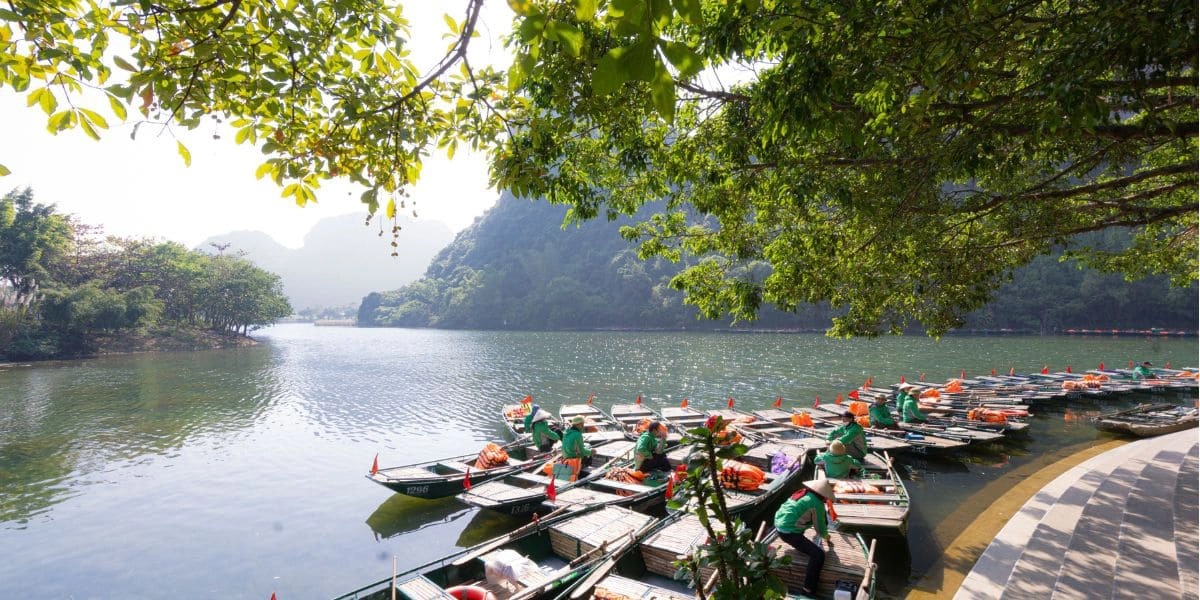
Sao Khe River - Source: LE ANH
Leaving the central wharf, a hand-rowed bamboo boat operated by a local guide will carry you deep into the heart of the heritage site. With no noisy engines, the only sound is the steady rhythm of the oars dipping into the water. Ahead, layers of limestone mountains are reflected on the calm surface, creating the dramatic scenery featured in the blockbuster Kong: Skull Island.
The Sao Khe River is famous for its crystal-clear water, which allows you to see all the way to the bottom. Leaning over the side of the boat, you can easily spot lush green hornwort growing from the muddy riverbed. The delicate plants sway gently with the current, creating a captivating underwater ecosystem.
Passing Through the Cave System
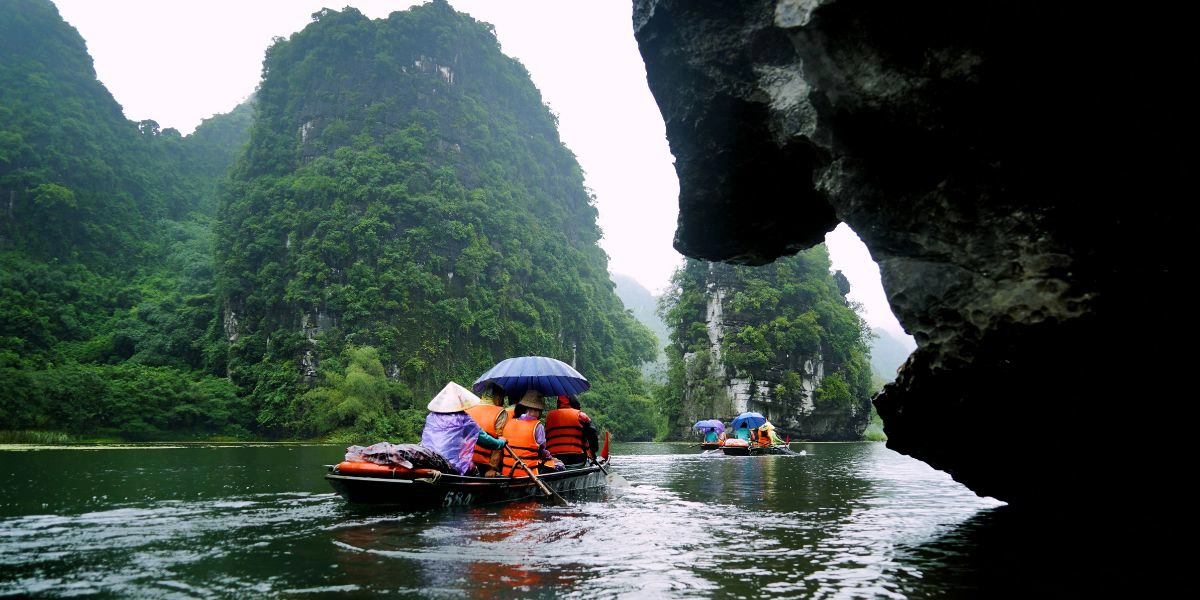
Exploring the cave system - Source: KHOA Nguyenduc
One of Trang An’s most distinctive features is its network of water caves with extremely low ceilings, including Nau Ruou Cave, Bright Cave, and Dark Cave. As soon as the boat enters, the temperature becomes noticeably cooler, offering a refreshing contrast to the heat outside. The darkness and enclosed surroundings create a mysterious and thrilling atmosphere.
The most exciting part of the experience comes when you must repeatedly bend low over the side of the boat to avoid the jagged, dripping stalactites overhead. Inside Nau Ruou Cave, you can also see dozens of neatly arranged earthenware jars and hear the legend of a naturally sweet underground spring once used to brew wine for the royal court.
Tran Temple and the Journey to the Airport
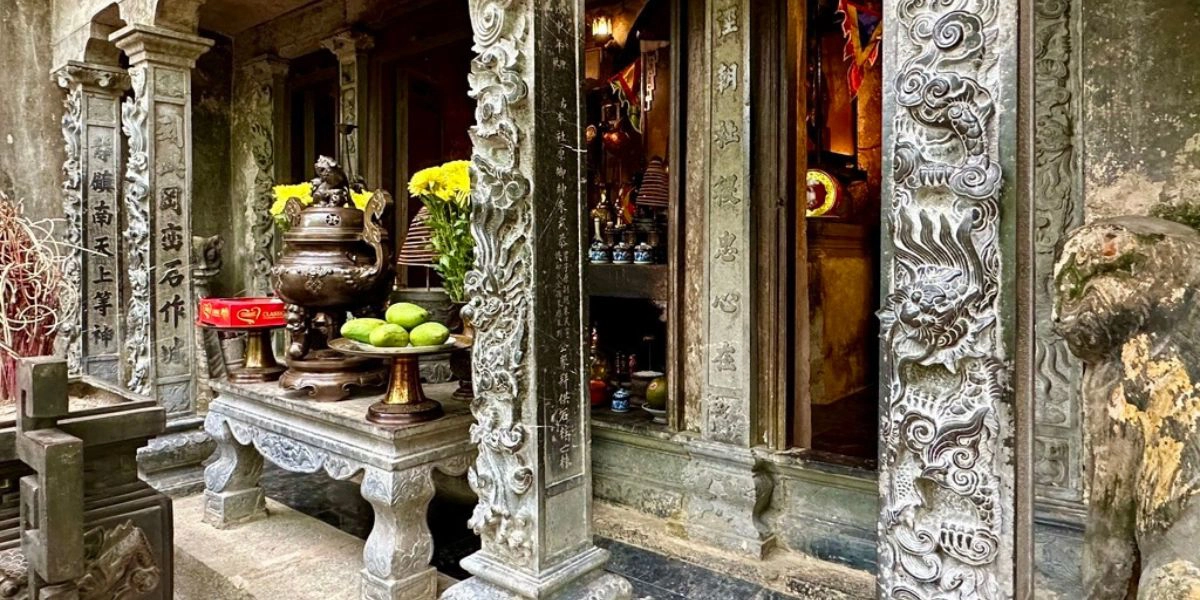
Tran Temple - Source: Bao Van Hoa
Scattered among the caves are ancient temples standing quietly on small, isolated islands. After stepping ashore, you will visit Tran Temple and Vu Lam Palace to offer incense. These intricately carved wooden structures sit deep within secluded, mist-covered valleys, offering a fascinating glimpse into the region’s rich and heroic history.
After completing your Trang An boat tour, a private vehicle will take you directly to Noi Bai International Airport in Hanoi. You will have enough time to rest and enjoy a light meal, such as a warm bowl of noodles, in the terminal before checking in for your evening flight. This marks the end of your Northern Vietnam journey and the beginning of your next adventure in the former imperial capital of Hue.
2. Day 5 – Day 7 (Central Vietnam): A Coastal Heritage Journey
Three days in Central Vietnam will take you on a journey back in time to discover the region’s enduring cultural heritage. From the quiet majesty of Hue’s imperial architecture to the colorful blend of cultures in Hoi An Ancient Town and the youthful energy of Da Nang, each destination reveals a different side of Central Vietnam.
2.1. Day 5: Explore the Former Imperial Capital of Hue – The Ancient Beauty of the Imperial Citadel and Royal Tombs
After arriving on last night’s flight, you will wake up to the peaceful atmosphere of Hue. Your first day in Central Vietnam is dedicated to discovering the former glory of the Nguyen Dynasty, Vietnam’s final imperial dynasty.
Hue Imperial City and the Forbidden Purple City
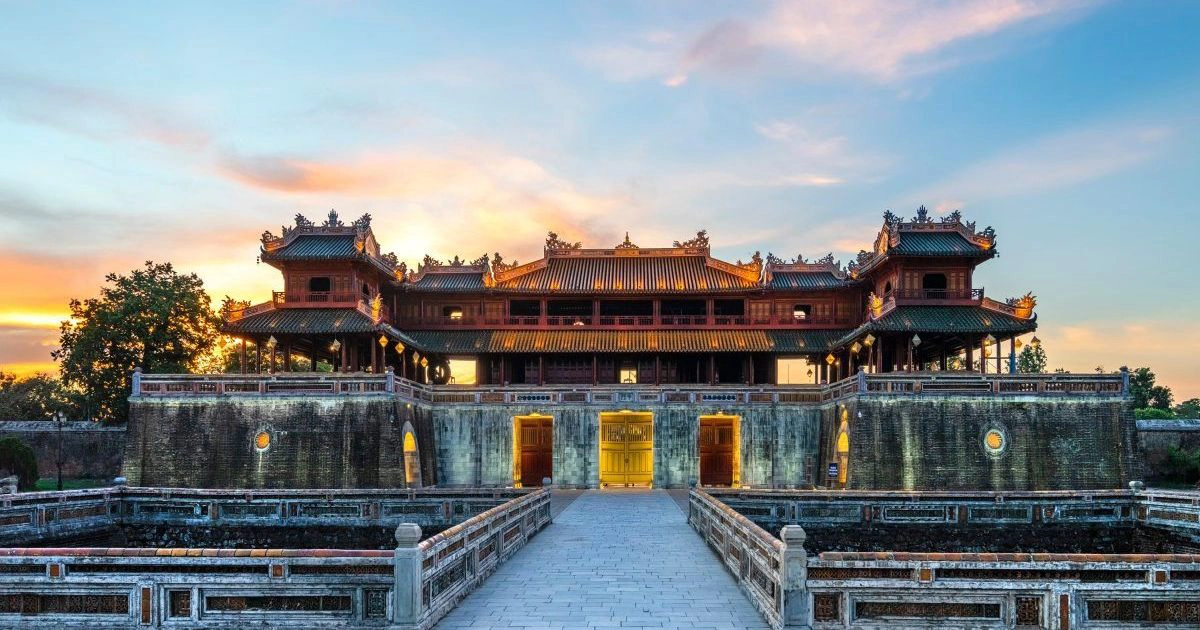
Hue Imperial City - Source: Bao Lao Dong
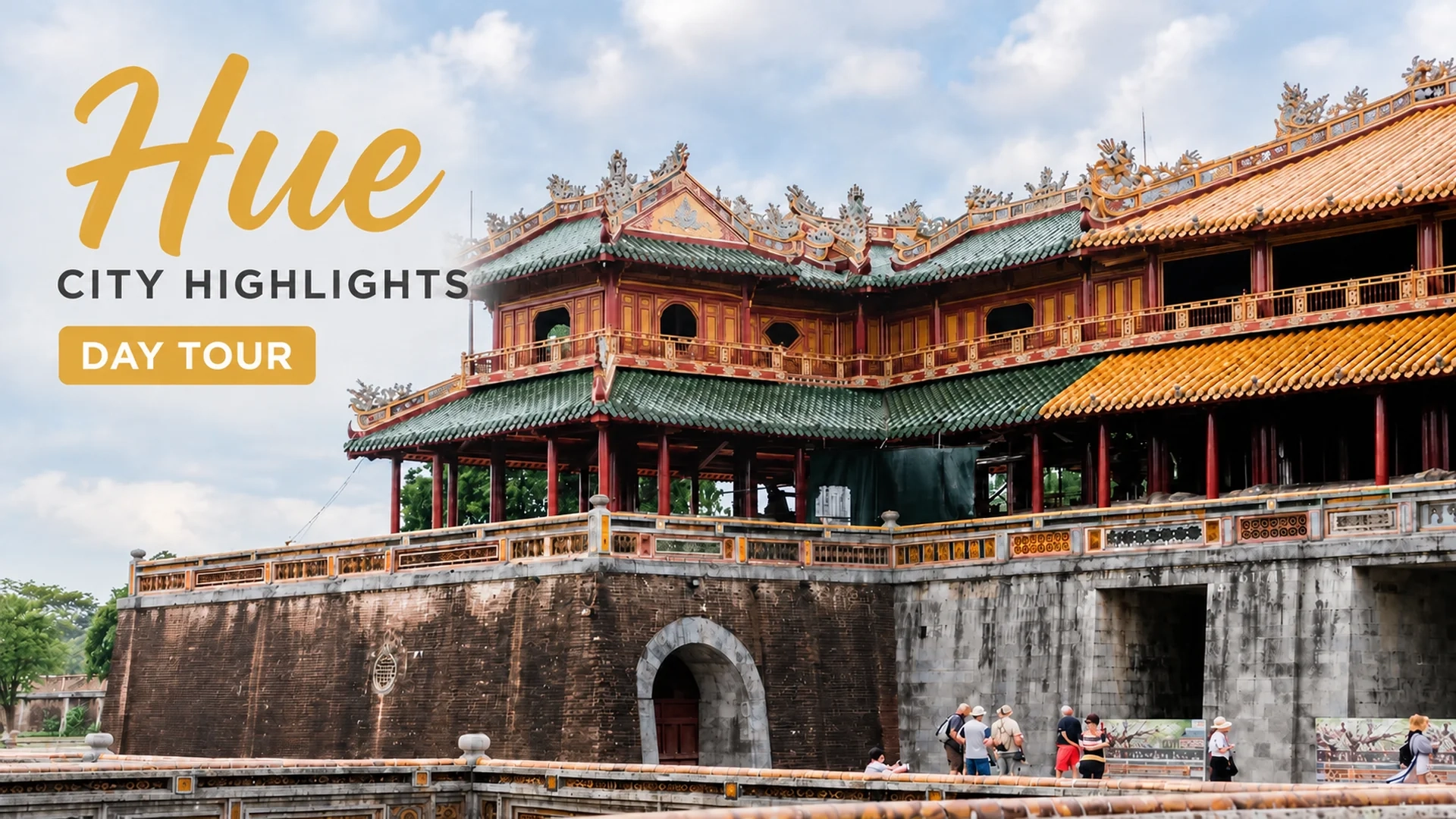
In the morning, you will pass through Ngo Mon Gate and enter the Imperial City, once the political and ceremonial center of the Nguyen Dynasty. Listen as your guide shares fascinating stories about life inside the royal court, then walk across the ceremonial courtyard where mandarins once gathered to pay their respects to the emperor.
The magnificent Thai Hoa Palace will leave a lasting impression with its red-and-gold wooden columns and elaborate dragon motifs. For a more immersive experience, rent a traditional Nhat Binh court costume, carry a silk fan, and capture nostalgic photographs among the moss-covered palaces and temples.
Khai Dinh Tomb and Tu Duc Tomb
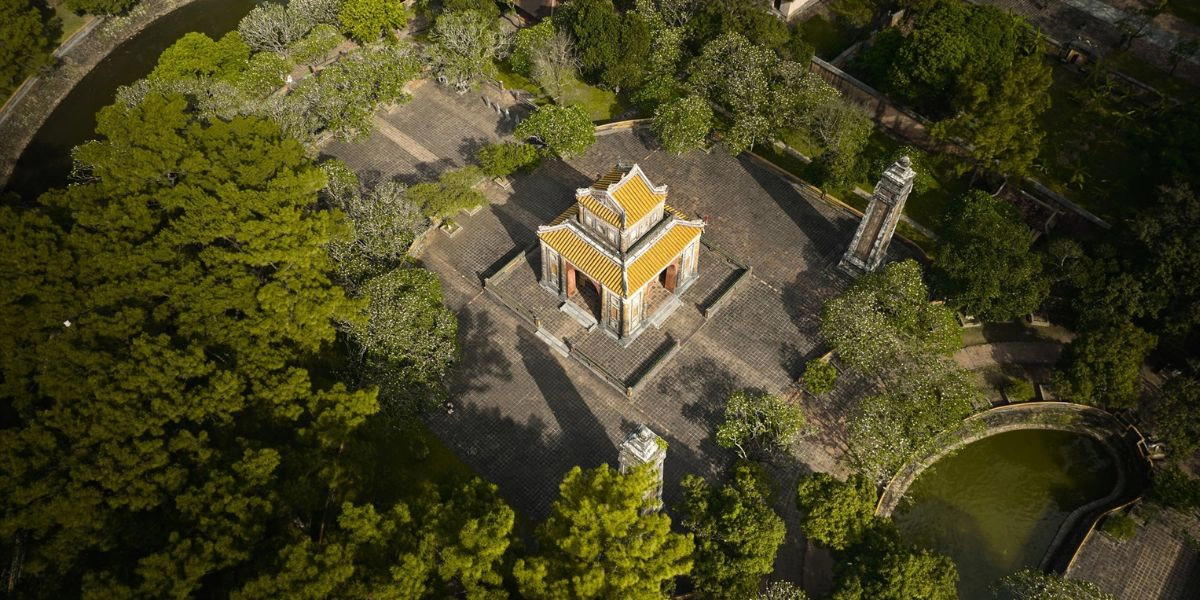
Tu Duc Tomb - Source: Bao Lao Dong
In the afternoon, the journey continues to two royal tombs with strikingly different architectural styles. Tu Duc Tomb resembles a peaceful royal garden, surrounded by pine trees and a vast lotus lake. Its poetic landscape reflects the romantic and artistic spirit of the talented emperor.
In complete contrast, Khai Dinh Tomb is a bold masterpiece combining Eastern and Western influences. Climb hundreds of stone steps to admire the exceptionally intricate ceramic and glass mosaics covering the walls and ceilings, as well as the life-sized bronze statue of Emperor Khai Dinh.
Imperial cuisine and Hue sweet soups
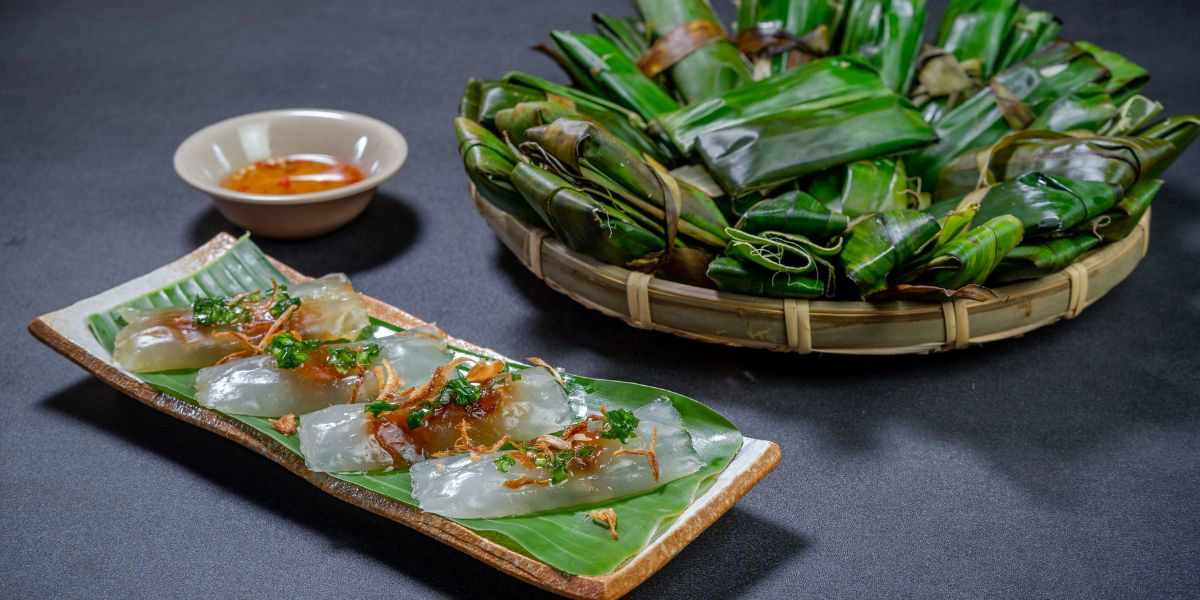
Banh bot loc - Source: Hai Nguyen
Food is an essential part of Hue’s cultural heritage. At lunchtime, try an authentic bowl of bun bo Hue, featuring a rich broth flavored with fermented shrimp paste and spicy chili oil, served with fragrant crab sausage and slow-cooked pork knuckle.
In the evening, wander through Hue’s smaller streets and sample local specialties such as banh nam, banh beo, and translucent banh bot loc dumplings filled with savory shrimp and pork. End the meal with a refreshing glass of Hue-style sweet soup, with dozens of choices ranging from lotus seeds wrapped in longan fruit to the unusual tapioca dumpling sweet soup filled with roasted pork.
>> Explore more: Travel Hue Vietnam: Explore Vietnam’s Imperial City
2.2. Day 6: Hue – Hoi An – Step into the Nostalgic World of the Ancient Town
Leaving the former imperial capital behind, you will travel south along some of Central Vietnam’s most scenic coastal roads toward the vibrant colors of the historic trading port of Hoi An.
Crossing the Hai Van Pass
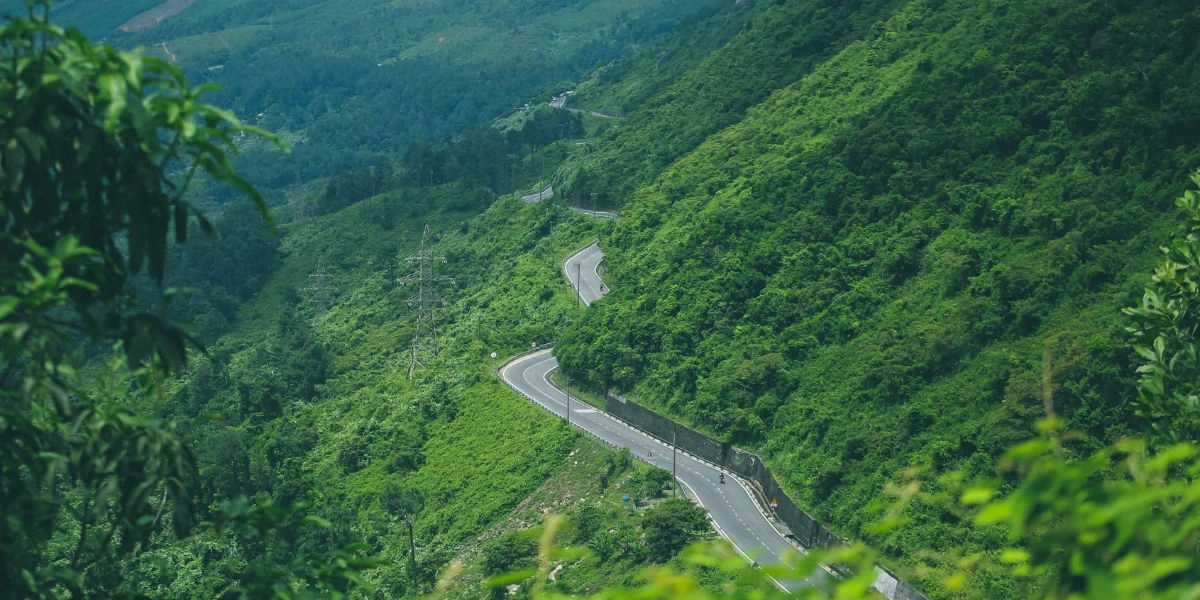
Hai Van Pass - Source: Duong Nhan
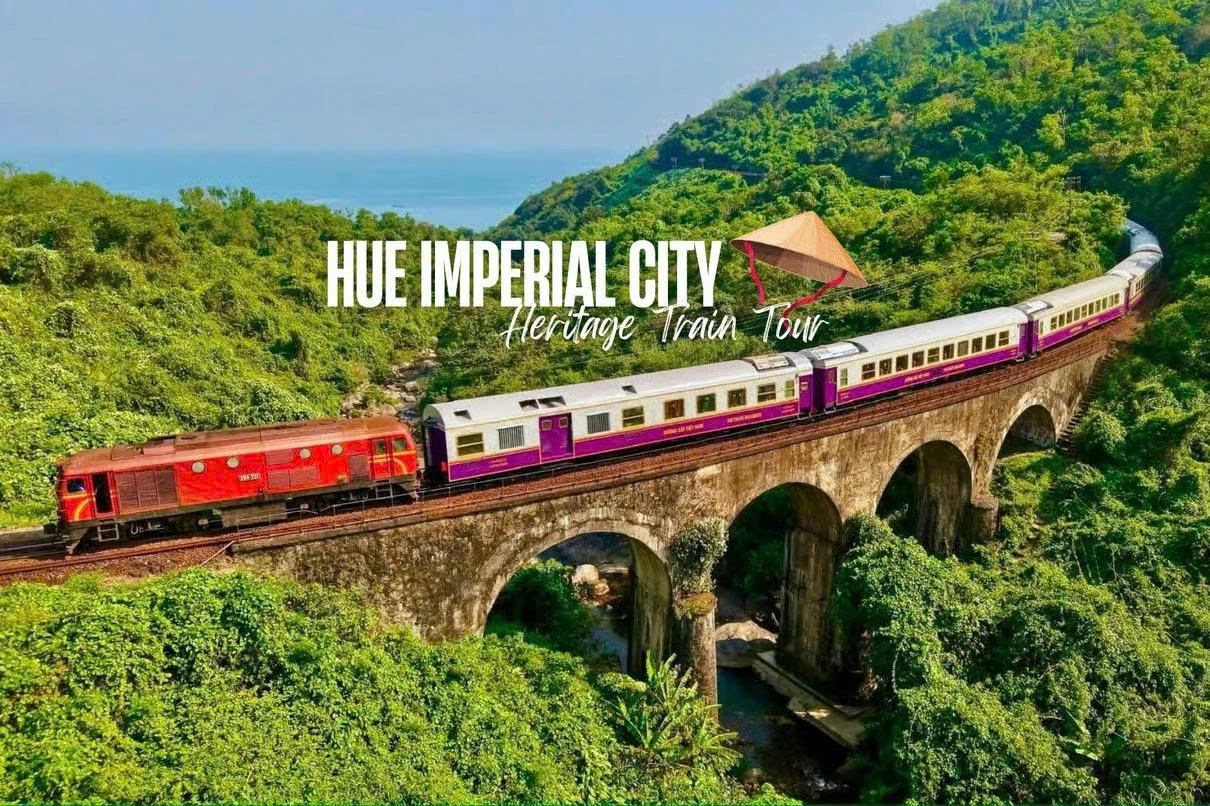
The morning drive follows one of Vietnam’s most spectacular coastal routes into the Quang region. The highlight of the journey is crossing the summit of Hai Van Pass, a dramatic natural boundary between Hue and Da Nang.
You will stop at the historic Hai Van Gate at the top of the pass to breathe in the fresh mountain air. From this elevated viewpoint, you can admire the sweeping panorama of turquoise Lang Co Bay, where smooth white beaches curve gracefully around the foot of the mountains.
Walking through Hoi An Ancient Town
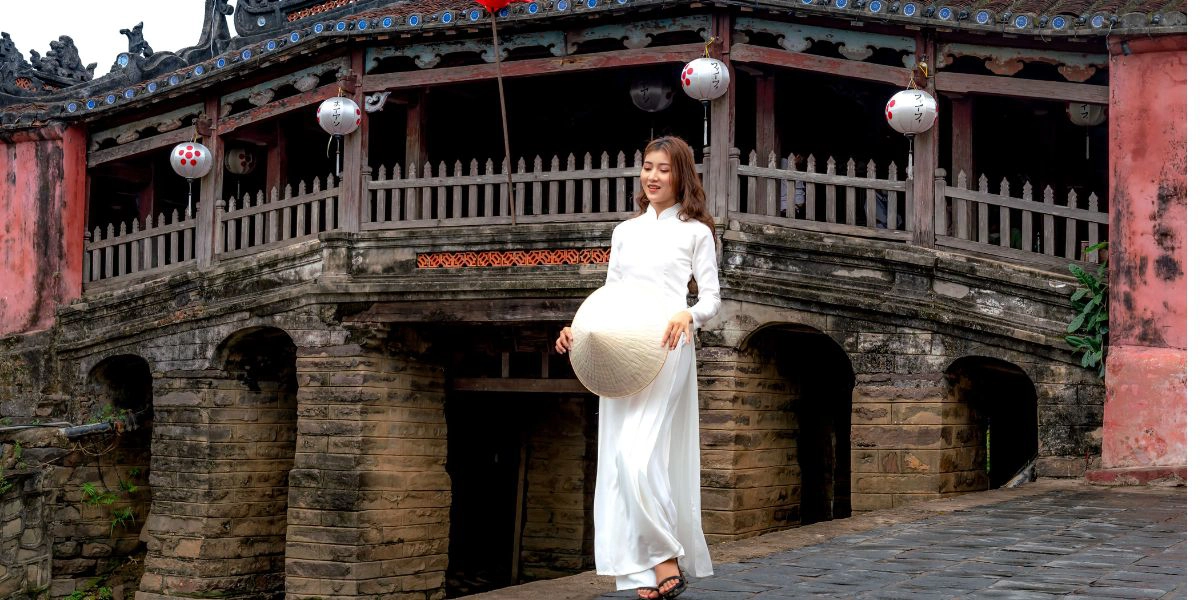
Japanese Covered Bridge - Source: Quang Nguyen Vinh
In the early afternoon, Hoi An welcomes you with rows of traditional tiled houses, yellow walls, and brilliant bougainvillea. Walking through its quiet narrow lanes, largely free from the noise of motorbike engines, creates a wonderfully relaxing experience.
Visit the Japanese Covered Bridge, an iconic symbol of Japanese and Vietnamese architectural influences, and the Fujian Assembly Hall, renowned for its elaborate Chinese woodcarvings. You may also stop at one of Hoi An’s express tailor shops and treat yourself to a personalized silk ao dai.
Quang regional cuisine and floating lanterns
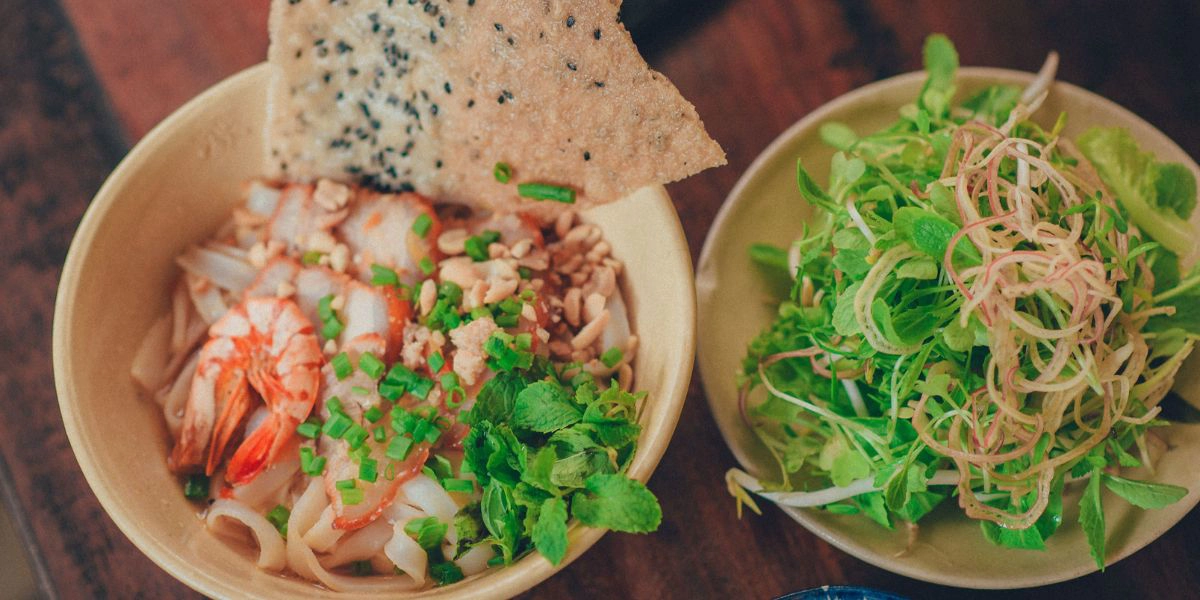
Cao Lau Hoi An - Source: Min An
Dinner in Hoi An would not be complete without a bowl of cao lau. Its firm, chewy noodles are mixed with sweet and savory char siu pork and fresh herbs from Tra Que Vegetable Village, creating an unforgettable combination of flavors and textures. For dessert, enjoy a refreshing glass of Mót herbal tea with delicate notes of lemongrass and lime.
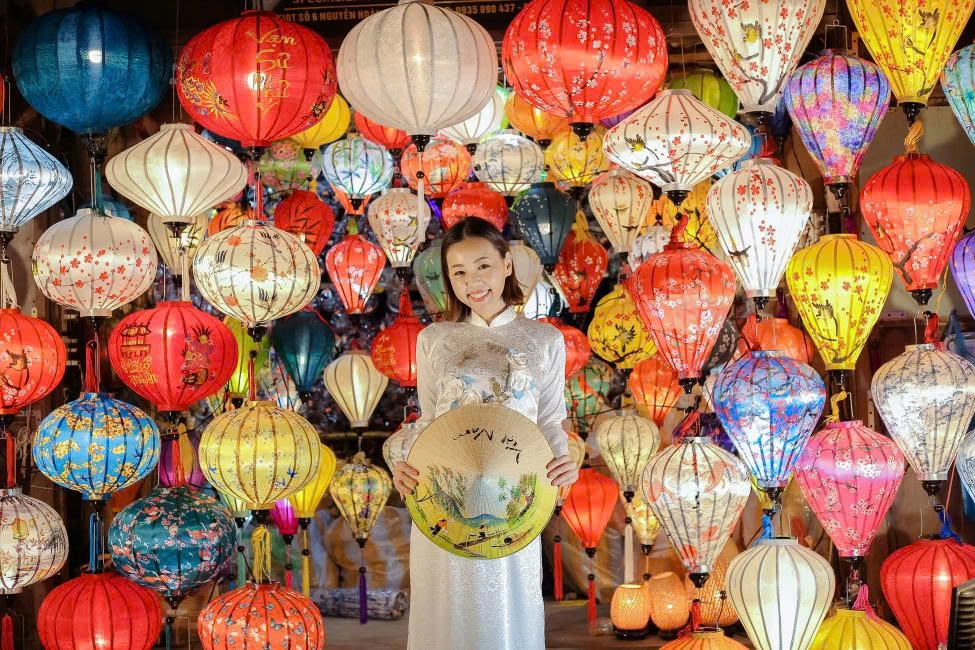
As night falls, Hoi An glows beneath thousands of colorful silk lanterns. Board a small wooden boat and release a paper flower lantern onto the calm Hoai River, sending wishes of peace and happiness to your family.
2.3. Day 7: Hoi An – Da Nang – Discover the Marble Mountains and Son Tra Peninsula
After several days immersed in a slower, more nostalgic atmosphere, Day 7 brings you back to the youthful energy of the coastal city of Da Nang, where mountains, forests, and the open sea come together.
The Marble Mountains
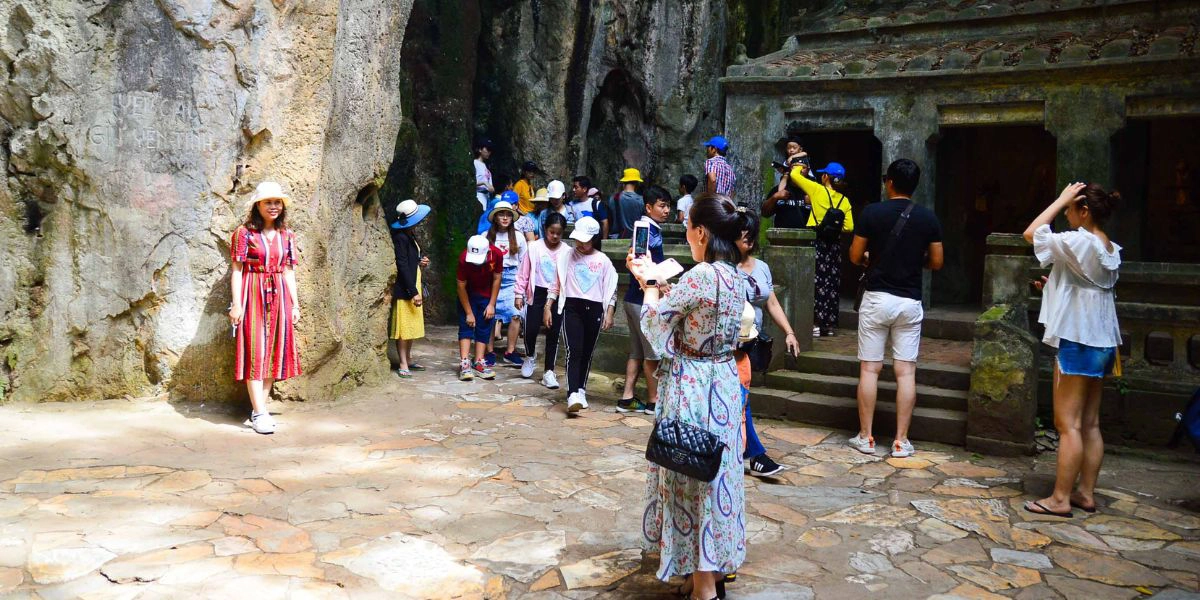
The Marble Mountains - Source: Bao Thanh Nien
In the morning, travel to Da Nang to explore the Marble Mountains. This cluster of six natural limestone and marble hills rises dramatically from the surrounding plain. The hills are associated with the five elements of Eastern philosophy—metal, wood, water, fire, and earth - and contain a mysterious network of sacred caves and temples.
At Thuy Son, the largest mountain, take a glass elevator part of the way up before exploring Huyen Khong Cave. The cavern becomes especially enchanting when sunlight streams through natural openings in the ceiling and shines directly onto the Buddha statue carved into the rock wall.
Son Tra Peninsula and Linh Ung Pagoda
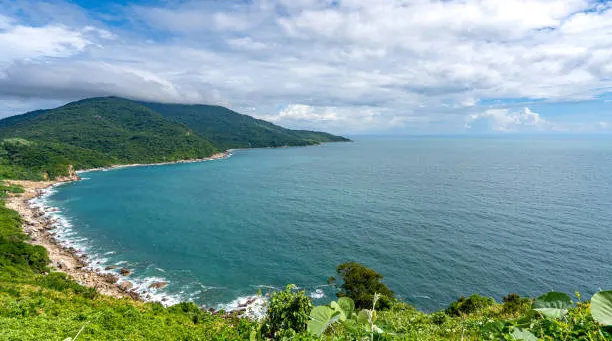
Son Tra Peninsula - Source: TUAN PHAN
In the afternoon, follow the coastal road to Son Tra Peninsula, known as the “green lung” of Da Nang. The air here is cool and fresh, while lush primary forest covers the hillsides along the winding mountain roads.
The main highlight is Linh Ung Pagoda at Bai But. Here, you can admire the 67-meter-tall Lady Buddha statue, gazing peacefully out toward the sea. From the pagoda courtyard, you can enjoy a beautiful panoramic view of modern Da Nang and its famous bridges.
Swimming at My Khe Beach and enjoying fresh seafood
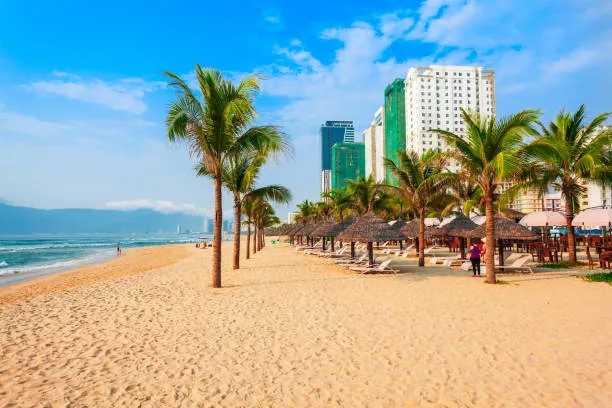
My Khe Beach - Source: Tuan Vy
At the end of the day, unwind in the cool blue water of My Khe Beach, widely regarded as one of the world’s most attractive beaches. Its wide, gently sloping shoreline and rows of coconut palms swaying in the breeze create an ideal setting for relaxation after several days of travel.
Dinner by the sea is the perfect opportunity to enjoy a generous seafood feast. At restaurants along Vo Nguyen Giap Street, you can select live lobster, freshly caught squid, spotted babylon snails, and other seafood directly from the tanks. The chefs will prepare your choices to order, creating a fresh and flavorful meal to complete your Central Vietnam journey.
3. Day 8 – Day 10 (Southern Vietnam): From Saigon to the Mekong Delta
The final three days of your journey will take you to the warm and sunny landscapes of Southern Vietnam. Get ready to discover the vibrant energy of glamorous Saigon and experience the simple, peaceful rhythm of life in the Mekong Delta.
3.1. Day 8: Fly to Ho Chi Minh City – Immerse Yourself in the Vibrant Rhythm of Saigon
A morning flight from Da Nang will take you to Tan Son Nhat International Airport. Ho Chi Minh City welcomes visitors with its fast-paced lifestyle, tree-lined streets, and timeless architectural landmarks.
Traces of French colonial architecture
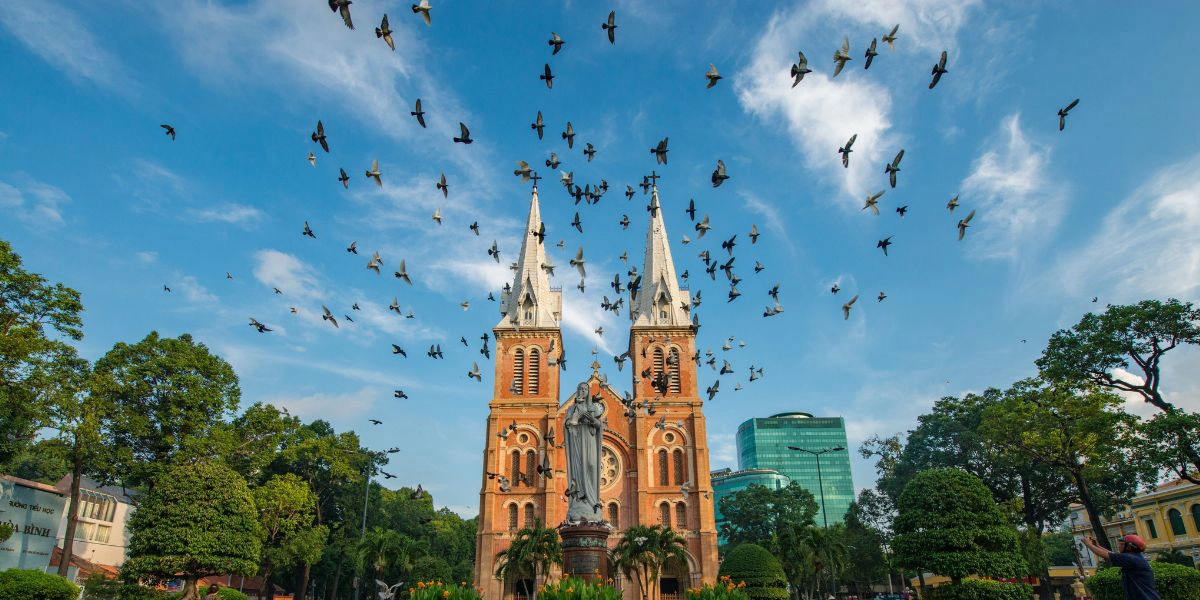
Notre-Dame Cathedral Basilica of Saigon - Source: Binh Ho Image
District 1 is home to many of the city’s most iconic buildings from the French colonial period. As you stroll along streets shaded by mature trees, you will see how nostalgic architectural charm blends naturally with modern urban development.
Stop for photos at Saigon Central Post Office, which features an elegant arched ceiling. Admire the distinctive red-brick architecture of Notre-Dame Cathedral Basilica of Saigon, then explore the impressive Independence Palace, a landmark closely connected to Vietnam’s modern history.
Pavement coffee culture and street food
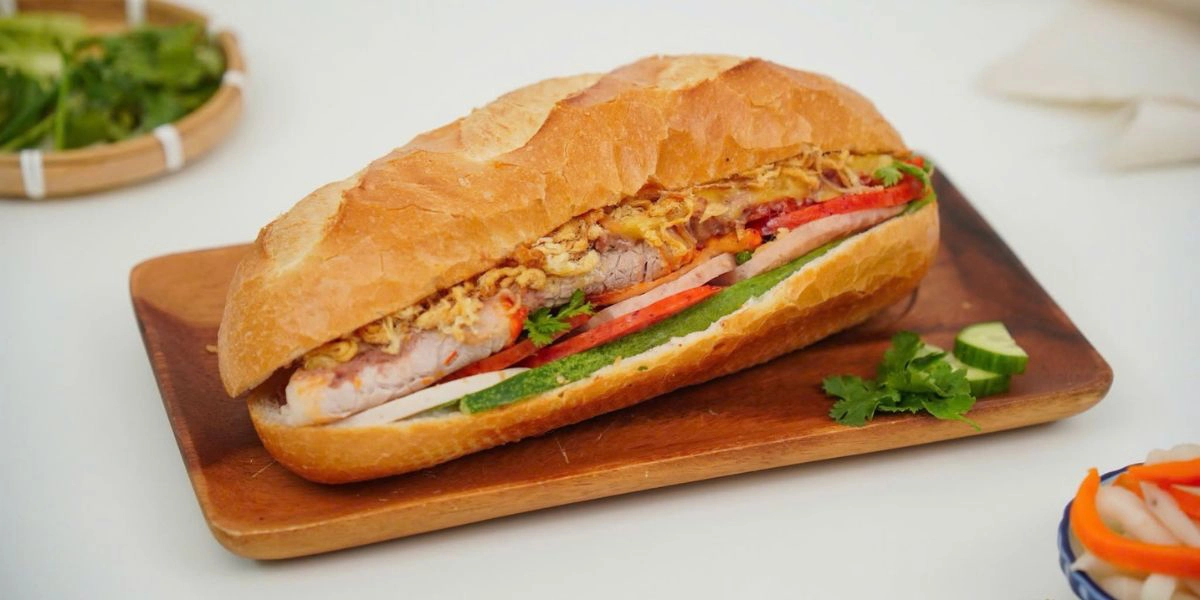
Huynh Hoa banh mi - Source: FB Banh Mi Huynh Hoa
Saigon’s culture is closely associated with roadside coffee and a diverse street food scene. This is your chance to experience how local residents enjoy simple moments of relaxation in the heart of the bustling city.
Sit on the pavement beneath the shady trees of April 30 Park, sip a local coffee, and watch the steady flow of traffic pass by. Afterward, enjoy a crispy Huynh Hoa banh mi generously filled with cold cuts, Vietnamese pork sausage, and rich pâté.
Nguyen Hue Walking Street and Bui Vien at night
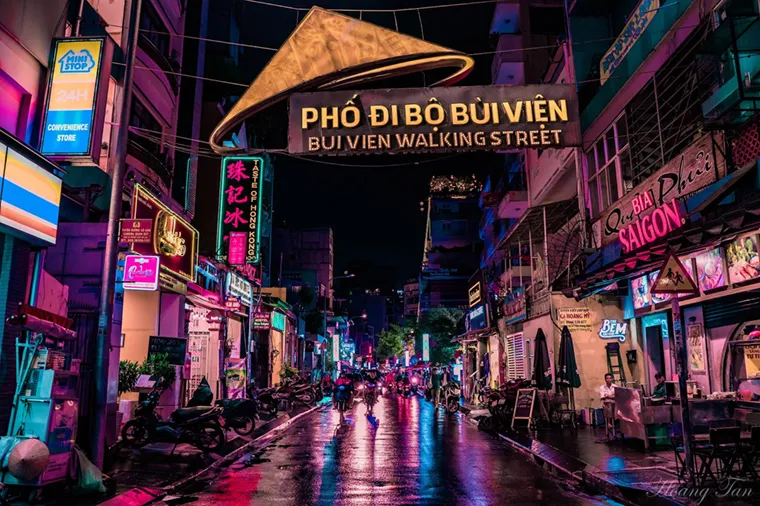
Bui Vien Walking Street - Source: Le Do Thanh Dat
When night falls, Saigon glows beneath colorful neon lights. The city truly comes alive with lively entertainment and social activities that continue until the early hours of the morning.
Take an evening walk along Nguyen Hue Walking Street, watch street performances, and capture photos with the Bitexco Financial Tower in the background. Alternatively, immerse yourself in the energetic atmosphere of Bui Vien Walking Street, where you can enjoy cold beer and lively music.
3.2. Day 9: Mekong Delta – Experience the Rustic Culture of Southern River Life
Leaving the noise of the city behind, a morning drive will take you to the peaceful province of Ben Tre. This is a wonderful opportunity to enjoy the fresh air and experience the simple riverside lifestyle of the Mekong Delta.
Exploring narrow canals by sampan
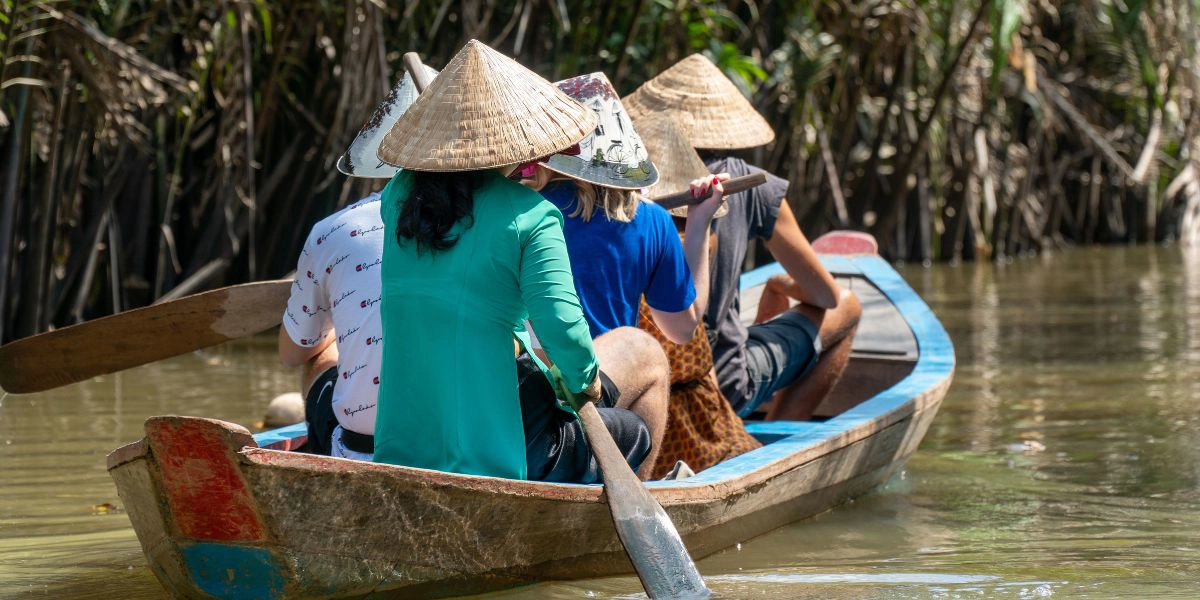
Nipa palm canal sampan ride - Source: 宇峰 吳
Upon reaching the pier, you will put on a life jacket and step into a traditional wooden sampan. Local residents dressed in traditional ao ba ba clothing will row you deep into the intricate network of canals that characterizes the region.
Enjoy the cool breeze beneath dense rows of nipa palms. The journey then continues by horse-drawn cart along quiet village roads, allowing you to admire fruit orchards filled with ripening produce at a leisurely pace.
Discovering traditional local crafts
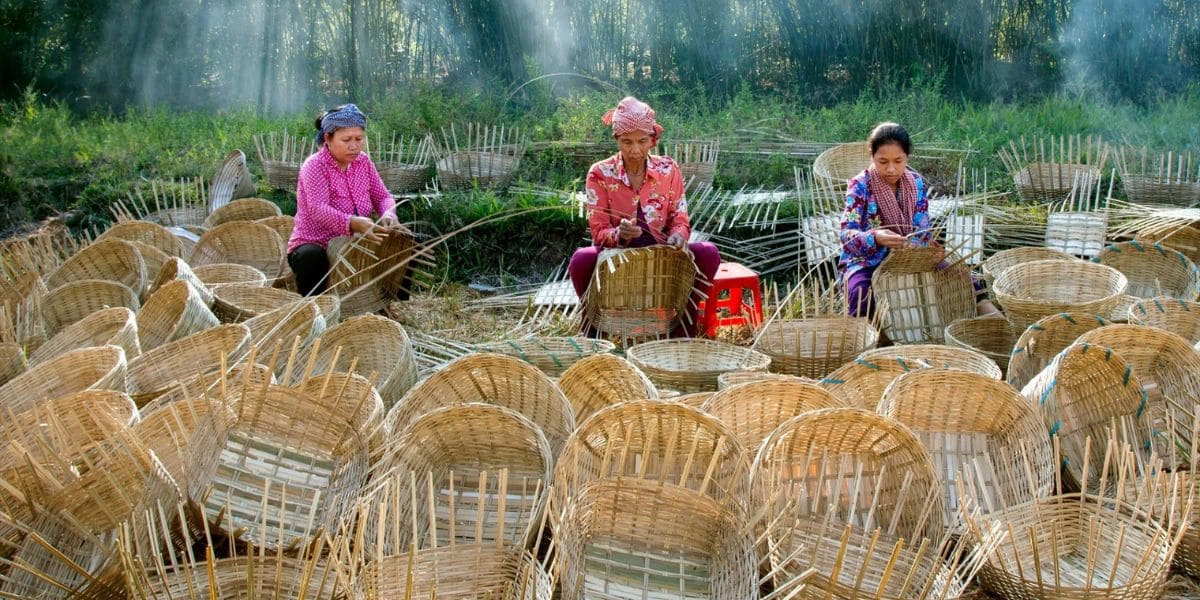
Traditional craft villages - Bo Khoa hoc va Cong nghe
Life in Southern Vietnam is closely connected to fruit gardens and traditional craft villages. Here, you can observe simple production methods that reflect the local culture and taste freshly prepared regional specialties.
Visit a coconut candy workshop to watch the mixture being stirred and sample a warm, sweet piece of candy straight from the production line. You will also stop at a bee farm, enjoy a refreshing cup of honey tea, and listen to don ca tai tu, a traditional form of Southern Vietnamese folk music.
Southern Vietnamese garden cuisine
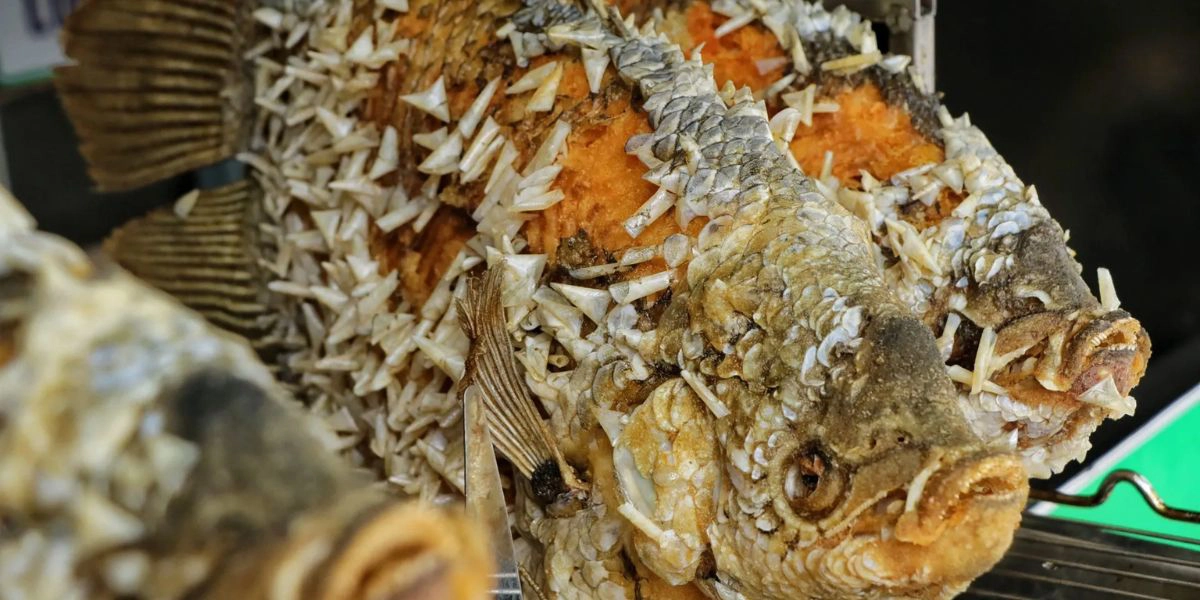
Crispy deep-fried elephant ear fish - Source: Bao Thanh Nien
Lunch at an eco-friendly garden restaurant will feature rustic dishes with rich local flavors. The ingredients are sourced directly from the surrounding countryside to ensure freshness.
Wrap crispy deep-fried elephant ear fish in rice paper with wild herbs, then dip each roll into sweet and sour garlic chili fish sauce. You should also try a refreshing bowl of snakehead fish sour soup cooked with yellow sesbania flowers, a dish that captures the distinctive flavors of rural Southern Vietnam.
3.3. Day 10: Cu Chi & Ben Thanh Market – Explore History and Say Farewell
The final day of your ten-day Vietnam journey combines an exploration of the country’s remarkable wartime history with a lively shopping experience at the city’s central market before you say goodbye.
The underground maze of the Cu Chi Tunnels
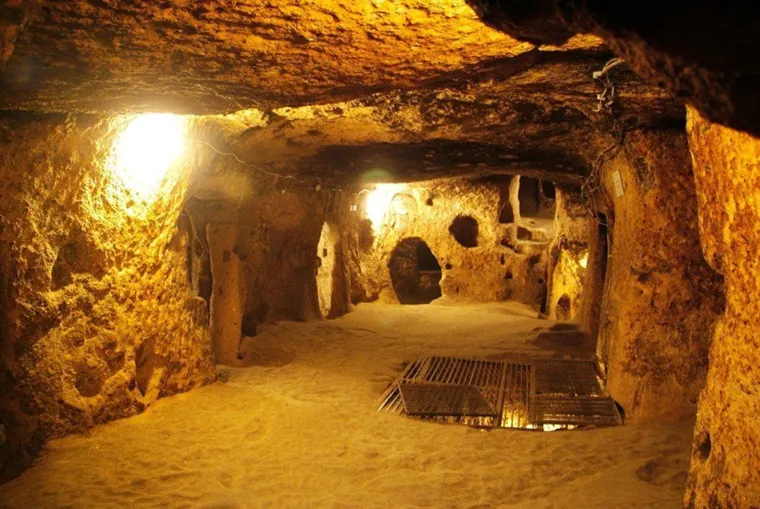
Cu Chi Tunnels - Source: Domy Kamsyah
In the morning, you will travel to the outskirts of the city to visit the Cu Chi Tunnels. This extensive underground defense system is a powerful testament to the resilience and remarkable ingenuity of the Vietnamese people.
You will have the opportunity to enter sections of the narrow, dark tunnels and gain a deeper understanding of life during wartime. Afterward, taste boiled cassava served with a peanut and salt dip, a simple meal commonly eaten by guerrilla fighters in the past.
Shopping at Ben Thanh Market
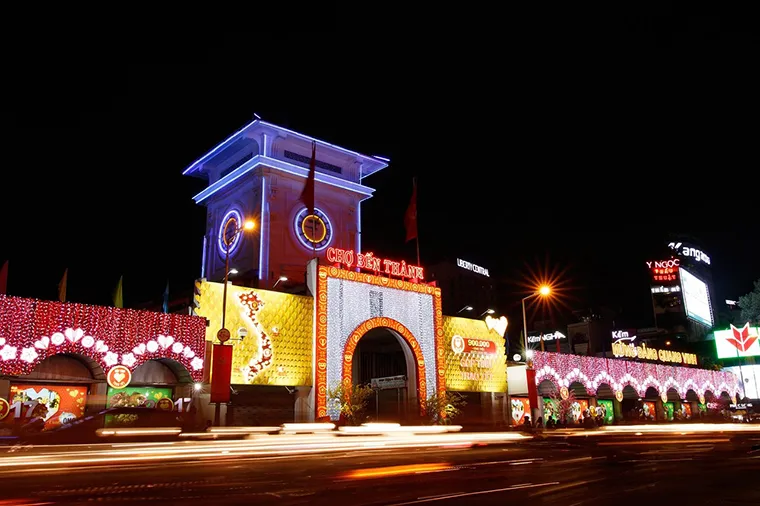
Ben Thanh Market - Source: Phat Truong
Returning to the city center in the afternoon, you will visit Ben Thanh Market. Recognizable by its iconic clock tower, the market is one of the best places to find meaningful souvenirs for family and friends.
Browse the stalls for traditional handicrafts, conical hats, and Vietnamese silk. Before leaving, stop by the lively food area for a refreshing glass of three-color sweet soup or purchase packaged fruit preserves to take home.
Transfer to Tan Son Nhat International Airport
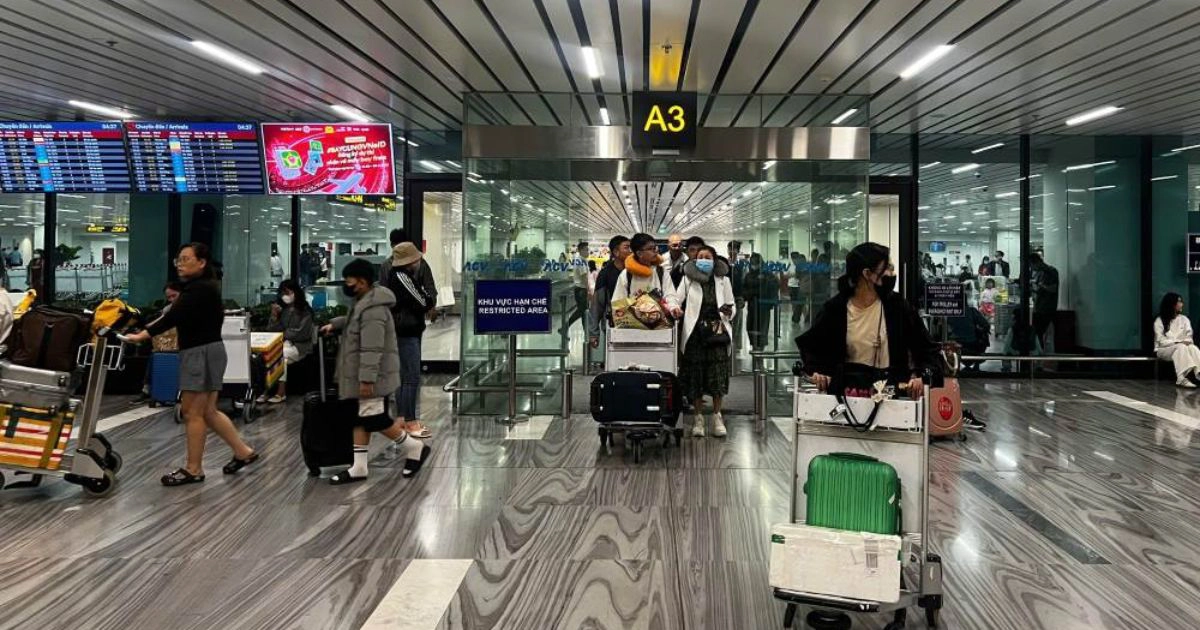
Tan Son Nhat International Airport - Source: Bao Tuoi Tre
After ten days of traveling from Northern to Southern Vietnam, it is time to pack your luggage and say goodbye. Memories of the country’s breathtaking landscapes and diverse cultures will remain with you long after the journey ends.
Your driver and guide will meet you in the hotel lobby and transfer you directly to Tan Son Nhat International Airport for check-in. Your ten-day journey across Vietnam comes to a fulfilling end, leaving you with countless unforgettable experiences.
>> Explore more: Cu Chi Tunnels Tour: A Thrilling Dive into Vietnam's Hidden History
4. FAQs About Vietnam Travel Itinerary 10 Days
4.1. How far in advance should I book domestic flights and hotel rooms?
During the low season, booking one to three months in advance is usually enough to secure a suitable itinerary and the best available rates. However, during peak travel periods such as public holidays, Tet, or the summer months, you should book three to six months ahead to avoid sold-out flights and fully booked hotels.
4.2. What type of power plug should I prepare for a trip across Vietnam?
Vietnam uses a standard electrical supply of 220V at 50Hz. The most common socket types are Type A, with two flat pins, and Type C, with two round pins. To charge your phone or laptop conveniently throughout the trip, simply bring a universal travel adapter.
4.3. Should I prioritize paying by cash or credit card during the trip?
You should use a combination of both payment methods throughout your trip. Credit cards such as Visa and Mastercard are convenient for larger expenses at hotels, shopping malls, and upscale restaurants. Cash is still essential for shopping at local markets, buying street food, paying for taxis, and leaving tips.
This Vietnam travel itinerary 10 days promises a complete and rewarding journey across the country. From the majestic natural heritage of Ha Long Bay and the romantic charm of Hoi An Ancient Town to the vibrant pace of life in Saigon, the itinerary brings together some of Vietnam’s most memorable experiences.
We hope these recommendations will make it easier for you to prepare for your trip. Contact Joytime: VietnamTravel today and turn your dream journey into reality!
|
Joytime Travel Agency - Travel JOY, TIMEless Vietnam Safe, Seamless, Satisfying, Sustainable Follow us for travel tips, local insights, and exclusive offers:
|
Danish Nguyen
Danish Nguyen is a renowned travel blogger in Vietnam with over 5 years of experience sharing unique travel experiences. With a passion for exploring new places, Danish captures incredible moments and provides readers with valuable tips to discover the beauty of his homeland.