









8 Must-Visit Spots At Imperial Citadel Of Thang Long
Located in the heart of historic Hanoi, the imperial citadel of Thang Long stands as a vivid testament to 13 centuries of Vietnam’s glorious history. If you are planning to explore this priceless World Heritage Site, this guide is exactly what you need. Join Joytime Travel on a journey through time to decode ancient architecture and get the latest tips for your visit.
1. Overview Of The Imperial Citadel Of Thang Long – A 13-Century Journey Through Time
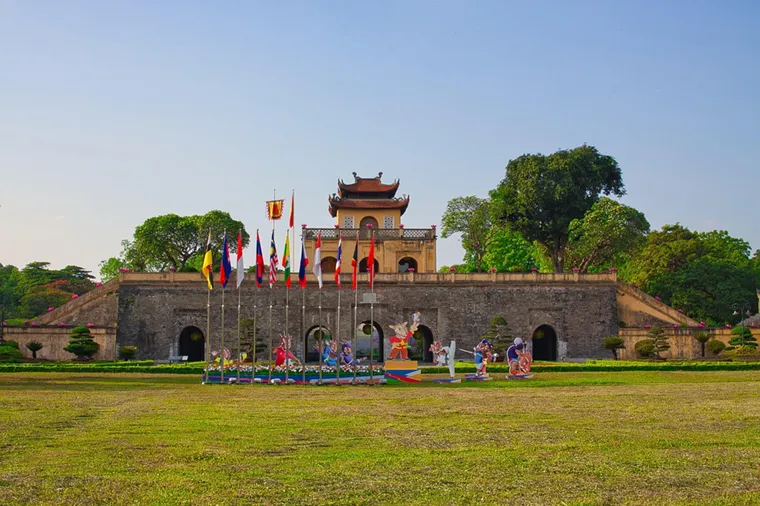
Imperial Citadel of Thang Long - Source: Valeria Drozdova
The main visitor entrance is located at 19C Hoang Dieu Street, Ba Dinh District, Hanoi. The central complex is bordered by four major roads: Hoang Dieu, Dien Bien Phu, Nguyen Tri Phuong, and Phan Dinh Phung.
Its location in the heart of the capital makes it easy to combine the visit with nearby attractions. The Ho Chi Minh Mausoleum is about one kilometer away, while the Hanoi Flag Tower is located directly beside the site and can be explored during the same outing.
The heritage site operates on two separate schedules, serving independent daytime visitors as well as guests joining an in-depth nighttime tour:
-
Daytime visits: Open from 8:00 AM to 5:00 PM every day of the week.
-
“Decoding the Imperial Citadel” night tour: Runs from 7:00 PM to 8:30 PM (Only on Friday and Saturday evenings).
The site management provides separate parking areas to ensure security and convenience for both independent travelers and large tour groups:
-
Motorbikes: The parking area is located inside the grounds near the entrance at 19C Hoang Dieu Street, right beside the ticket counter.
-
Cars and coaches: Vehicles with fewer than 16 seats may park along Hoang Dieu Street. Larger coaches are directed by staff to an additional parking area on Hoang Van Thu Street to help prevent local traffic congestion.
The heritage site preserves several outstanding archaeological and historical values supported by tangible evidence:
-
Continuous historical development: A cultural layer extending 4.5 meters underground contains overlapping layers of artifacts, providing evidence of uninterrupted development since the 7th century.
-
Center of national power: The citadel served as the political and military headquarters from which the Ly, Tran, and Early Le dynasties governed the country.
-
Cultural exchange: Architectural remains and ceramics clearly reflect the interaction between indigenous Vietnamese culture and influences from Chinese and Champa cultures.
On August 1, 2010, UNESCO officially recognized the Central Sector of the Imperial Citadel of Thang Long as a World Cultural Heritage Site. The nomination was approved because the site met strict criteria as tangible evidence of a long-standing center of political power. This recognition strengthened Hanoi’s position as a cultural tourism destination and established a rigorous legal protection framework for the 18,000-square-meter core heritage area.
>> Explore more: Top 8 Hanoi Boat Tours: Best Scenic Cruise Experiences from Hanoi
2. Map Of 8 Must-Visit Check-In Spots In The Imperial Citadel Of Thang Long Complex
The Imperial Citadel of Thang Long brings together imperial architecture, archaeological remains, military structures, and important revolutionary sites. Exploring Ha Noi capital becomes more convenient with a clear map of the complex. The following route highlights seven historic landmarks and one signature night experience for a well-planned visit and memorable photo opportunities.
2.1. Hanoi Flag Tower
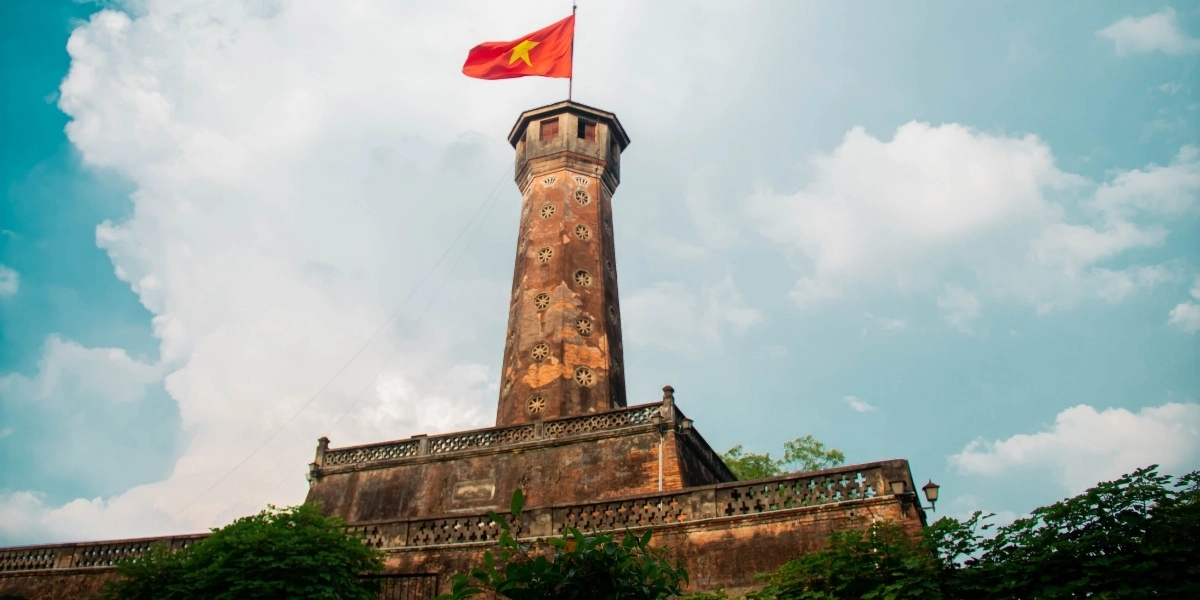
Hanoi Flag Tower historical landmark - Source: Tu Chu
Completed in 1812 under Emperor Gia Long, Hanoi Flag Tower stands on the former site of Tam Mon Gate, which marked the outer southern entrance to the Forbidden City during the Le dynasty. From this point, the former royal route extended northward through Doan Mon Gate to Kinh Thien Palace, the political and ceremonial center of the imperial complex.
The tower was one of the few structures to survive the demolition of Hanoi Citadel by the French colonial administration between 1894 and 1897. It was later used as an observation post by both French troops and Vietnamese air defense forces. On October 10, 1954, the Vietnamese national flag was raised here during the capital’s liberation ceremony. Its historic brick surfaces, monumental platforms, and prominent national flag now make it one of Hanoi’s most recognizable check-in locations.
Notable features:
-
Three square platforms gradually decreasing in size toward the top.
-
An 18.2-meter octagonal tower containing a 54-step spiral staircase.
-
A total height of 41.4 meters when measured to the top of the flagpole.
.webp)
2.2. Doan Mon Gate
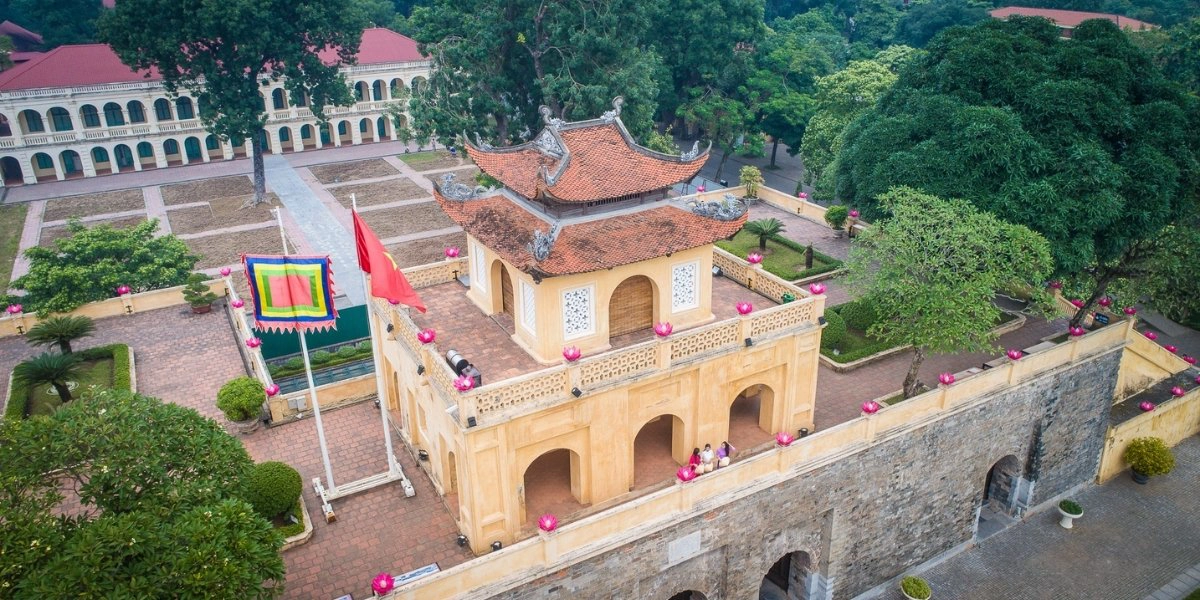
Doan Mon imperial gate - Source: Hoang Thanh Thang Long
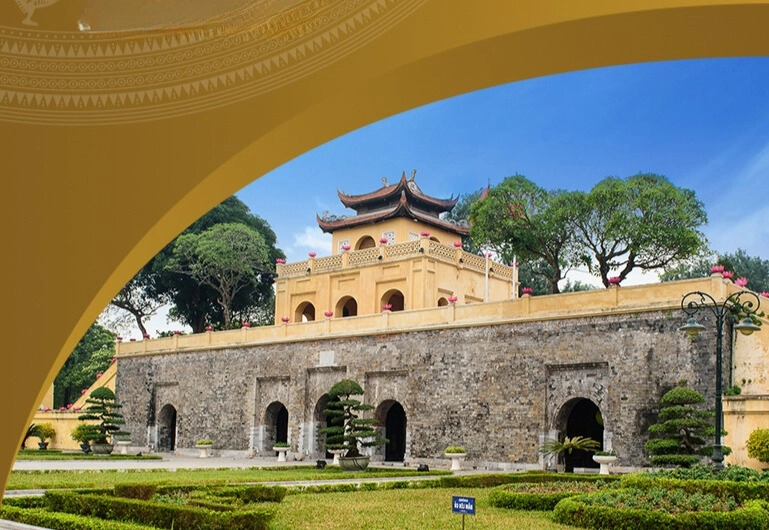
Doan Mon was the main southern entrance to the Forbidden City, an enclosed area reserved for the emperor, royal family, and senior court officials. Based on its materials and architectural style, the existing structure was primarily built during the Le dynasty and later restored under the Nguyen dynasty. It stands directly on the central axis connecting Hanoi Flag Tower with Kinh Thien Palace.
The gate measures approximately 47.5 meters from east to west and features five arched entrances. The largest central entrance was reserved exclusively for the emperor, while the four smaller passages were used by mandarins and members of the royal family. Excavations conducted beneath Doan Mon in 1999 revealed a Le-period courtyard at a depth of about 1.2 meters and a Tran-period road paved with decorative flower-shaped bricks at approximately 1.9 meters.
Notable features:
-
Five balanced arched entrances built primarily from stone and large bricks.
-
A central stone plaque bearing the Vietnamese name “Doan Mon.”
-
An elevated pavilion with traditional curved roofs and decorative dragon motifs.
>> Explore more: Best Day Tours from Hanoi: Top Day Trips You Can't Miss
2.3. Kinh Thien Palace
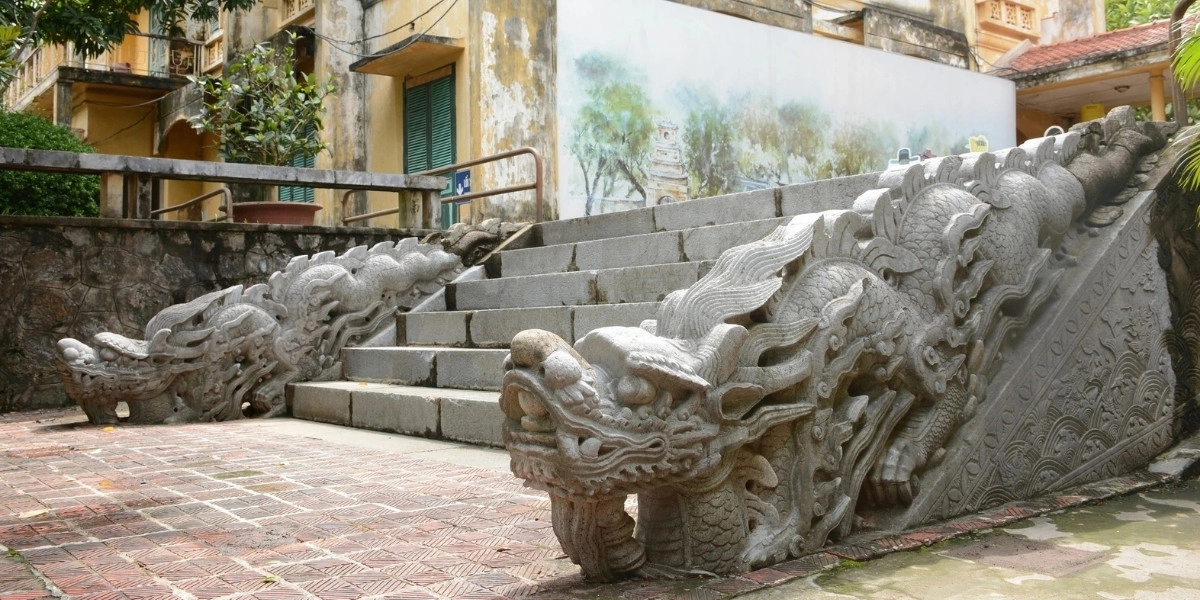
Kinh Thien palace foundation - Source: Hoang Thanh Thang Long
Kinh Thien Palace was constructed in 1428 under Emperor Le Thai To and later completed during the reign of Emperor Le Thanh Tong. It occupied the most important position within the Forbidden City, on the former site of Can Nguyen and Thien An palaces from the Ly and Tran dynasties. The palace hosted royal audiences, diplomatic receptions, major ceremonies, and discussions concerning important state affairs.
The original wooden structure no longer exists due to repeated changes during the Nguyen and French colonial periods. Today, visitors can see the elevated palace foundation and the stone staircases on its southern and northern sides. The platform measures approximately 57 meters long, 41.5 meters wide, and 2.3 meters high. The southern staircase is divided into three paths by four stone dragons, while the smaller northern staircase features dragons created during the Later Le period.
Notable features:
-
Five-clawed stone dragons carved in 1467 during the early Le dynasty.
-
Detailed decorations featuring clouds, flames, lotus flowers, and water patterns.
-
A raised platform that reveals the former palace’s impressive scale and central position.
2.4. Hau Lau, Also Known As Tinh Bac Pavilion
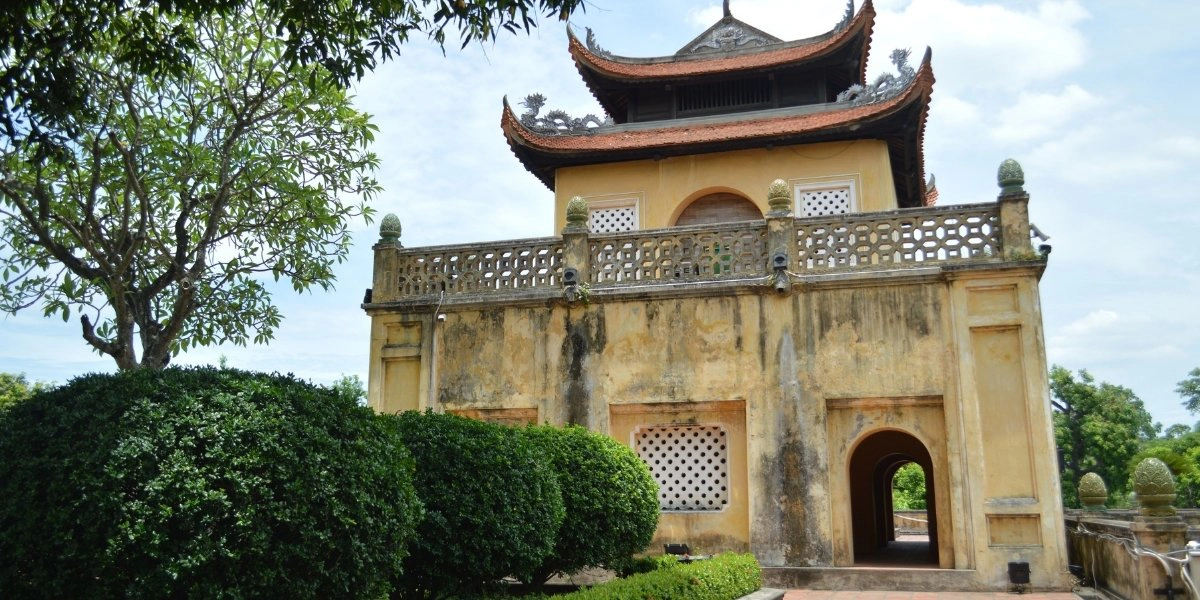
Hau Lau pavilion - Source: Valeria Drozdova
Hau Lau was built in October 1821 under Emperor Minh Mang and was originally named Tinh Bac Pavilion. The name expressed the emperor’s hope that the northern region would remain peaceful and stable. Recent official research identifies the building as a Daoist religious structure where the Nguyen court performed ceremonies and prayed for peace, prosperity, and the well-being of the population in northern Vietnam.
The familiar names Princess Palace and Princess Pagoda appeared later, particularly in records produced after the French occupation of Hanoi Citadel. The French converted the building into a defensive post and later added several European elements. Archaeological excavations around Hau Lau also uncovered a Le-period landing, an ancient well, lotus-shaped stone bases, and royal ceramics. These discoveries suggest that the surrounding area had previously been connected to royal residences and daily palace life.
Notable features:
-
A multi-storey brick structure with layered roofs and curved corners.
-
A combination of traditional Nguyen architecture and later French modifications.
-
Archaeological remains associated with earlier royal buildings beneath the surrounding area.
2.5. North Gate
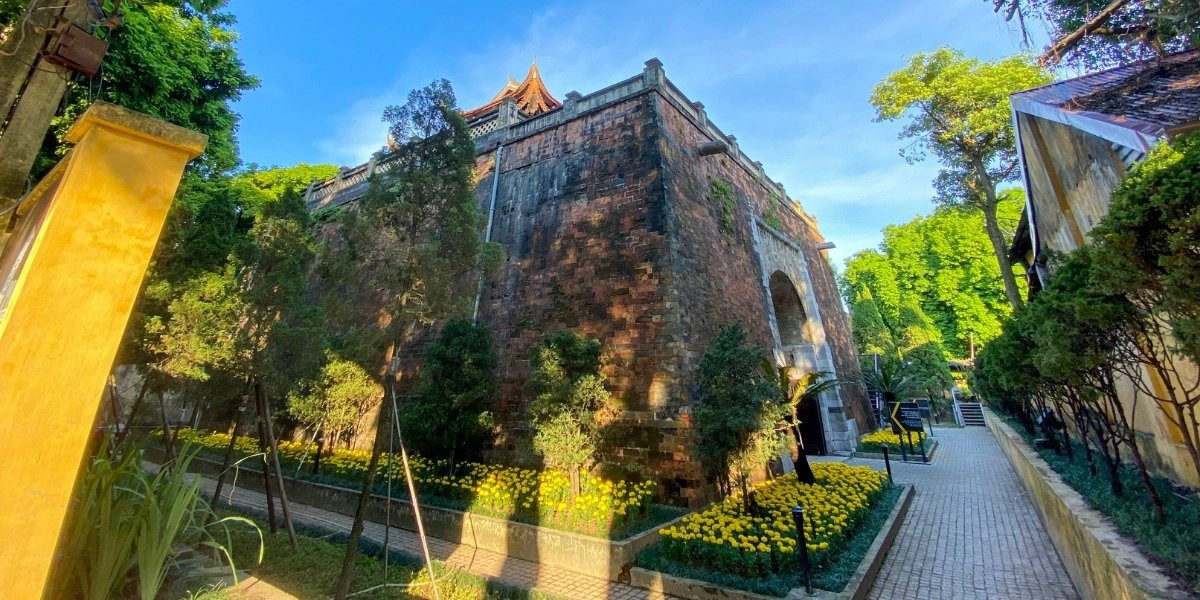
Chinh Bac Mon gate - Source: Hoang Thanh Thang Long
North Gate, officially known as Chinh Bac Mon, was constructed in 1805 on the former site of a northern gate from the Le dynasty. It is the only surviving gateway of Hanoi Citadel built under the Nguyen dynasty. The gate formed part of a Vauban-style defensive system that included thick walls, a surrounding moat, observation posts, and controlled entrances into the fortress.
The structure measures approximately 8.71 meters high and 17.08 meters wide, with walls around 2.48 meters thick. A traditional wooden watchtower stands above the massive brick and stone gateway. Two cannonball marks from the French attack on Hanoi in 1882 remain visible on the exterior wall. The upper pavilion now contains a memorial dedicated to Governors Nguyen Tri Phuong and Hoang Dieu, who died while defending Hanoi Citadel during the French attacks of 1873 and 1882.
Notable features:
-
A stone plaque inscribed with the Chinese characters “Chinh Bac Mon.”
-
Two preserved cannonball marks associated with the 1882 French attack.
-
A wooden watchtower with double-layered roofs overlooking Phan Dinh Phung Street.
>> Explore more: Top Hanoi City Tours - Culture, History, Local Experiences
2.6. House D67 And The Underground Bunker
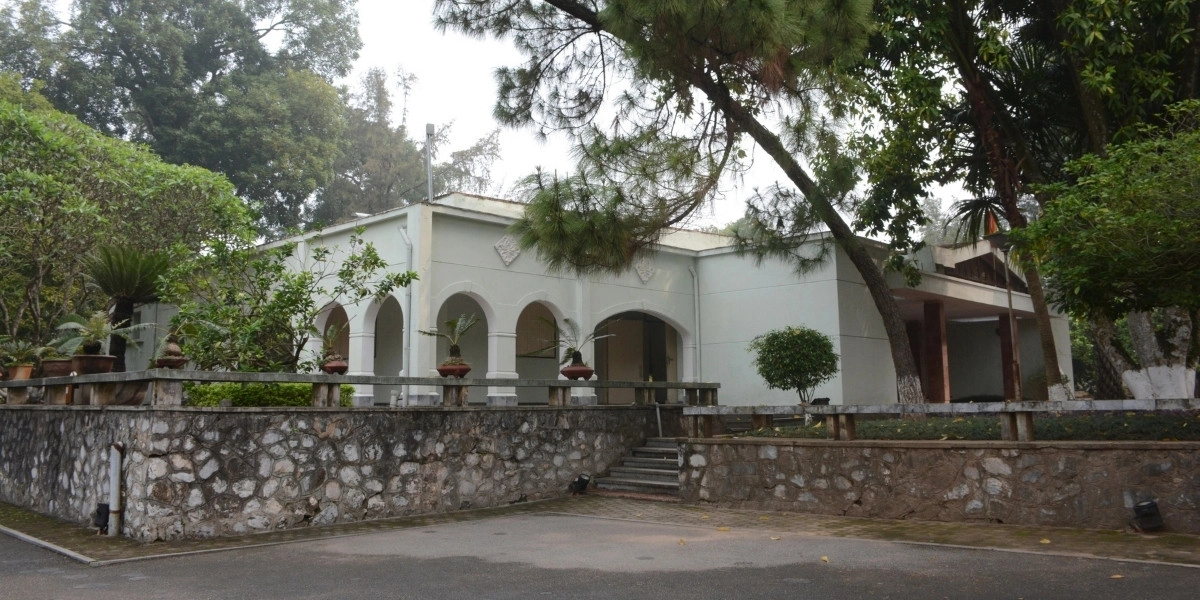
House D67 military headquarters - Source: Dan Tri
House D67 was constructed in 1967 behind the former Kinh Thien Palace as a protected headquarters for Vietnam’s senior political and military leaders. From 1968 to 1975, the building hosted important meetings of the Politburo, Central Military Commission, and Ministry of National Defense. Strategic decisions related to major military campaigns and the liberation of southern Vietnam were discussed within this complex.
The one-storey building covers approximately 604 square meters and was constructed from reinforced concrete. It contains a central meeting room, a break room, and former offices associated with Generals Vo Nguyen Giap and Van Tien Dung. Two stairways connect the building to the underground bunker, located approximately 10 meters below ground. The bunker includes meeting, communications, and air filtration rooms, together with independent electrical, ventilation, and emergency systems.
Notable features:
-
Exterior walls measuring approximately 0.6 meters thick.
-
A multilayered roof containing reinforced concrete and protective sand.
-
Thick steel doors designed to resist blast waves, water, and toxic gases.
2.7. 18 Hoang Dieu Archaeological Site
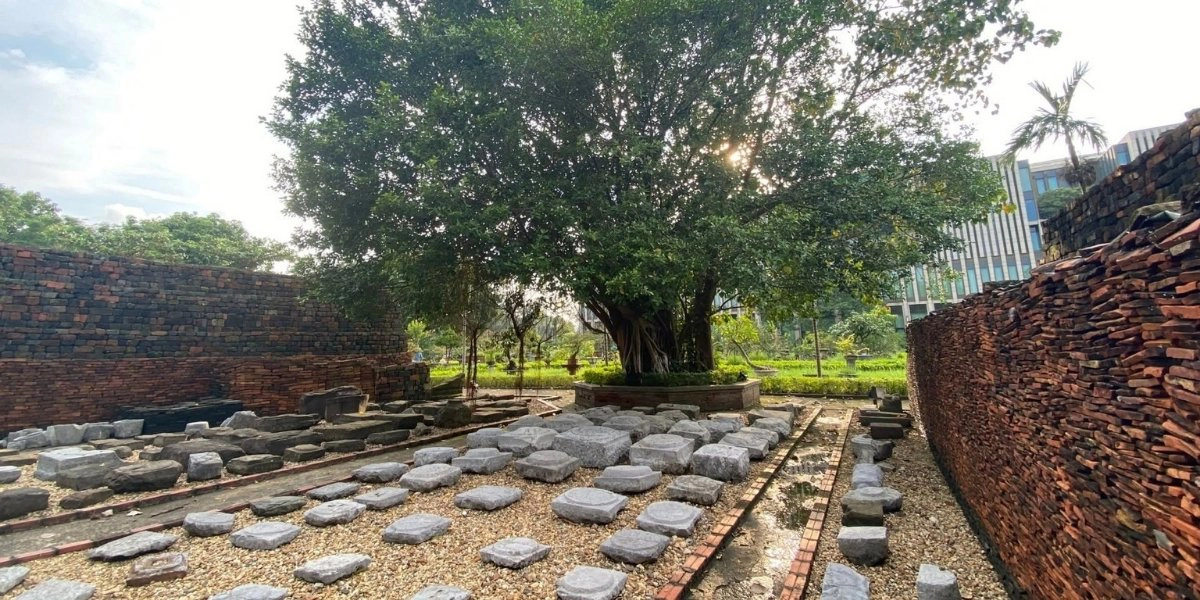
Thang Long archaeological site - Source: Hoang Thanh Thang Long - Imperial Citadel of Thang Long
The 18 Hoang Dieu Archaeological Site was discovered during excavations beginning in December 2002, when the area was being prepared for the construction of Vietnam’s new National Assembly building. Approximately 19,000 square meters were excavated between 2002 and 2004, revealing overlapping architectural and cultural layers spanning around 1,300 years of history.
The lowest layers contain wooden columns, wells, foundations, and drainage systems from the Dai La period. Above them are palace foundations, gravel-filled pillar bases, lotus-shaped stone bases, courtyards, and decorative roof materials from the Ly and Tran dynasties. The upper layers include Le-period brick foundations, glazed roof tiles decorated with five-clawed dragons, and royal ceramics. The site was divided into four main archaeological areas, known as A, B, C, and D, each containing different palace and residential remains.
Key archaeological finds:
-
Foundations of large royal buildings and smaller hexagonal structures.
-
Ancient wells, waterways, courtyards, and sophisticated drainage systems.
-
Imperial ceramics, glazed roof tiles, gold ornaments, and architectural decorations.
.webp)
2.8. The Night Tour: Decoding The Imperial Citadel Of Thang Long
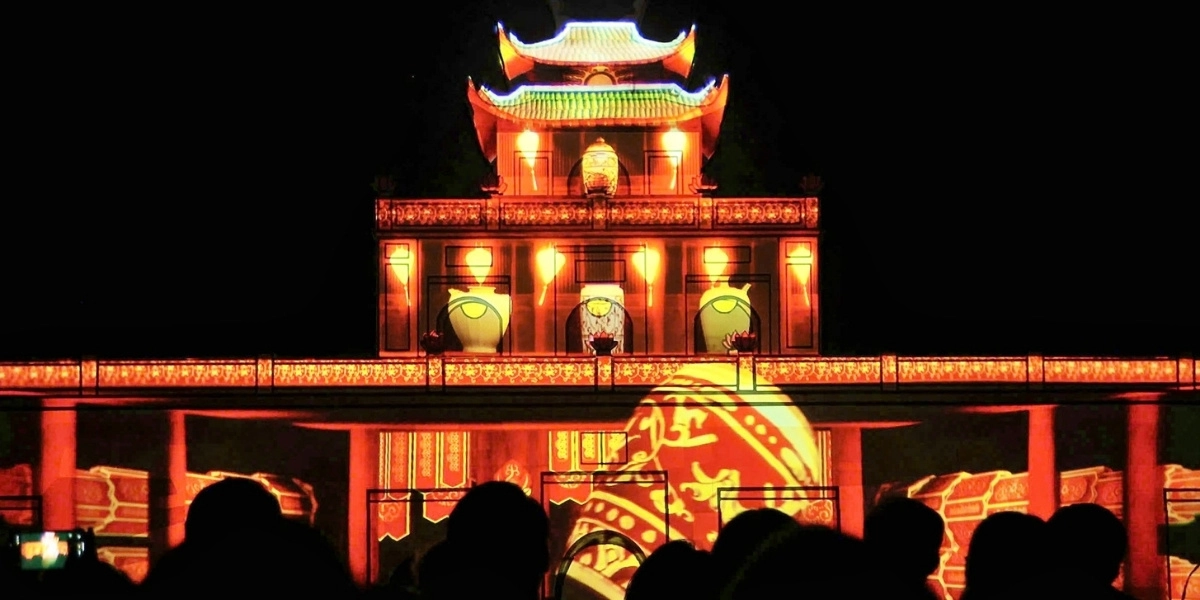
Imperial Citadel night tour - Source: Tap chi Cong dan va Khuyen hoc
The night tour offers a more immersive way to explore the Imperial Citadel through theatrical performances, lighting, historical exhibitions, and interactive activities. The approximately 90-minute journey normally begins at Doan Mon Gate and continues through the exhibition rooms, Kinh Thien Palace, and the archaeological area. Participants are encouraged to arrive at the entrance at 19C Hoang Dieu at least 15 minutes before departure.
The tour is normally scheduled for 7:00 p.m. every Friday and Saturday. The official listed price is VND 300,000 per adult, with discounted tickets for children. In addition to the regular tour, the citadel has introduced a separate 3D mapping show titled “Kinh do Thang Long". Visitors should confirm whether this performance is included in their selected ticket package when making a reservation.
Main experiences:
-
Watching an art performance above the archaeological glass floor at Doan Mon.
-
Visiting historical exhibitions and offering incense at Kinh Thien Palace.
-
Decoding artifacts with laser effects before enjoying lotus tea and royal-style preserves.
>> Explore more: 15+ Best Food in Hanoi You Must Try: Detailed Suggested Culinary Guide
3. Practical Guide To Visiting The Imperial Citadel Of Thang Long Hanoi
To enjoy a smooth and well-organized visit to the Imperial Citadel as part of your Hanoi tour, travelers should familiarize themselves with the site’s regulations, ticket prices, and available services. The practical information below has been compiled in detail to help you plan your visit and make the most of your itinerary.
3.1. Latest Ticket Price Updates
Latest ticket prices - Source: Hoang Thanh Thang Long
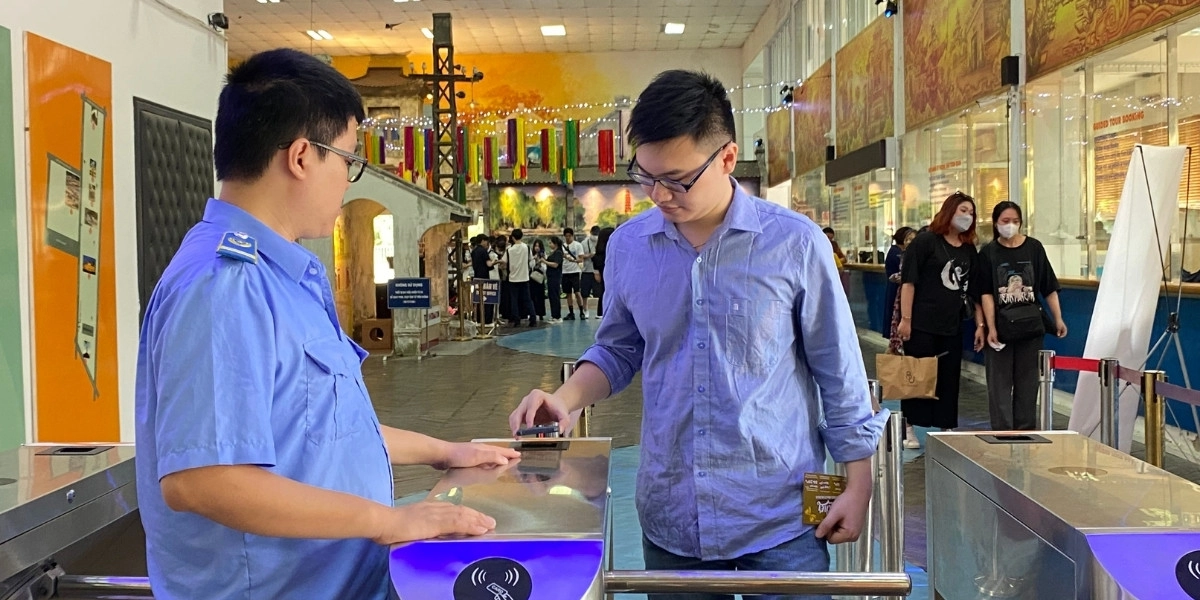
The site management has introduced a new ticket pricing structure to support conservation work and daily operations. Visitors can review the rates below to plan their budget accordingly.
Tickets can be purchased directly at the counter near the entrance at 19C Hoang Dieu Street or paid for online through the official website. Ticket categories are clearly defined to ensure appropriate benefits for each eligible group:
-
Standard ticket (VND 100,000 per person): The regular admission fee applies equally to adult Vietnamese and international visitors.
-
50% discounted ticket (VND 50,000 per person): Available to students aged 16 and above with a valid student card, Vietnamese citizens over 60, and people recognized for their contributions to the revolution.
-
Free admission: Available to children under 16, school students under 1.3 meters tall, and people with particularly severe disabilities.
3.2. Dress Code And Personal Considerations
Visitor dress and health tips - Source: Hoang Thanh Thang Long - Imperial Citadel of Thang Long
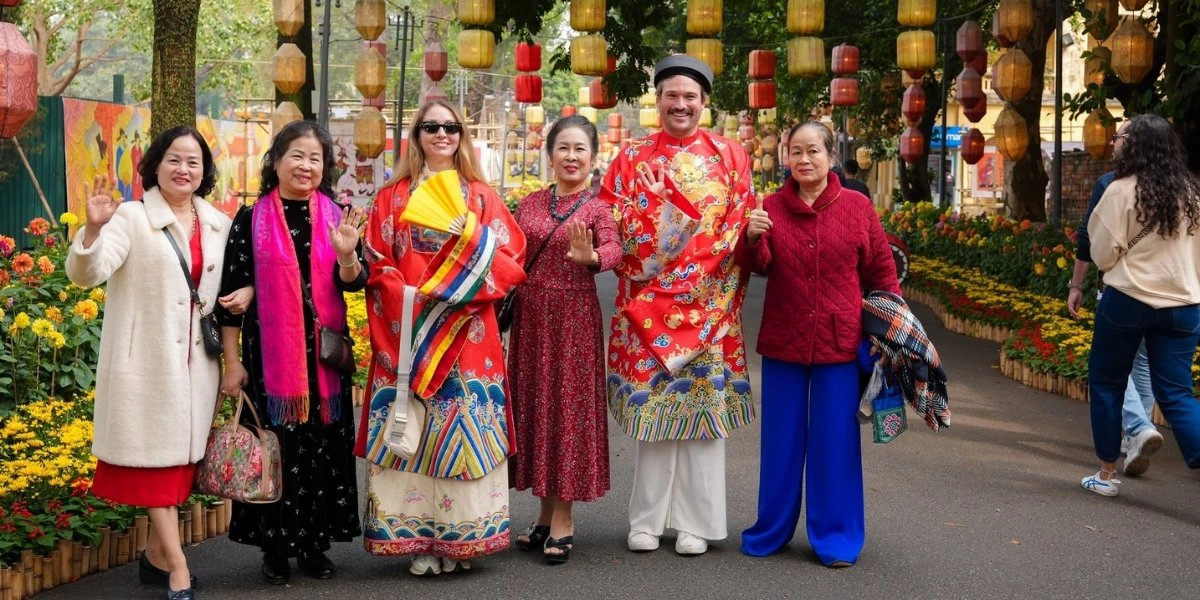
The Imperial Citadel of Thang Long has strict standards of conduct for visitors. You should follow the dress requirements and prepare physically for an extended walking route.
Recommended clothing:
-
Wear a sleeved top and trousers or a skirt that covers the knees when offering incense at Kinh Thien Palace.
-
Choose sneakers or flat shoes, as the walking route through the archaeological areas and palace grounds covers approximately 2 to 3 kilometers.
Health considerations:
-
Bring a hat, sun umbrella, and personal drinking water, as most of the heritage site is outdoors.
-
Consider purchasing an electric shuttle ticket for VND 15,000 per ride if your group includes older visitors or young children. This can help save both time and energy.
3.3. Support Services: Tour Guides And Souvenir Shopping
Tour guide services - Source: Hoang Thanh Thang Long - Imperial Citadel of Thang Long
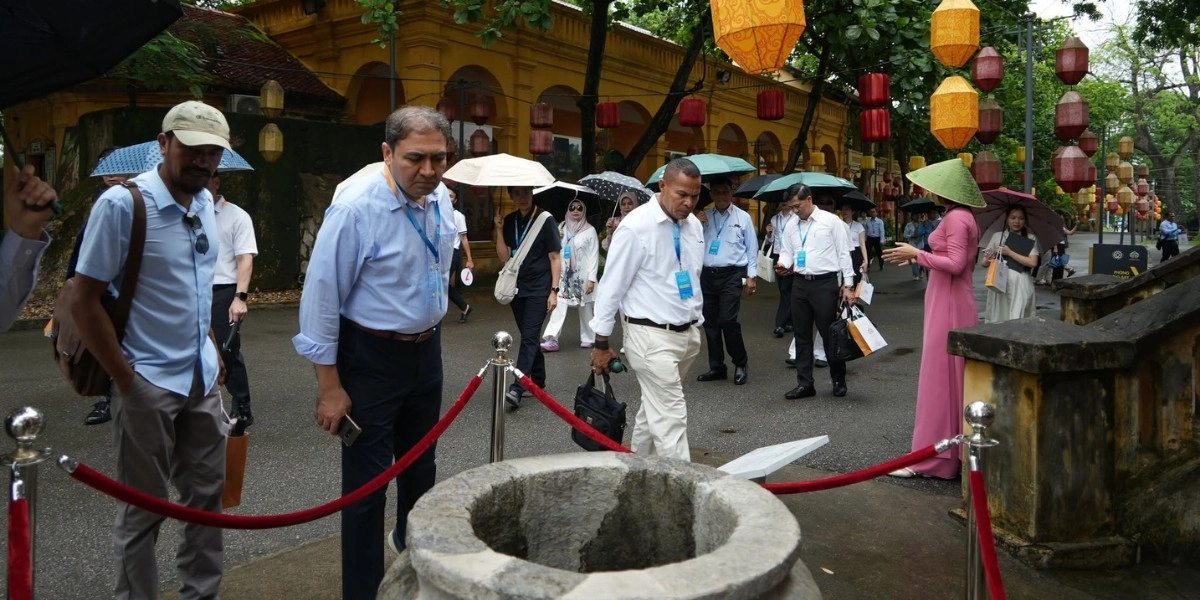
The site management provides several visitor services near the main entrance at 19C Hoang Dieu Street. Travelers can register directly at the information counter.
Hire a tour guide or use the Audio Guide:
-
Hire an on-site guide for VND 150,000 to VND 300,000 per group to receive live commentary along the standard 90-minute sightseeing route.
-
Scan the QR codes on information boards to access the free Audio Guide, which is available in five languages: Vietnamese, English, French, Japanese, and Korean.
Shop for souvenirs:
-
The souvenir shop is located beside the exit and specializes in publications and handcrafted products exclusive to the Imperial Citadel.
-
Recommended gifts include royal tea, candied lotus seeds, bronze seals, and replicas of Ly Dynasty dragon heads.
4. FAQs When Visiting The Imperial Citadel Of Thang Long
4.1. How Much Time Do You Need To Fully Explore The Heritage Site?
To explore the entire central architectural axis and the archaeological site at 18 Hoang Dieu during the day, you should allow approximately 2 to 3 hours. For visitors joining the “Decoding the Imperial Citadel” night tour, the itinerary lasts exactly 90 minutes.
4.2. Are Audio Guides Or On-Site Tour Guides Available?
Yes, the site management provides both services near the main entrance:
-
On-site tour guide: Register directly at the information counter. The listed fee ranges from VND 150,000 to VND 300,000 per group.
-
Audio Guide: Scan the QR codes on the information boards to access the service free of charge. It is available in five languages.
4.3. Does The Imperial Citadel Of Thang Long Offer Any Evening Activities Outside Regular Opening Hours?
Yes. The heritage site offers an immersive experience called the “Decoding the Imperial Citadel of Thang Long” night tour. It is held only on Friday and Saturday evenings, running from 7:00 PM to 8:30 PM.
A journey through the Imperial Citadel of Thang Long allows you to experience 13 centuries of history at the heart of Vietnam’s former political power. Its archaeological remains and ancient architecture offer an invaluable insight into the country’s rich cultural heritage.
To make the most of your itinerary and discover the site’s historical stories in greater depth, contact Joytime: Vietnam Travel to book your tour today. We are always ready to accompany you on your journey!
|
Joytime Travel Agency - Travel JOY, TIMEless Vietnam Safe, Seamless, Satisfying, Sustainable Follow us for travel tips, local insights, and exclusive offers:
|

Danish Nguyen
Danish Nguyen is a renowned travel blogger in Vietnam with over 5 years of experience sharing unique travel experiences. With a passion for exploring new places, Danish captures incredible moments and provides readers with valuable tips to discover the beauty of his homeland.