









Bai Dinh Pagoda Ninh Binh: Complete Visitor Guide 2026
Located in Vietnam’s ancient capital region, Bai Dinh Pagoda Ninh Binh is a vast spiritual complex renowned for its record-breaking architecture. Beyond its sacred historical significance, it offers a tranquil setting for sightseeing and reflection. This guide from Joytime Vietnam Travel provides a well-planned sightseeing route and practical transportation tips for a complete visit.
1. Bai Dinh Pagoda Ninh Binh: One of Vietnam’s Leading Spiritual Destinations
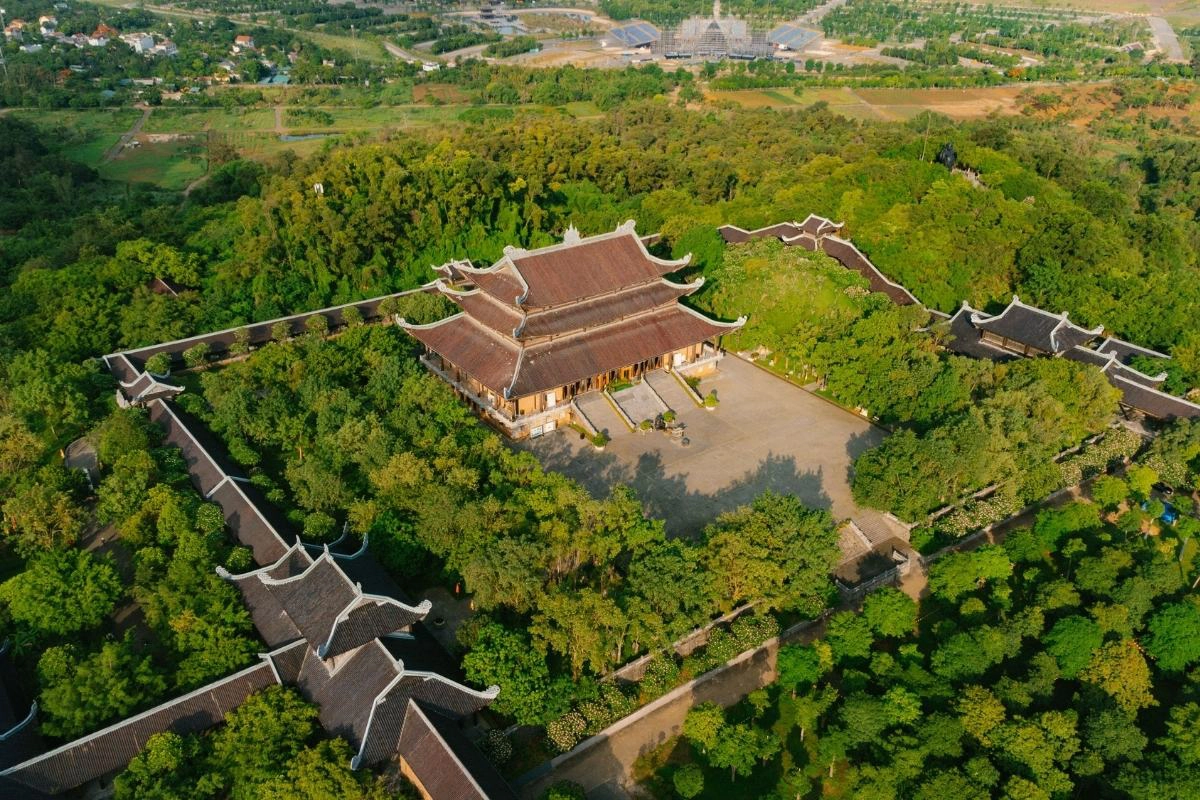
Bai Dinh Pagoda location - Source: HONG SON
The pagoda complex has been recognised as one of the largest spiritual tourism destinations in the region. Below is an overview of its location and the history behind the development of this sacred Buddhist site.
1.1. Location and Record-Breaking Achievements in Asia
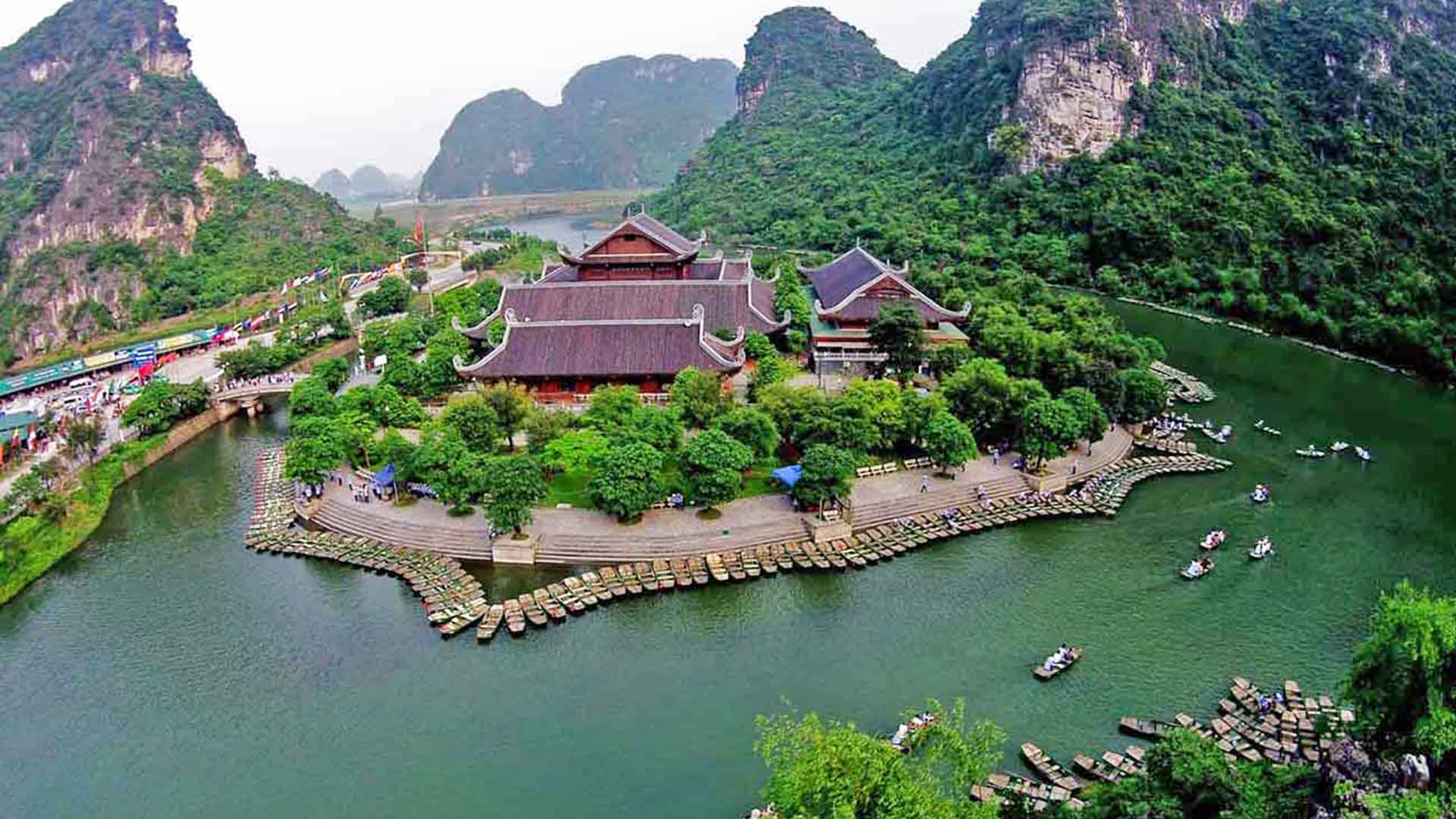
Bai Dinh Pagoda is located within the Trang An Scenic Landscape Complex, beside National Highway 38B in Tay Hoa Lu Ward, formerly Gia Sinh Commune in Gia Vien District, Hoa Lu City, Ninh Binh Province. The pagoda is approximately 95 kilometres from Hanoi, and the journey takes just over two hours. It also lies about 15 kilometres west of central Ninh Binh. The impressive scale of the complex is demonstrated by several remarkable records:
- The longest Arhat corridor in Asia.
- The largest gilded bronze Buddha statue in Asia.
- The largest bronze bell in Vietnam.
- The largest Jade Well in Vietnam.
1.2. Through the Centuries: From an Ancient Pagoda to a Magnificent Complex
The origins of this destination can be traced back to an ancient pagoda that is more than 1,000 years old. It was founded by Zen Master Nguyen Minh Khong during the Ly Dynasty. The site once served as a centre for traditional medicine, where the monk treated local people. It was also used by Emperor Dinh Tien Hoang to perform rituals and pray for peace and prosperity throughout the nation, giving the destination a rich and enduring historical foundation.
In 2003, a major restoration and expansion project began on a vast area of land next to the ancient pagoda. The new complex was carefully planned to accommodate the millions of visitors who come each year for worship, pilgrimage, and sightseeing. This development has transformed Bai Dinh Pagoda into a thriving centre of Buddhism.
>> Explore more: Ninh Binh Vietnam Things to Do: From Ancient Temples to Epic Views

2. A Three-Stage Walking Route Through Bai Dinh Pagoda
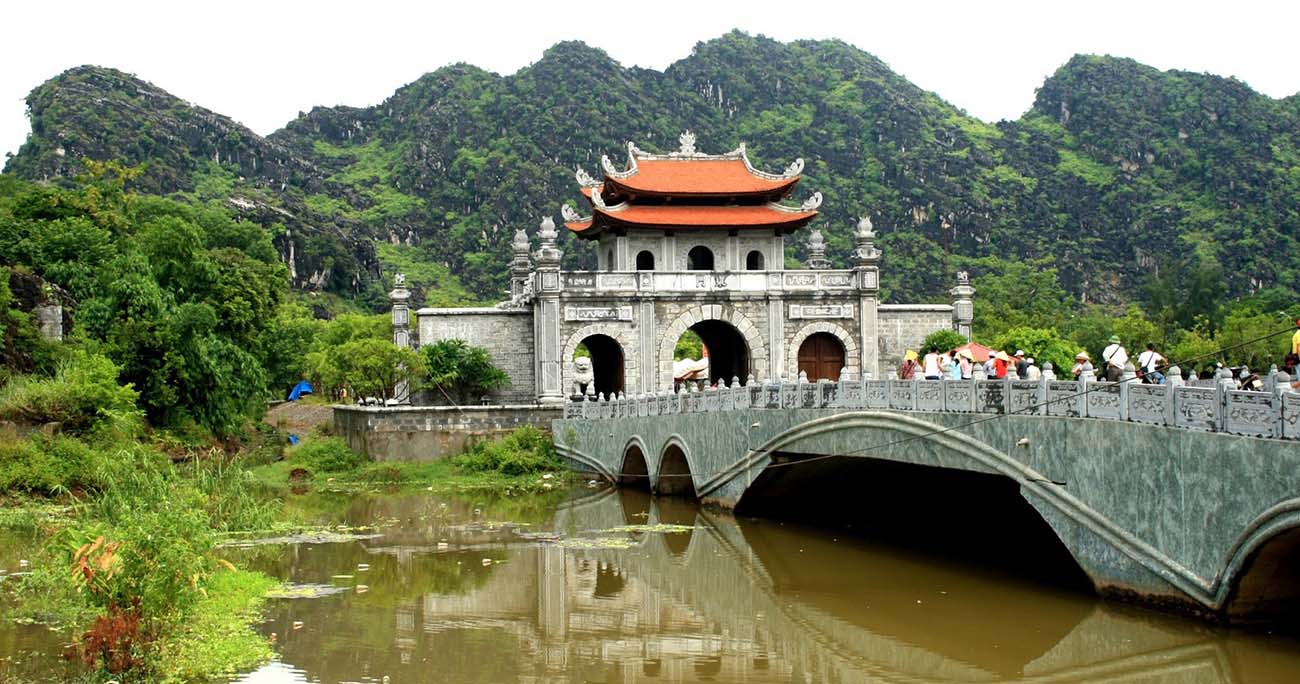
For a smooth and less tiring sightseeing trip to Bai Dinh Pagoda in Ninh Binh, visitors should explore the complex from the lower area upward. The practical three-stage itinerary below will help you visit all its magnificent architectural landmarks without missing any highlights.
2.1. Stage 1: Tam Quan Gate, Arhat Corridor, and Bell Tower
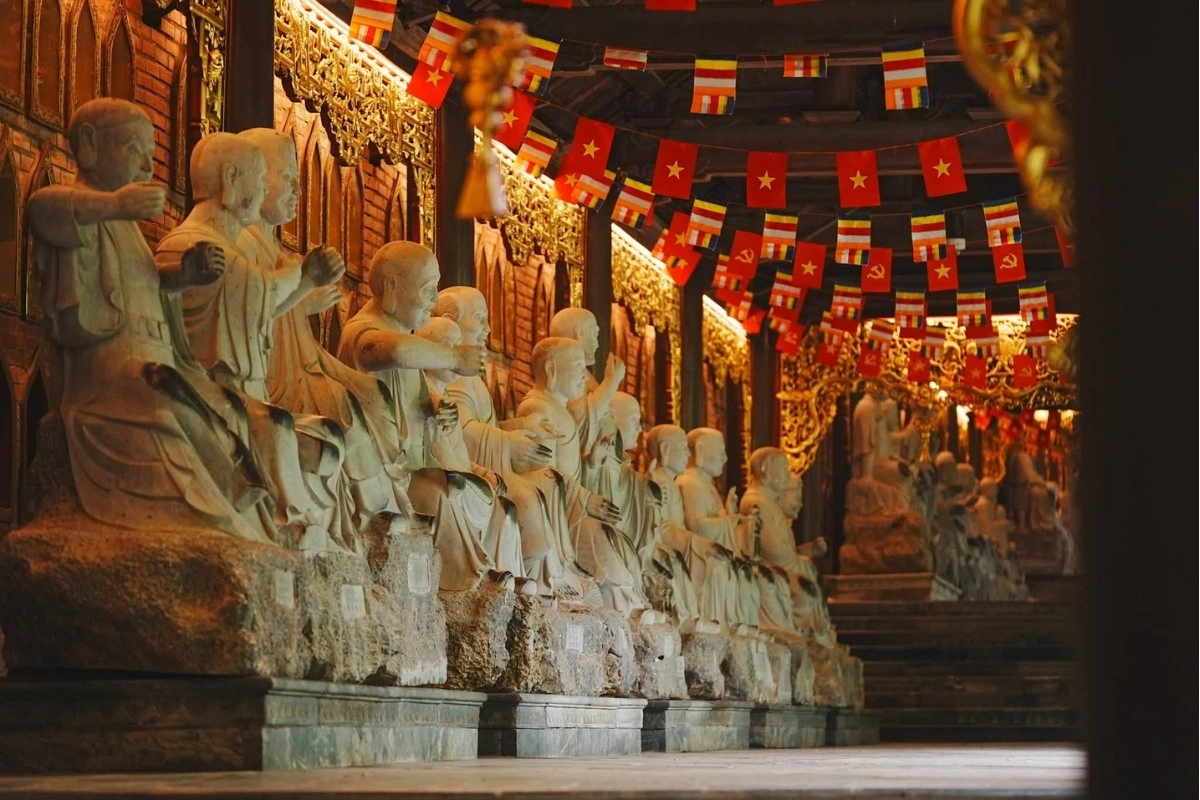
Arhat Corridor - Source: FB Chua Bai Dinh
The first stage leads visitors from the secular world into the magnificent Buddhist complex. The path is shaded by lush trees, relatively flat, and easy to walk. From a tour guide’s perspective, this is one of the best areas to admire the exceptional stonework and traditional woodcarving skills of Vietnamese artisans.
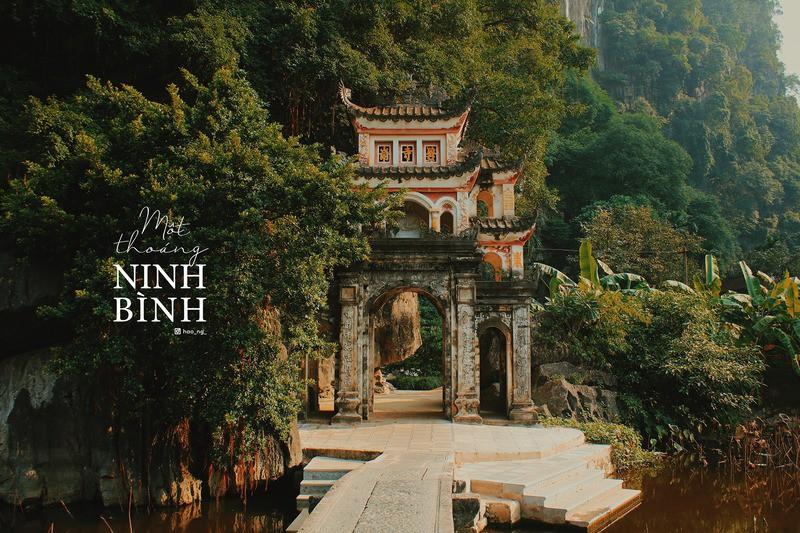
- Tam Quan Gate: The main highlight is its four massive pillars made from premium hardwood, each standing nearly 14 metres tall. On either side are two enormous bronze Dharma Protector statues, each weighing 12 tonnes. Seated on blue-stone pedestals, they project a commanding presence as guardians of this sacred site.
- Arhat Corridor: The corridor showcases remarkable craftsmanship through 500 hand-carved blue-stone Arhat statues, each featuring a unique facial expression. As you walk along the corridor, look up at the enormous wooden beams and columns, and feel the natural coolness radiating from the stone slabs.
- Bell Tower: In addition to its Great Bell, the tower features an impressive four-metre-long bell striker made from sến hardwood. Directly beneath the bell, visitors can also admire a giant bronze drum decorated with intricate motifs inspired by the famous Dong Son bronze drums.
>> Explore more: What to See in Ninh Binh: Hidden Gems Beyond Tourist Traps
2.2. Stage 2: Avalokitesvara Hall, Dharma Lord Hall, and Three Periods Hall
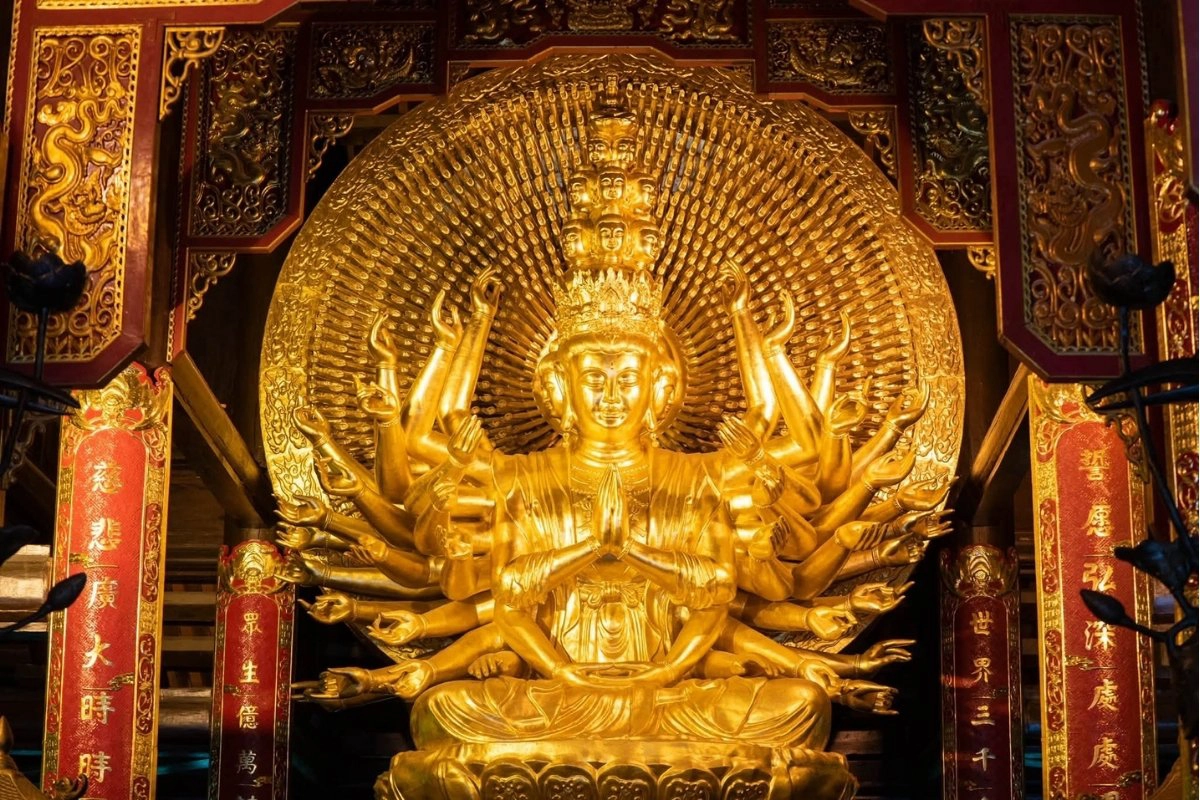
Quan Am Hall - Source: FB Chua Bai Dinh
As you make your way deeper into the heart of the complex, the route becomes more challenging, with steep stone steps leading to the three main worship halls. Vast courtyards separate the halls from one another. This area showcases masterpieces of solid bronze casting, leaving visitors in awe of the magnificent yet contemplative worship spaces filled with the fragrance of incense.
- Quan Am Hall: The entire system of columns and beams is made from durable sen hardwood. The main highlight is the statue of Quan Am, the Bodhisattva of Compassion. A closer look reveals a finely carved wisdom eye in the palm of each hand.
- Phap Chu Hall: The visual centrepiece is the majestic statue of Shakyamuni Buddha seated on a lotus throne. Surrounding it are wooden altars intricately carved with motifs of the Four Sacred Animals. A pair of enormous bronze cranes flanks the statue, adding to the hall’s deeply solemn atmosphere.
- Tam The Hall: Located on the highest hill, this hall houses three Buddha statues representing the Past, Present, and Future. Behind each statue is a bronze relief shaped like a Bodhi leaf and weighing 1.5 tonnes, glowing beautifully beneath lotus-shaped chandeliers.
2.3. Stage 3: Relic Stupa and Ancient Bai Dinh Pagoda
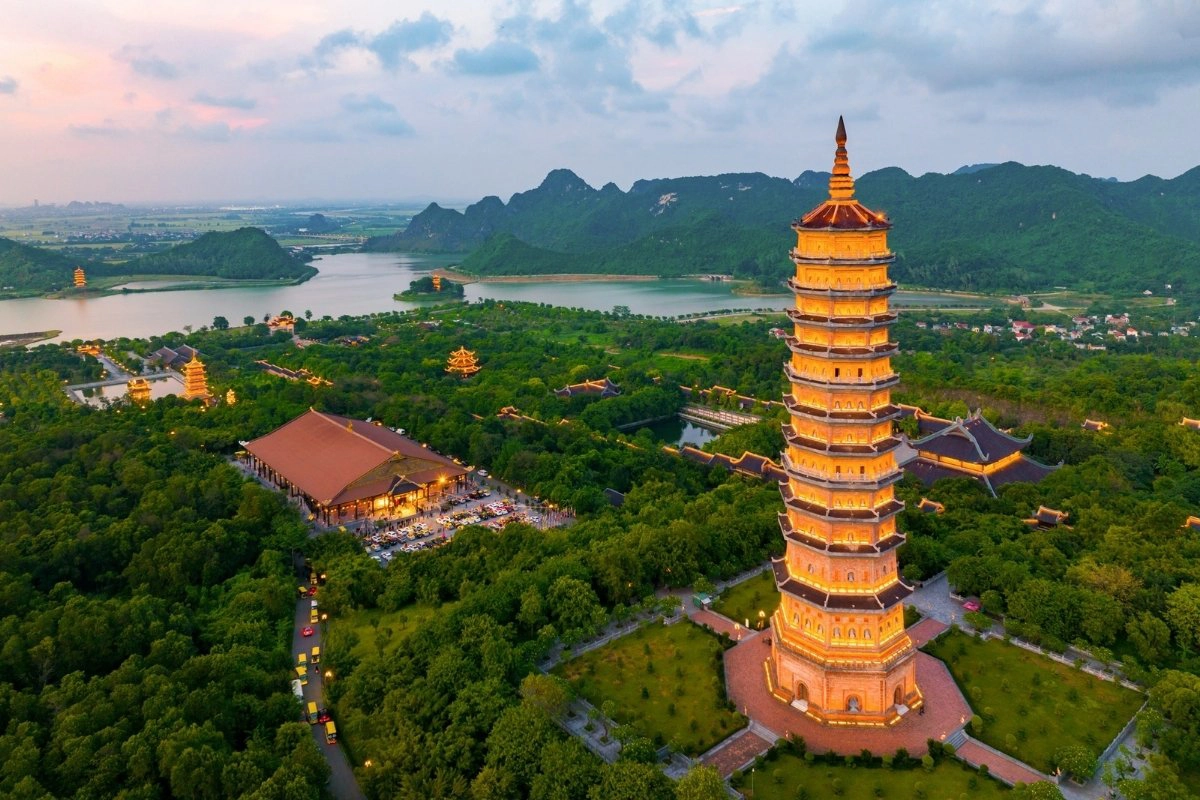
Buddha Relic Stupa - Source: Bao Chinh Phu
The final stage marks a transition from the grandeur of modern architecture to the quiet, unspoiled beauty of nature. You will make your way up steep mountain paths to a place where the clouds seem close enough to touch and history comes alive. From a tour guide’s perspective, this is where you should slow down and take in the deeply peaceful and sacred atmosphere.
- Buddha Relic Stupa: Besides offering 360-degree panoramic views from its 13th floor, the stupa’s greatest treasure is a sacred Buddha relic brought from India. At the foot of the tower stands a Bodhi tree propagated from the sacred tree at the Mahabodhi Temple in Bodh Gaya.
- Dark Cave and Bright Cave: The ancient pagoda is nestled entirely within natural limestone caves. Bright Cave is illuminated by sunlight that shines directly onto the Buddha altar. In contrast, Dark Cave features remarkable natural stalactites that produce sounds resembling a stone musical instrument when gently struck.
- Cao Son Deity Temple: Built in the traditional wooden architectural style of the Ly Dynasty, the temple rests majestically against a towering cliff. It is dedicated to the deity believed to guard the surrounding mountains and forests. Shaded by rows of ancient sưa trees, the temple offers visitors a profound sense of serenity and peace.
>> Explore more: Tours By Locals Ninh Binh: Authentic Travel Guide 2026
3. Practical Tips for Visiting Bai Dinh Pagoda
To ensure a smooth and uninterrupted pilgrimage, visitors should familiarise themselves with the available services and site regulations. The practical tips below will help you prepare for your visit to Ninh Binh.
3.1. Electric Shuttle Service and Visiting Costs
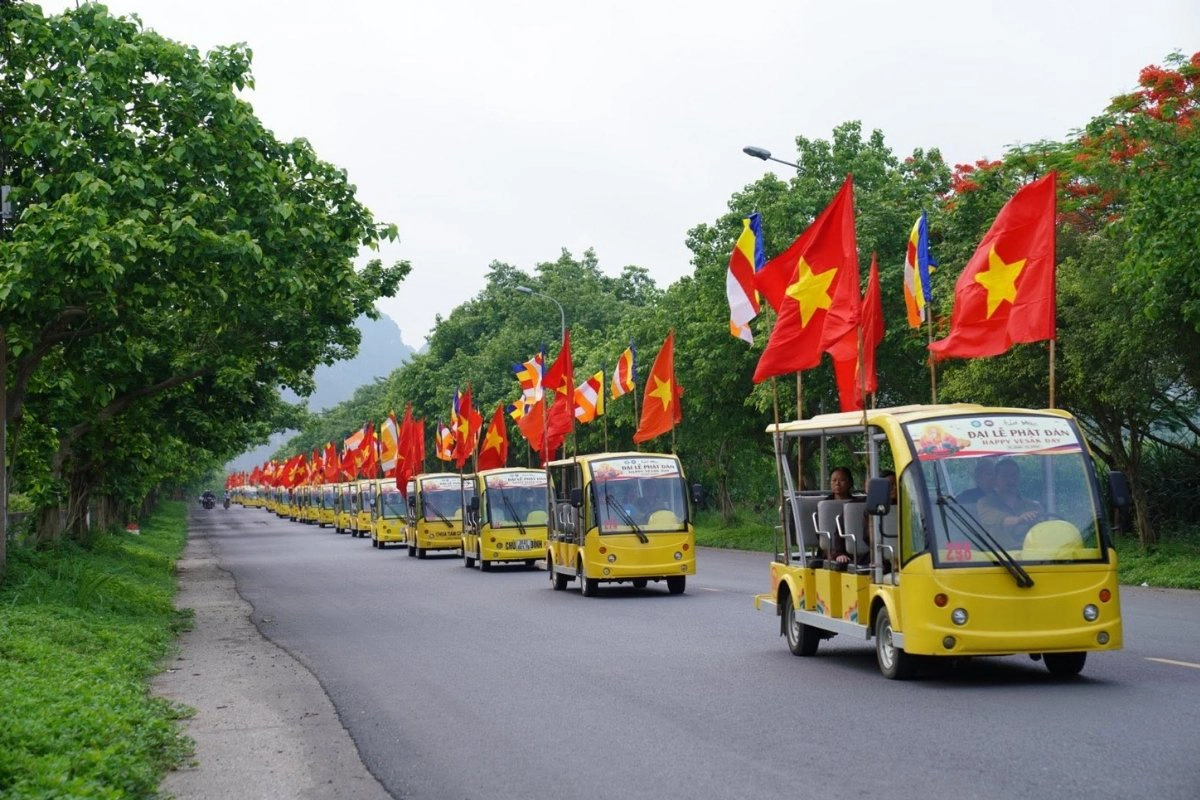
Electric shuttle in Bai Dinh pagoda - Source: FB Chua Bai Dinh
The tourist complex’s car park is located nearly 3.5 kilometres from the main Tam Quan Gate. As this is quite a long distance, taking an electric shuttle is the best way to conserve your energy before beginning the uphill sightseeing route. It is advisable to purchase a return ticket from the outset so that you do not have to queue again on your way back.
- Admission fee: Entry to the entire complex is completely free for all visitors.
- Electric shuttle ticket: The current reference price is VND 30,000 per journey, which is equivalent to VND 60,000 for a return ticket.
- Buddha Relic Stupa ticket: If you wish to take the lift to the top of the stupa, you will need to purchase a ticket costing approximately VND 50,000 to VND 60,000 per person.
3.2. Clothing and Personal Items
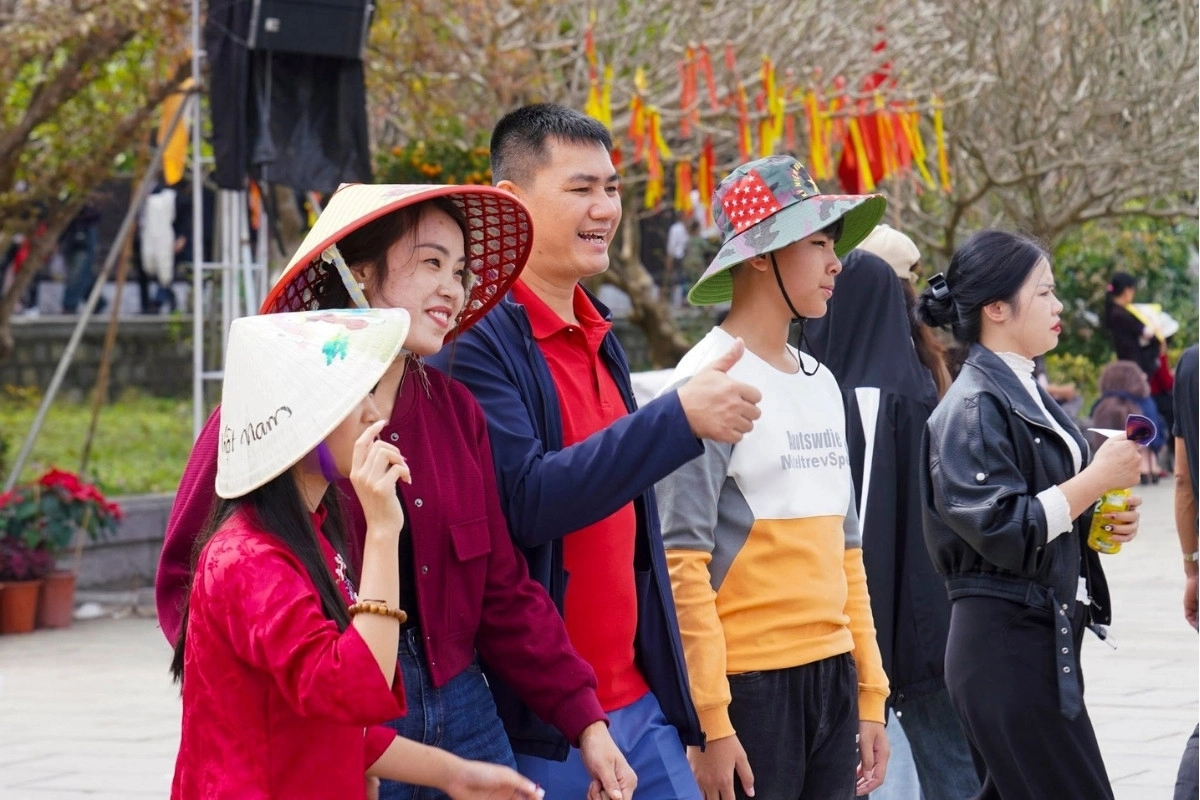
Modest clothing and non-slip footwear - Source: FB Chua Bai Dinh
The complex features expansive outdoor grounds and thousands of stone steps. Therefore, packing appropriately will make a significant difference to your comfort throughout the visit.
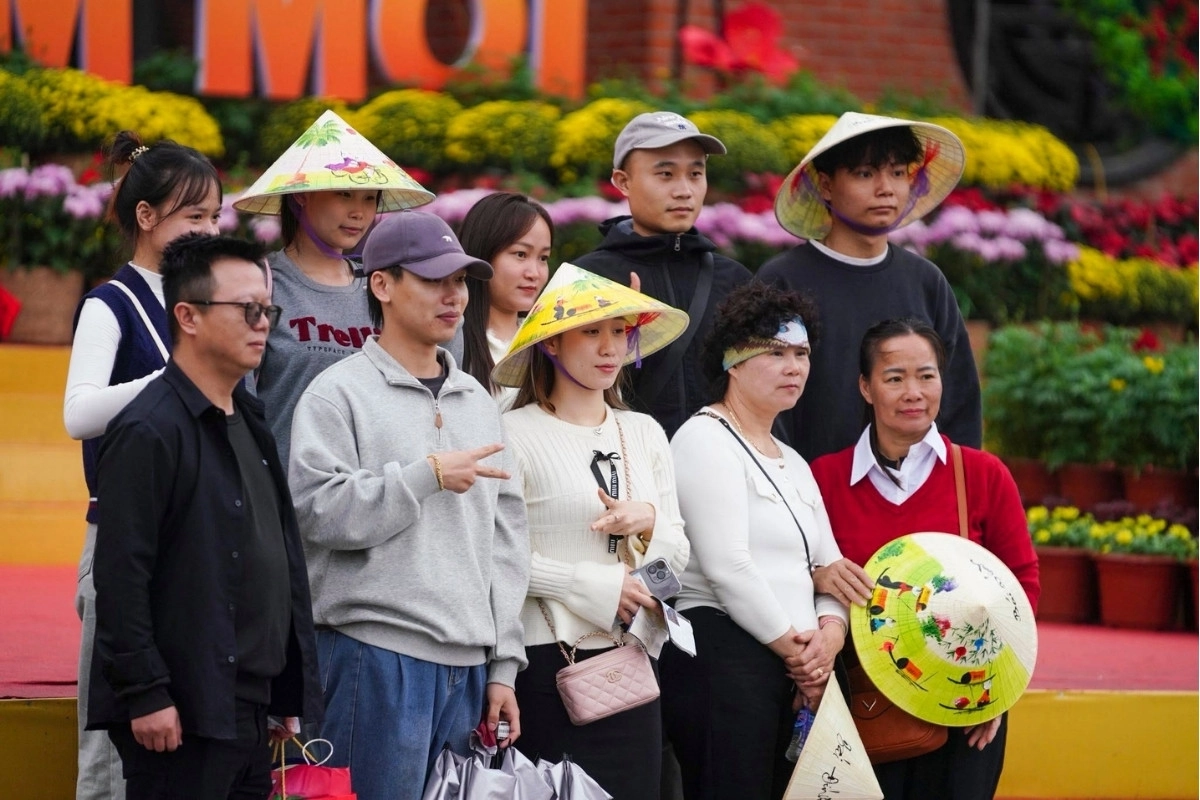
- Clothing: Visitors are required to dress respectfully and modestly by wearing sleeved tops and trousers or skirts that cover the knees. Lightweight, breathable fabrics such as cotton or linen are recommended, as the long walking route can make you perspire heavily.
- Footwear: The stone steps can develop a thin layer of moss, making them particularly slippery in foggy or rainy weather. Avoid wearing high heels. Instead, choose comfortable trainers with non-slip rubber soles or soft slip-on walking shoes.
- Useful items: The courtyards in front of the worship halls are spacious and receive strong sunlight. Bring a wide-brimmed hat, a compact umbrella, and apply sunscreen before your visit. You should also carry a bottle of water in your backpack. However, vending machines are available at rest stops throughout the complex if you need to purchase more drinks.
3.3. Rules for Respectful Conduct at the Pagoda
Bai Dinh pagoda etiquette - Source: FB Chua Bai Dinh
Bai Dinh Pagoda is not only a tourist attraction but also a deeply sacred Buddhist place of worship. Visitors should behave respectfully and responsibly to help preserve the heritage site, its surroundings, and the peaceful atmosphere of the monastic grounds.
- Protecting the heritage site: Do not touch or rub the Arhat statues. Perspiration and friction from millions of visitors have worn down and darkened the surfaces of many blue-stone statues, causing them to lose their original beauty.
- Making donations respectfully: Only place donations in the official wooden donation boxes provided by the site management. Do not tuck banknotes into the hands of statues, place them on carved pedestals, scatter them beneath the Bodhi tree, or throw them into the Jade Well, as these actions spoil the appearance of the sacred site.
- Conduct and photography: Walk quietly, speak softly, and refrain from playing music through speakers or making excessive noise. When taking photos, avoid blocking the main walkways. Visitors should also avoid standing with their backs to the Buddha or striking inappropriate poses close to the altars.
>> Explore more: Best Ninh Binh Luxury Tours for an Unforgettable Vietnam Trip
4. FAQs About Visiting Bai Dinh Pagoda Ninh Binh
4.1. How long does it take to fully explore Bai Dinh Pagoda?
Visitors typically need around three to four hours to complete the entire three-stage route, including travel time by electric shuttle. If you are travelling with elderly visitors or young children, it is best to set aside half a day so that everyone can explore at a comfortable pace without becoming too tired.
4.2. Should I explore Bai Dinh Pagoda independently or hire an on-site guide?
If your main purpose is sightseeing and worship, you can easily explore the complex independently by following the clear signs throughout the site. However, if you would like to learn more about Buddhist legends, history, and architecture, hiring a tour guide at the central ticket counter will provide a more informative and rewarding experience.
4.3. Are food and rest facilities available at Bai Dinh Pagoda?
Yes, a full range of facilities is available. Bai Dinh Restaurant serves vegetarian meals and local specialities such as crispy rice and Ninh Binh goat dishes. Along the sightseeing route, you will also find snack stalls, drinks vending machines, and plenty of stone benches in the corridors where you can stop and rest.
Bai Dinh Pagoda Ninh Binh is truly a magnificent masterpiece of Buddhist architecture and a peaceful sanctuary for the soul. Whether you visit to worship or simply admire the scenery, exploring this remarkable complex is sure to leave you with unforgettable memories. For a smooth, fulfilling, and time-efficient journey through Vietnam’s ancient capital, contact Joytime: Vietnam Travel today for expert itinerary advice and dedicated support throughout your trip.
|
Joytime Travel Agency - Travel JOY, TIMEless Vietnam Safe, Seamless, Satisfying, Sustainable Follow us for travel tips, local insights, and exclusive offers:
|

Danish Nguyen
Danish Nguyen is a renowned travel blogger in Vietnam with over 5 years of experience sharing unique travel experiences. With a passion for exploring new places, Danish captures incredible moments and provides readers with valuable tips to discover the beauty of his homeland.