









Phan Thiet Fish Sauce and the Craft Behind Its Flavor
The main content of the article
- 1. What Makes Phan Thiet Fish Sauce Special?
- 2. How Is Traditional Phan Thiet Fish Sauce Made?
- 3. Where Can Visitors Learn About and Taste Phan Thiet Fish Sauce?
- 4. Where to Buy Phan Thiet Fish Sauce and How to Choose a Good Bottle
- 5. Frequently Asked Questions About Phan Thiet Fish Sauce
- Conclusion
A small bowl beside a plate of rice cakes can tell you quite a bit about this stretch of coast. In Phan Thiet, the fish sauce in that bowl comes from a craft practiced for more than two centuries. Salted fish spends months in barrels before the liquid is drawn off, and the finished sauce has a savory depth that lingers long after the first salty taste. Here’s where to try Phan Thiet fish sauce, what to look for on the bottle, and how to pack it for the flight home.
1. What Makes Phan Thiet Fish Sauce Special?
Phan Thiet fish sauce has a bold, salty taste and a lingering savory sweetness. Local producers have long fermented fish and sea salt in wooden barrels or earthenware vessels. Vietnam registered “Phan Thiet” as a geographical indication for fish sauce in 2007, protecting the name for products that meet its origin and quality criteria.
1.1. The History of Fish Sauce Making in Phan Thiet
Fish sauce making in Phan Thiet dates back more than 200 years. By the nineteenth century, wooden sailing boats known as ghe bầu were carrying fish sauce and dried seafood to the imperial capital at Hue. At the museum, look for the small earthenware jars called tĩn. Their narrow necks are a reminder that fish sauce was once a cargo as well as a kitchen staple.
The fishing trade is still visible along the coast. To catch the boats coming in, see Joytime’s guide to Mui Ne Fishing Village at sunrise.
1.2. What Does Phan Thiet Fish Sauce Taste Like?
Expect a clear fermented aroma, a salty first taste and a rounded umami finish. The slight sweetness that follows comes from the breakdown of fish proteins during fermentation.
Hold a bottle to the light and you may see a pale straw color in an anchovy sauce or a golden brown in one made with round scad. The fish used helps explain the difference.
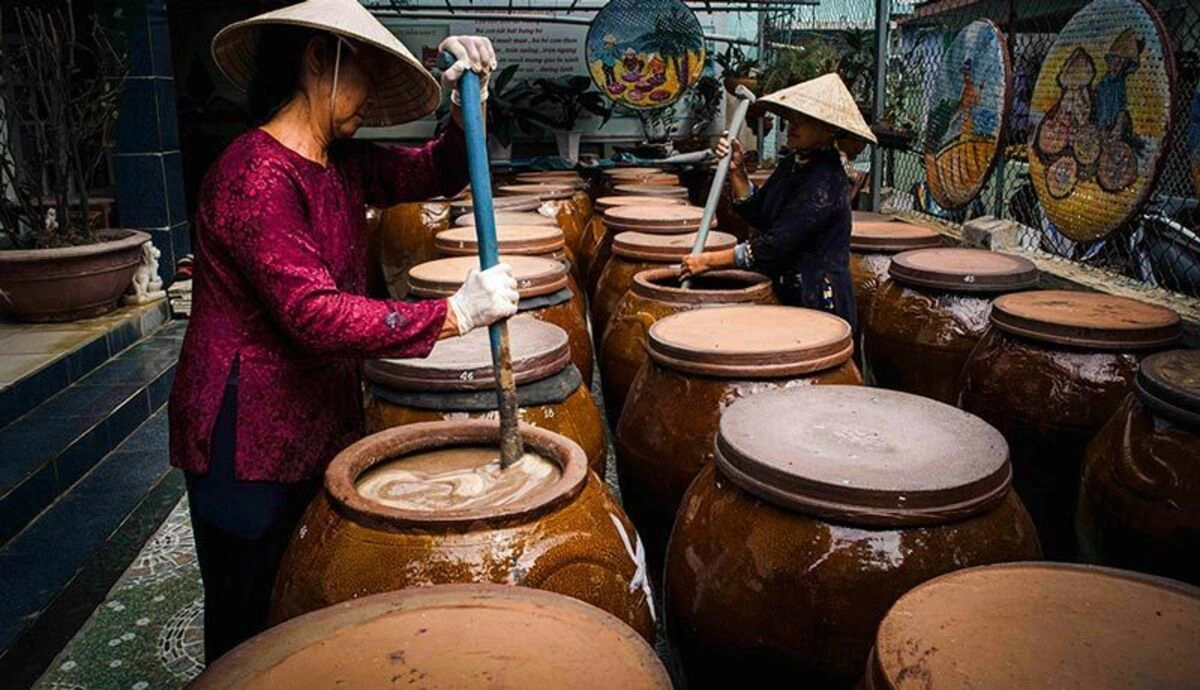
Traditional Phan Thiet fish sauce jars - Source: Kenh14
>>> Four Beautiful Phan Thiet Pagoda Sites Worth Visiting
2. How Is Traditional Phan Thiet Fish Sauce Made?
Traditional makers salt fresh fish, leave the mixture to mature, then draw off and filter the liquid before checking and bottling it. The fermentation stage does most of the work, gradually turning salted fish into a clear, intensely savory seasoning.
2.1. Selecting Fresh Anchovies and Mixing Them with Sea Salt
Fresh anchovies and food-grade sea salt are a classic pairing for Vietnamese anchovy fish sauce in Phan Thiet. Some local makers also work with round scad and other fish. A documented traditional method uses roughly three parts fish to one part salt. Once packed together, the salted mixture is called chượp.
2.2. Fermenting the Fish and Salt Mixture
The traditional Phan Thiet method described in Vietnam’s geographical indication profile takes about eight to twelve months for the mash to mature. Some producers age it for longer. During that time, enzymes break down the fish proteins into smaller compounds, including amino acids that contribute to the sauce’s characteristic umami.

2.3. Extracting and Filtering the Fish Sauce
After the fish and salt have fermented for several months, makers drain the liquid that has collected in the barrel. In Phan Thiet, the first batch of fish sauce drawn this way is called nước mắm nhĩ. It has a deep, savory flavor and a sweet finish. Makers then strain the sauce to remove small pieces of fish and other particles before checking its quality and bottling it.
2.4. Quality Checking and Bottling
Before bottling, producers check characteristics such as clarity, aroma and flavor. Vietnam’s fish sauce standard also sets chemical criteria, including total nitrogen and amino acid nitrogen, which are measured separately. On the shelf, the finished product should have an intact seal and a clear label identifying the producer, ingredients and use-by date.
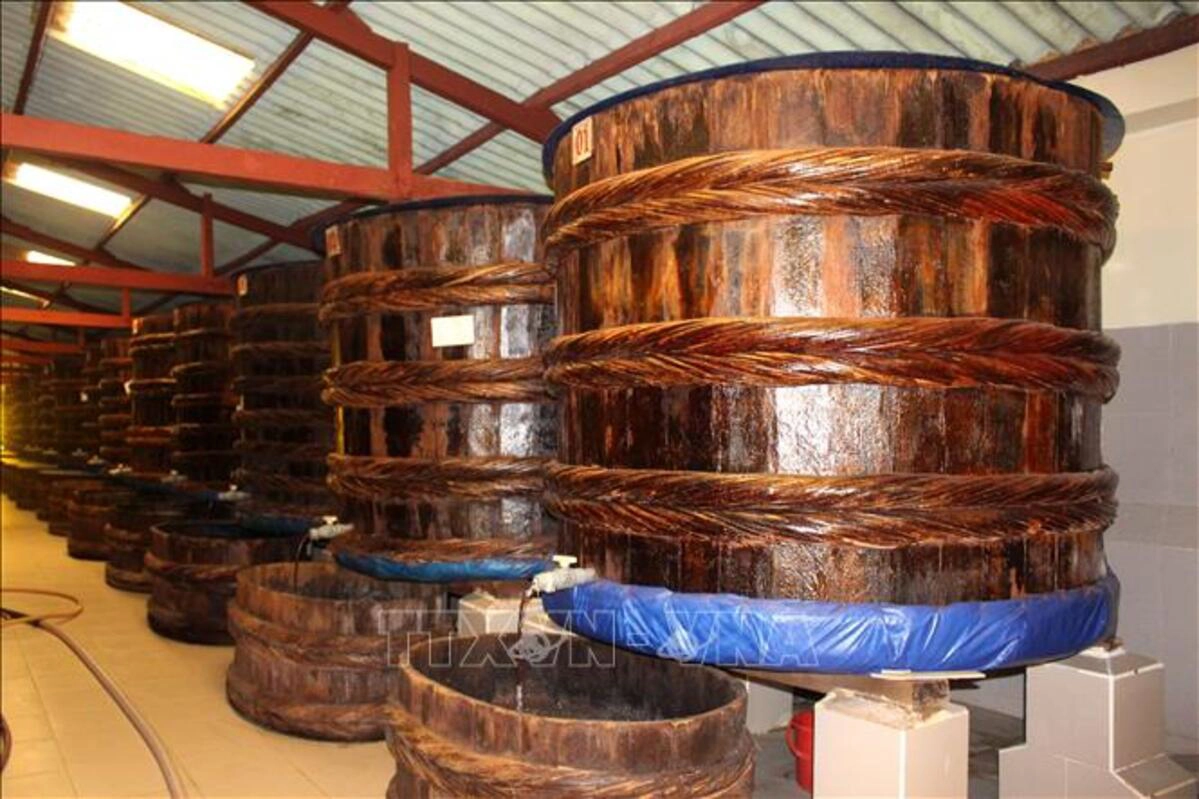
Fish sauce fermentation barrels - Source: Vietnam.vn
3. Where Can Visitors Learn About and Taste Phan Thiet Fish Sauce?
The Lang Chai Xua Fish Sauce Museum offers tastings and exhibits on how Phan Thiet fish sauce is made. At local eateries, you can try it in the dipping sauce served with bánh căn (small rice cakes) or seafood.
3.1. Visit Lang Chai Xua Fish Sauce Museum in Phan Thiet
The Lang Chai Xua Fish Sauce Museum is at 360 Nguyen Thong Street. The museum lists opening hours of 9:00 a.m. to 5:00 p.m. daily and an adult ticket of VND 100,000, with free admission for children under one meter. Allow around 40–60 minutes.
As you walk through the museum’s 14 exhibition spaces, you’ll get a glimpse of daily life in Phan Thiet’s old fishing village. Look for the wooden barrels where fish sauce was left to mature and the small ceramic jars used to carry it by boat. At the tasting, try the sauce on its own and see if you can pick up the slight sweetness after the first salty taste.
3.2. Discover How Fish Sauce Is Used in Local Vietnamese Dishes
Order bánh căn to try one of Phan Thiet’s most distinctive uses of fish sauce. The small rice cakes arrive with a dipping bowl that can include fish braising liquid, pork meatballs and chopped green mango. At other meals, the sauce can season braised fish or be mixed with lime, garlic and chili for seafood.
The dip served at the table is usually made with fish sauce and other ingredients. To make your own version at home, start with a bottle of plain fish sauce and season the dip to taste. You’ll find more places to try local dishes, including seafood spots and family-style Vietnamese restaurants, in Joytime’s Phan Thiet restaurant guide.
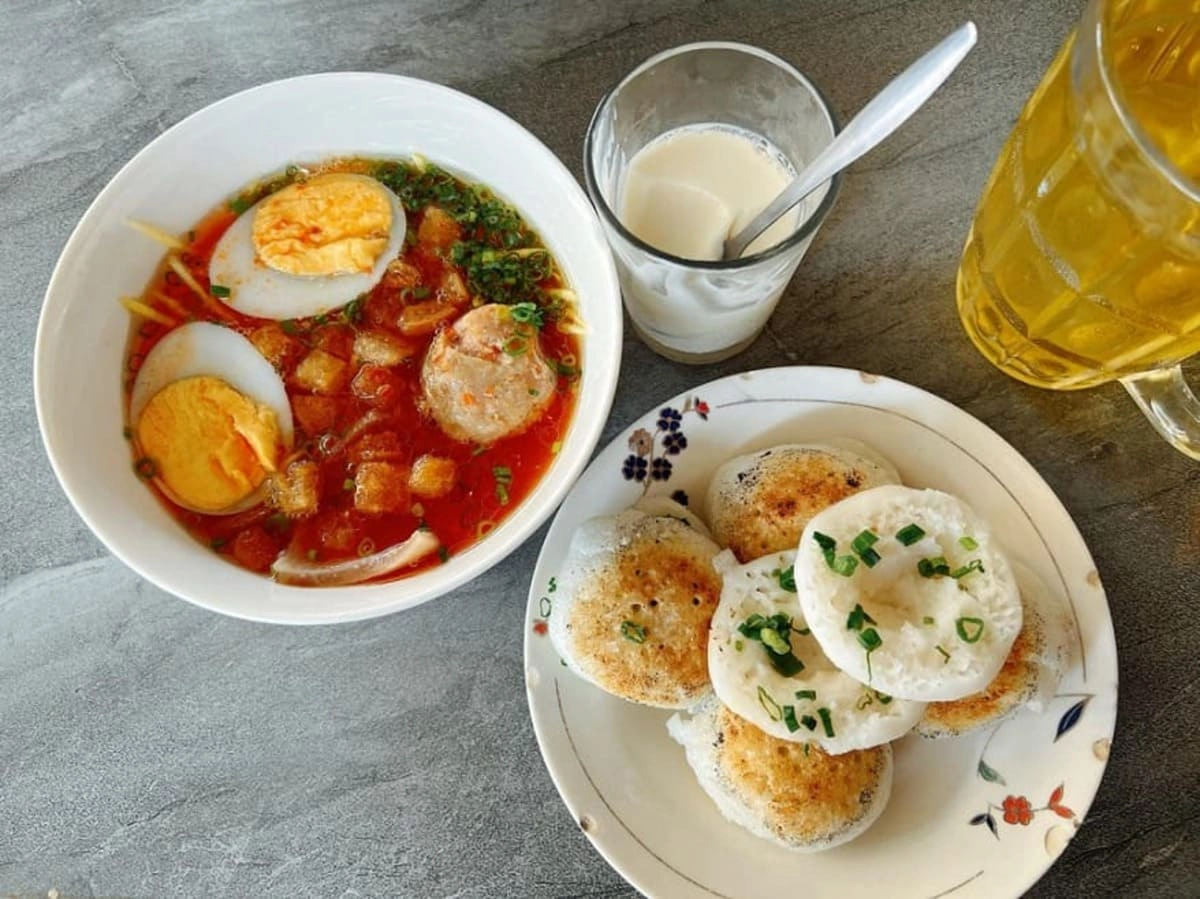
Phan Thiet bánh căn with fish sauce - Source: VinWonders
4. Where to Buy Phan Thiet Fish Sauce and How to Choose a Good Bottle
Buy fish sauce in Phan Thiet at a producer, the museum shop or the central market. For a first bottle, compare ingredients, the producer’s address and the seal. If you’re flying, check the packaging rules before buying a ceramic gift jar.
4.1. Local Fish Sauce Producers, Specialty Shops, and Markets
Phan Thiet Market is the place to start when you’d like to see several local brands side by side. Browse a few stalls and compare prices for bottles of the same size. A smaller bottle makes sense when you’re trying a brand for the first time.
On a museum day, ask at the Lang Chai Xua shop for the fish sauce you sampled, or stop by PT Fisaco on the same street to see what another local producer offers. Ngoc Dinh is a handy stop along Nguyen Dinh Chieu Street for travelers staying in Ham Tien. These addresses cover both options and two local producers.
|
Place |
Address |
|
Lang Chai Xua museum shop |
360 Nguyen Thong Street |
|
PT Ficaso, Hiệu Con Cá Vàng |
65 Nguyen Thong Street |
|
Ngoc Dinh |
188 Nguyen Dinh Chieu Street |
|
Phan Thiet Market |
115 Ly Thuong Kiet Street |
4.2. How to Read Fish Sauce Labels and Choose the Right Type
On a Vietnamese label, nước mắm nguyên chất means pure fish sauce. It’s made by fermenting fish and salt, so look for those two ingredients on the label. Look for nước mắm nguyên chất and an ingredient list of fish and salt if you want pure fish sauce. A label marked 40°N indicates 40 grams of total nitrogen per liter. Compare this figure across bottles with similar ingredients, then choose a flavor you enjoy. For cooking or mixing dips, a small, sealed bottle is a practical first purchase.
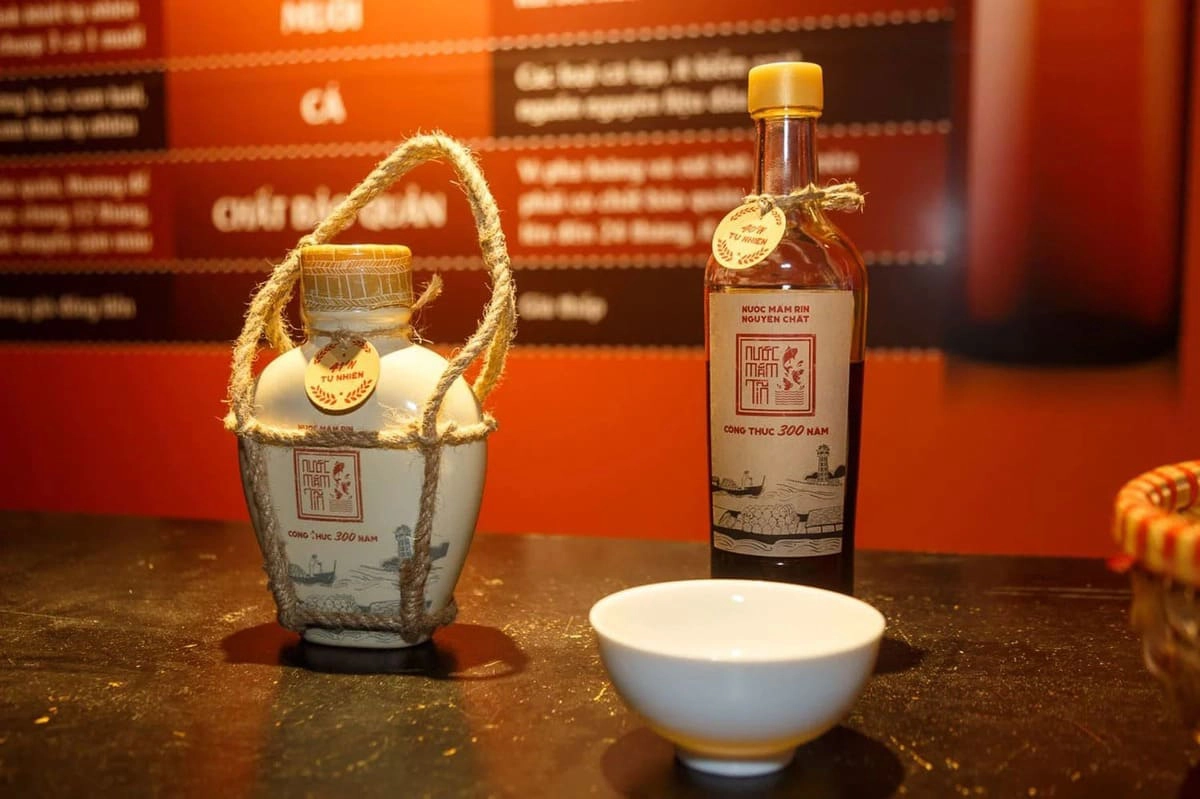
Phan Thiet fish sauce labels - Source: VinPearl
4.3. Can You Bring Phan Thiet Fish Sauce Home on a Plane?
Vietnam Airlines accepts up to 3 liters or 3 kg per passenger in checked baggage under its policy for strong-smelling items. Use plastic bottles filled to no more than 95% of capacity. Tighten the caps and wrap each bottle with tape. Place the bottles snugly in a foam box and tape it shut. For international or connecting flights, check each airline’s baggage rules and your destination’s import rules at Vietnam Airlines baggage policy

5. Frequently Asked Questions About Phan Thiet Fish Sauce
For a bottle you’ve brought home, the two most useful places to look are the storage directions and the ingredients list. They tell you how the maker recommends keeping the sauce and whether the product contains fish.
5.1. Does Phan Thiet Fish Sauce Need to Be Refrigerated?
Traditional fish sauce can generally be kept tightly capped in a cool, dark cupboard if the label allows it. Some brands recommend refrigeration after opening to preserve flavor and color. Follow the bottle’s instructions, especially for ready-made dipping sauces that may contain added ingredients. If you’re buying a bottle as a gift, leave the storage instructions and expiry date visible on the original label.
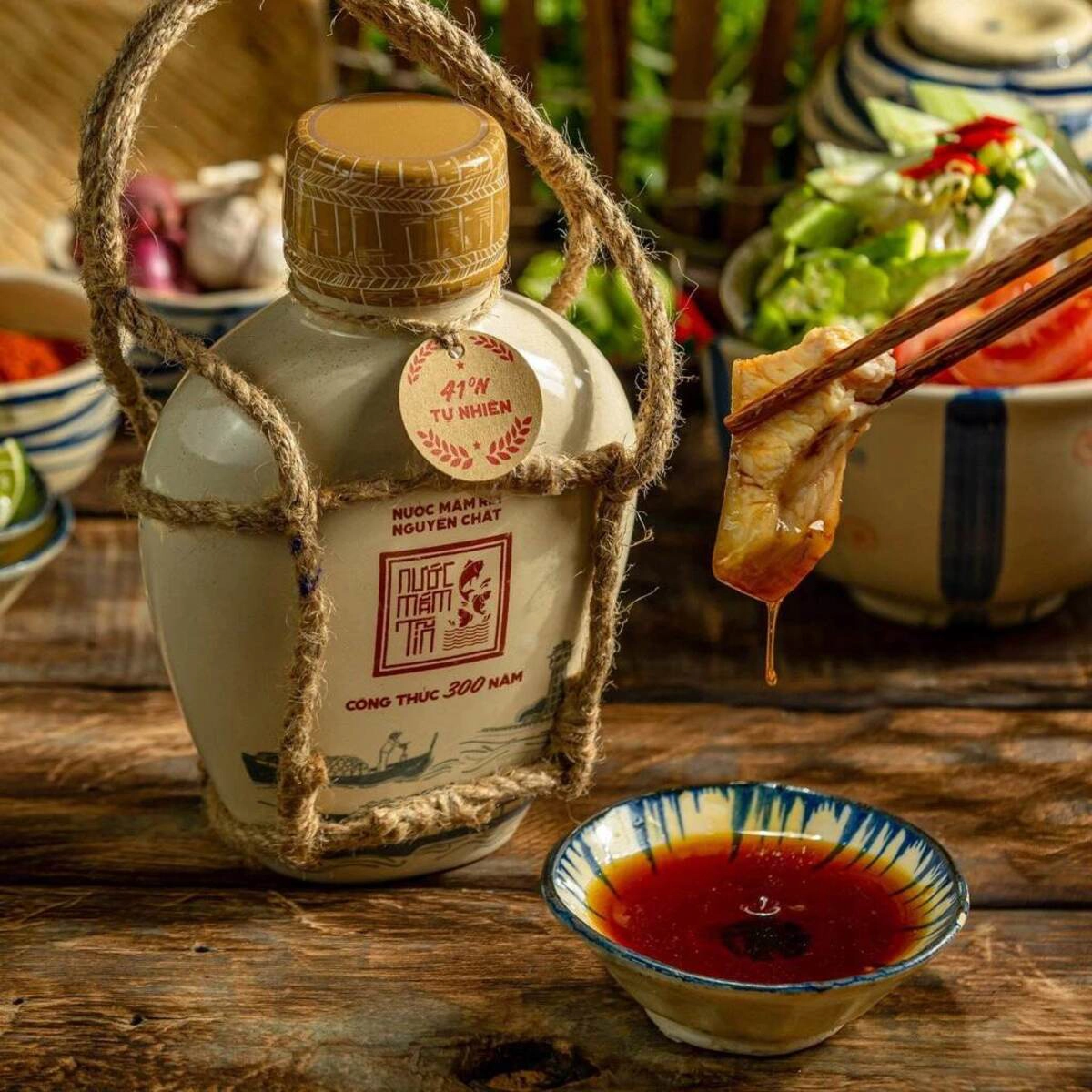
Traditional anchovy fish sauce - Source: Nuocmamtin
5.2. Why Does Traditional Fish Sauce Become Darker Over Time?
Traditional fish sauce can darken as it oxidizes after opening. Air exposure contributes to the color change, so cap the bottle after use and keep it away from direct light and the stove. A deeper color alone is a poor guide to whether the product is still suitable to use.
5.3. Is Phan Thiet Fish Sauce Suitable for Vegetarians or Vegans?
Traditional Phan Thiet fish sauce contains fish and is unsuitable for vegetarian and vegan diets. Look for a product labeled nước mắm chay and verify its ingredients. When eating out, ask about the dipping sauce and seasoning as well as the main ingredients, since a vegetable dish may still be seasoned with fish sauce.
Conclusion
A plate of bánh căn, the small rice cakes served with a savory dip, is a good place to get to know Phan Thiet fish sauce. At the Lang Chai Xua Fish Sauce Museum, you can taste it on its own and see the barrels used to make it. Back home, a few drops over grilled fish can bring that familiar flavor to your own table. Discover more places to visit and local dishes to try in Vietnam with Joytime.
|
Joytime Travel Agency - Travel JOY, TIMEless Vietnam Safe, Seamless, Satisfying, Sustainable Follow us for travel tips, local insights, and exclusive offers:
|

Danish Nguyen
Danish Nguyen is a renowned travel blogger in Vietnam with over 5 years of experience sharing unique travel experiences. With a passion for exploring new places, Danish captures incredible moments and provides readers with valuable tips to discover the beauty of his homeland.