









Whale Temple Vung Tau: A Coastal Heritage Site to Explore
Whale Temple Vung Tau is a distinctive coastal heritage site associated with the long-standing whale worship traditions of local fishing communities. Located within the Thang Tam heritage complex, the temple preserves important ritual spaces, cultural objects, and stories connected to life at sea. With Joytime Vietnam Travel, visitors can better understand this local belief while planning a meaningful stop as part of a broader Vung Tau sightseeing itinerary.
1. Whale Temple Vung Tau Overview
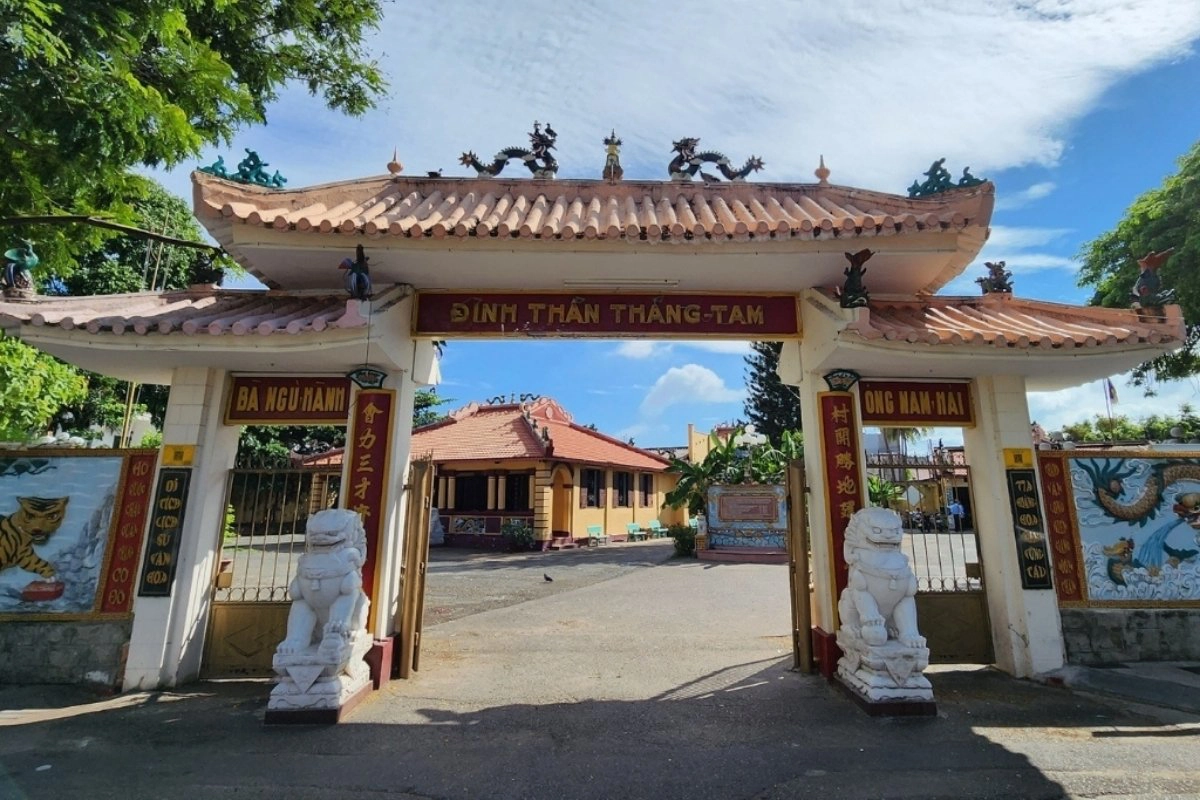
Thang Tam heritage complex - Source: www.anhquoc.vn
Whale Temple Vung Tau, locally known as Lang Ong Nam Hai, is part of the Thang Tam heritage complex and represents the long-standing maritime beliefs of Vung Tau’s fishing communities.
1.1. Location in the Thang Tam Heritage Complex
Whale Temple is located within the Thang Tam heritage complex at 77A Hoang Hoa Tham Street, Vung Tau. The complex consists of three main religious structures: Thang Tam Communal House, Ba Ngu Hanh Temple, and Lang Ong Nam Hai.
Within the complex, Lang Ong Nam Hai stands to the right of the main communal house. This arrangement places the whale shrine within a larger religious space associated with the beliefs of Thang Tam’s coastal community, rather than functioning as a separate standalone temple.
>> Explore more: How Far from Saigon to Vung Tau? 7+ Suitable Transportation Modes for Your Reference!
1.2. Origin of Whale Worship in Vung Tau
Whale worship developed from the close relationship between local fishermen and the sea. Coastal communities traditionally regarded whales, known respectfully as Ca Ong, as protective beings believed to help fishermen survive storms and dangerous conditions offshore. Over time, this belief became an important part of spiritual life in Vung Tau.
Lang Ong Nam Hai was established in 1824 and dedicated to the Whale God, formally worshipped as Nam Hai Cu Toc Ngoc Lan Chi Than. The belief later received royal recognition through imperial decrees issued under the Nguyen Dynasty, showing that whale worship had developed beyond a local seafaring custom into an established coastal religious tradition.
>> Explore more: Vung Tau Lighthouse: What to See and Know Before You Go
2. What to See at Whale Temple Vung Tau
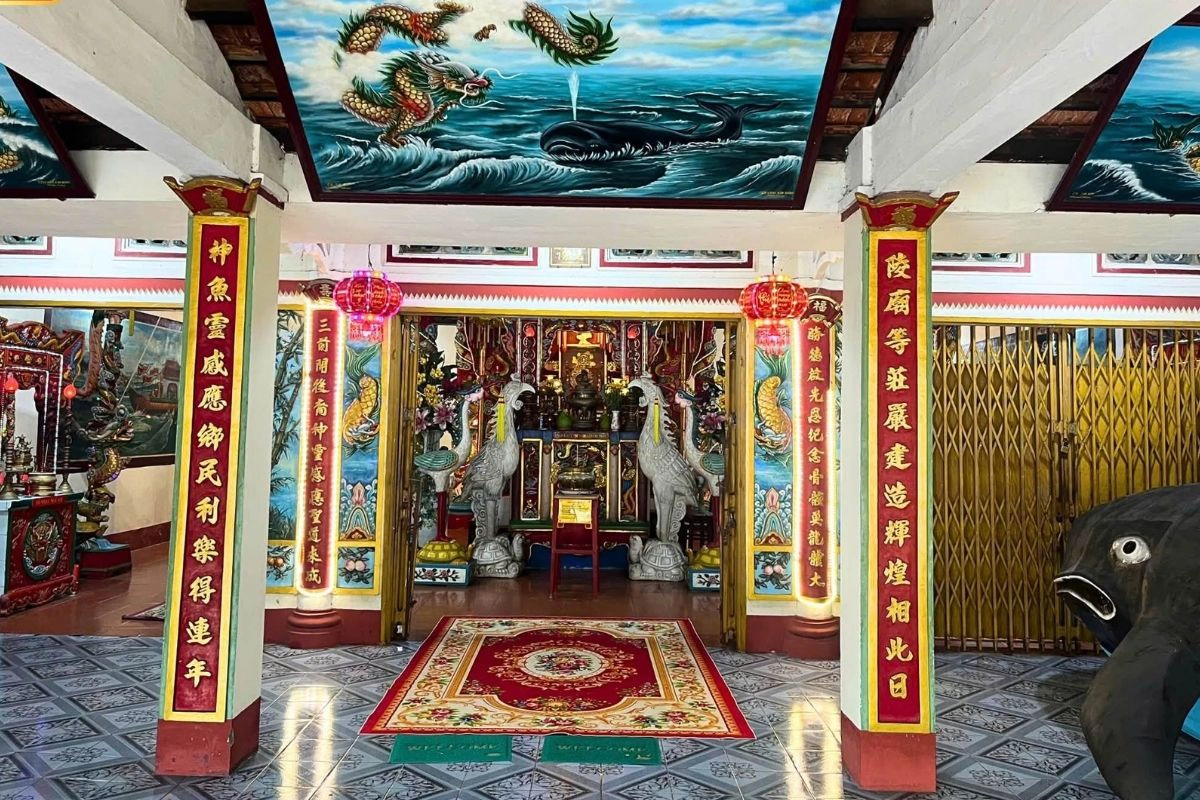
Whale Temple Vung Tau heritage - Source: Thu Vien So Nguyen An Ninh - Chuyen de Nam Bo
The temple’s main highlights are the preserved whale remains and the worship arrangement built around them. These elements allow visitors to see how whale relics are preserved within an active religious space rather than displayed separately as museum objects.
2.1. The Preserved Whale Skeleton and Main Shrine
Whale Temple preserves around 180 sets of whale bones, making the collection much larger than a single ceremonial skeleton. The largest preserved set is approximately 18 meters long, giving visitors a clear sense of the scale of the whales historically recovered along the Vung Tau coast.
Inside the shrine, the bones are arranged in three large glass cabinets rather than displayed openly. The cases protect the remains while allowing visitors to examine the skulls, vertebrae, ribs, and other large bone sections at close range. Each cabinet corresponds with a dedicated altar, so the preserved remains remain part of the temple’s worship structure.
This arrangement is the key detail to notice: the whale bones are not treated simply as historical specimens. Their position directly beside the altars shows that the preserved remains continue to hold a ceremonial role within the shrine.
2.2. Traditional Architecture and Worship Space
The interior follows a compact traditional shrine layout, with the three whale-bone cabinets and three principal altars forming the central worship area. This concentrated arrangement makes the religious function of the building easy to recognize as soon as visitors enter.
Two additional altars stand on the left and right sides of the main space. One is dedicated to Ba Sau, associated with the Turtle Deity, while the other honors To Nhac, the ancestor of ceremonial music. Their presence shows that rituals at the shrine extend beyond the whale relics and include other figures connected with coastal ceremonial life.
Rather than looking only at decorative details, visitors should pay attention to how the glass cabinets, main altars, and side altars are positioned together. The layout helps explain how preserved marine remains, worship, and ceremonial traditions function within the same space.
>> Explore more: How To Make The Most Of Your 8 Days Vietnam Trip
3. Planning Your Visit to Whale Temple Vung Tau
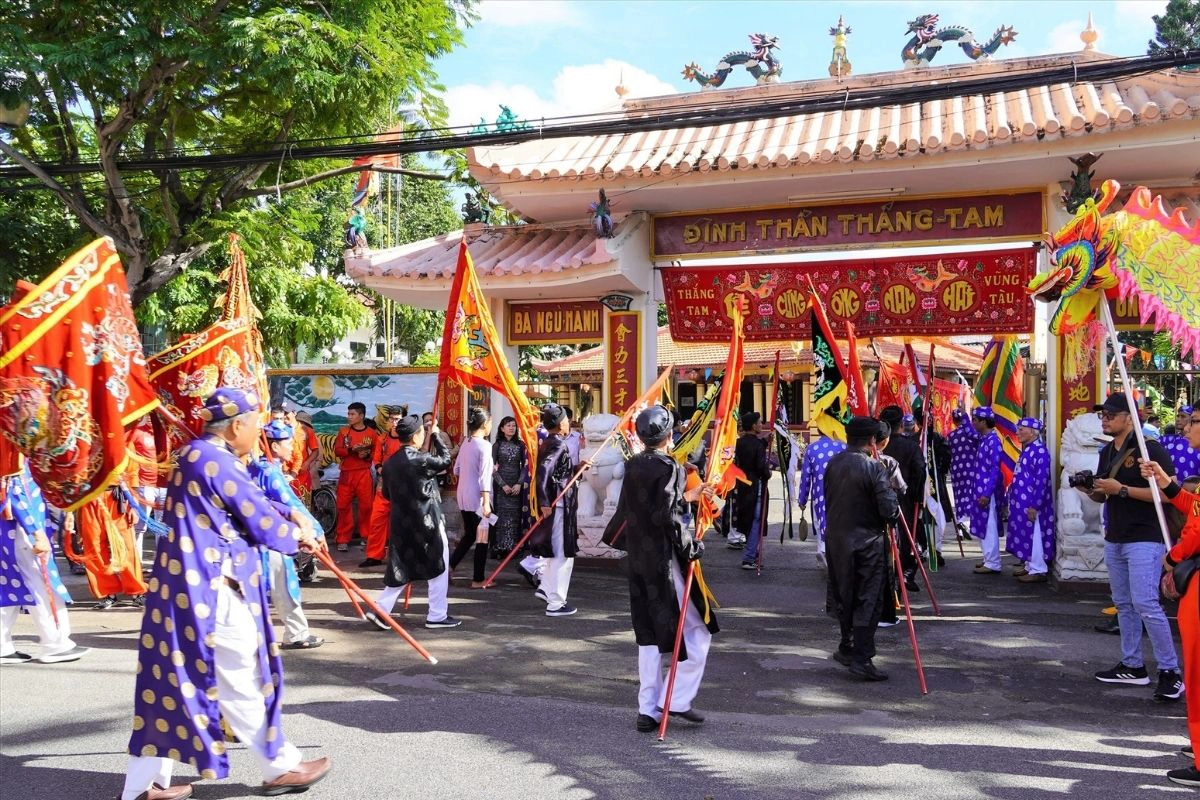
Nghinh Ong Festival traditions - Source: Bao Lao Dong
A visit to Whale Temple is easy to include in a Vung Tau city itinerary. The main points to plan are how you will get there, whether your visit coincides with the Nghinh Ong Festival, and how to behave appropriately inside the religious site.
3.1. Getting to Whale Temple Vung Tau
The most practical transport depends on where you are staying and how many other stops you plan to visit that day. Travelers coming from Ho Chi Minh City can also book a private car from Ho Chi Minh City to Vung Tau for a direct transfer before continuing to Whale Temple and other attractions around the city.
- Rental motorbike: A good option for independent travelers combining the temple with several attractions around Vung Tau. Motorbikes can be rented from hotels or rental shops near Back Beach for about 120,000–180,000 VND per day.
- Taxi: Suitable for families, older travelers, or anyone who only needs a direct ride to the site. Taxis are widely available around Back Beach, Front Beach, central hotels, and major attractions.
- Self-drive car: More practical for families or groups visiting several locations in one day. Rental rates in Vung Tau generally range from about 700,000–1,200,000 VND per day, depending on the vehicle and travel date.
- Walking: Reasonable if your hotel is already around central Hoang Hoa Tham or nearby streets and you are exploring the area on foot.
For navigation, search “Lang Ong Nam Hai – Thang Tam” or “Thang Tam Communal House” on your map app. If renting a motorbike, check the brakes, tires, fuel level, and helmet before leaving, especially when combining several stops around the city.
3.2. Best Time to Visit and Nghinh Ong Festival
For a quieter visit focused on the shrine itself, choose a normal weekday outside major festival dates. The atmosphere changes significantly during the Nghinh Ong Thang Tam Festival, when the complex becomes one of the main ceremonial centers for Vung Tau’s coastal community.
The festival is held annually on the 16th, 17th, and 18th days of the eighth lunar month. Major activities include the procession welcoming the Whale God from the sea, incense and offering ceremonies, hát bội performances, bả trạo rowing performances, lion dances, and other traditional activities.
If you want to observe local maritime culture, these festival days offer the most complete experience. If your priority is seeing the shrine calmly and examining the displays without large crowds, visit outside this period.
3.3. Dress Code and Temple Etiquette
Whale Temple is still used for worship, so visitors should follow the same basic etiquette expected at an active Vietnamese religious site.
- Wear modest clothing: avoid beachwear, very short shorts, or revealing tops inside the worship area.
- Keep conversations quiet: especially when local residents are praying or ceremonies are underway.
- Do not handle ritual objects or offerings: observe them without moving or touching anything.
- Avoid blocking worshippers: stand away from the central ceremonial area when people are burning incense or making offerings.
- Ask before photographing ceremonies: particularly during the Nghinh Ong Festival, when many activities are religious rather than staged for tourists.
- Follow temporary access instructions: some areas may be restricted while ceremonies or processions are taking place.
These simple rules allow visitors to explore the temple respectfully without interrupting its religious activities.
>> Explore more: Best Time to Visit Vietnam January: Why Travelers Should Consider It?

4. FAQs About Whale Temple in Vung Tau
4.1. Is There an Entrance Fee for Whale Temple Vung Tau?
No. Visitors can enter Whale Temple and the Thang Tam heritage complex free of charge.
4.2. How Long Should You Spend at Whale Temple?
Around 20–30 minutes is enough to see Whale Temple itself. If you also explore Thang Tam Communal House and Ngu Hanh Temple, allow about 45–60 minutes for the whole complex.
4.3. Can Whale Temple Be Combined With Other Thang Tam Attractions?
Yes. Whale Temple is located within the same heritage complex as Thang Tam Communal House and Ngu Hanh Temple, so visitors can conveniently explore all three during one visit.
Whale Temple Vung Tau offers visitors a closer look at the maritime beliefs, preserved whale remains, and ceremonial traditions that have shaped local coastal culture for generations. Its location within the Thang Tam heritage complex also makes it easy to combine with other nearby religious and historical sites in one visit. To build a more convenient Vung Tau itinerary with cultural landmarks, local food, and coastal attractions, contact Joytime: Vietnam Travel for practical travel planning and suitable tour suggestions.
|
Joytime Travel Agency - Travel JOY, TIMEless Vietnam Safe, Seamless, Satisfying, Sustainable Follow us for travel tips, local insights, and exclusive offers:
|

Danish Nguyen
Danish Nguyen is a renowned travel blogger in Vietnam with over 5 years of experience sharing unique travel experiences. With a passion for exploring new places, Danish captures incredible moments and provides readers with valuable tips to discover the beauty of his homeland.