









Ha Giang Tour by Car: Best Routes, Costs & Travel Experience
Planning a northern Vietnam road trip but not sure about riding a motorbike through steep mountain passes? A Ha Giang tour by car offers the perfect alternative; you still get to experience the dramatic scenery, winding roads, and rich ethnic culture of Ha Giang, but with far greater comfort, safety, and peace of mind. This guide covers everything you need to know before booking: itinerary options, vehicle types, travel costs, and practical tips for a smooth mountain journey.
1. Why Choose a Car Tour in Ha Giang
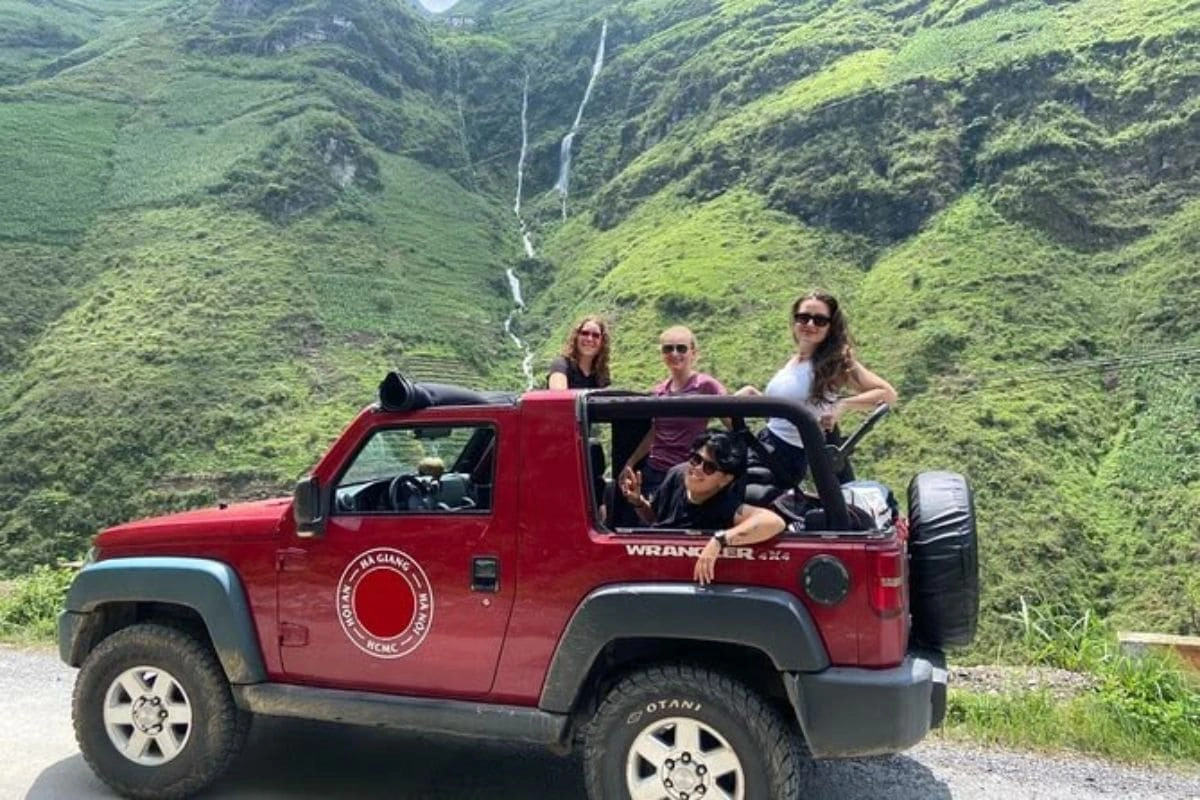
Why Choose a Car Tour in Ha Giang - Source: Pinterest
For many visitors, a Ha Giang tour by car is not a compromise; it is genuinely the better choice for their travel style. Here is why more and more tourists are opting for four wheels instead of two.
1.1. Comfortable Travel for Families and Groups
Mountain roads in Ha Giang are long, winding, and often exhausting even for experienced riders. A car removes most of that physical strain. Elderly travelers and young children can ride safely without worrying about balance or fatigue.
During the rainy season (typically May to September), car travel also provides shelter from sudden downpours that would make motorbike journeys unpleasant or even dangerous. Additionally, groups of four to seven people also find car tours more economical when splitting the cost between passengers, especially on private bookings.
1.2. Safer Access to Ha Giang’s Scenic Passes
The Ha Giang Loop includes several of Vietnam's most dramatic mountain passes, Ma Pi Leng, Quan Ba Heaven Gate, and the road to Lung Cu Flag Tower, among others. Many of these routes involve narrow cliffside roads with steep drops and minimal guardrails.
A professional local driver who knows the roads well is a significant safety advantage, particularly during foggy mornings or after rain when the asphalt becomes slippery. Traveling by car also means passengers can focus entirely on the view rather than the road ahead.
>> Read more: Ha Giang Loop Tour Vietnam - Motorbike, Car & Private Tours | Joytime
2. Best Ha Giang Tour by Car Itineraries
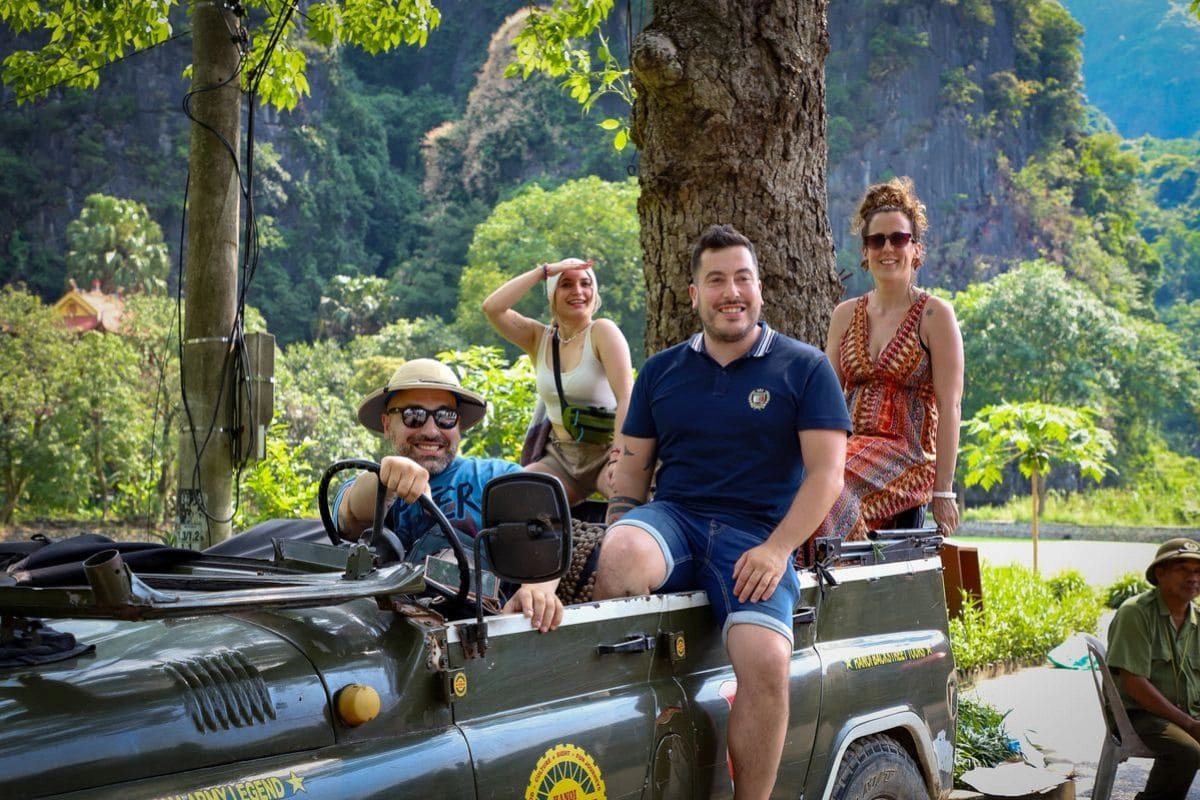
Best Ha Giang Tour by Car Itineraries - Source: Pinterest
Most car tours of Ha Giang follow the classic loop starting and ending in Ha Giang City. Depending on how much time you have, you can choose a compact three-day adventure or a more relaxed four-day cultural journey.
2.1. The Popular 3 Days 2 Nights Route
This is the most common option for travelers with limited time. The route covers all the major highlights of the Ha Giang Loop without feeling too rushed.
-
Day 1 – Ha Giang City to Dong Van: The journey begins with Quan Ba Heaven Gate, where the iconic Twin Mountains (or Fairy Bosom) stretch across the valley below. Continuing north, the road passes through Yen Minh's cool pine forests before arriving in Dong Van. The Dong Van Old Quarter, a historic cluster of stone houses and French colonial architecture, is worth a slow evening walk.
-
Day 2 – Dong Van to Meo Vac: This is arguably the most spectacular day of the entire loop. The road crosses Ma Pi Leng Pass, one of the four great passes of northern Vietnam, with views that drop sharply down to the turquoise Nho Que River far below. Most tours include a short boat trip on the river, which offers a completely different perspective of the canyon. A brief detour to Lung Cu Flag Tower, the northernmost point of Vietnam, is also included on this day.
-
Day 3 – Meo Vac back to Ha Giang City: The return journey passes through Du Gia and along scenic valley roads, arriving back in Ha Giang City by late afternoon or early evening.
2.2. The Relaxed 4 Days 3 Nights Journey
For travelers who prefer a slower pace and deeper cultural engagement, the four-day version is a significantly richer experience. Rather than rushing through the loop to hit every viewpoint, this itinerary builds in breathing room, longer stops, earlier arrivals, and room for spontaneous exploration.
-
Day 1 – Ha Giang City to Yen Minh: Instead of pushing all the way to Dong Van on the first day, the four-day route breaks the journey at Yen Minh. This gives travelers time to stop properly at Quan Ba Heaven Gate without feeling rushed, explore the Twin Mountains viewpoint at a relaxed pace, and arrive in Yen Minh in the early evening. The town itself is small and quiet, surrounded by pine-covered hills, and genuinely peaceful on the first night.
-
Day 2 – Yen Minh to Dong Van: With a shorter drive ahead, Day 2 allows for deeper detours into the rocky plateau landscape. The road passes through several Hmong and Lo Lo minority villages where travelers can observe daily life, traditional architecture, and local markets (if timing aligns). The afternoon arrives in Dong Van with enough daylight left to explore the Old Quarter slowly; the stone houses, local food stalls, and the surrounding karst peaks at golden hour are worth every extra hour saved.
-
Day 3 – Dong Van to Meo Vac to Du Gia: This remains the most dramatic day of the loop. The crossing of Ma Pi Leng Pass and the Nho Que River boat trip are still the highlights, but the four-day pace allows a longer stop at Lung Cu Flag Tower, Vietnam's northernmost point, before heading south toward Meo Vac. In the afternoon, the route continues to Du Gia Village, a lush valley settlement home to Tay ethnic communities. Overnight in Du Gia puts travelers right in the heart of terraced rice field scenery.
-
Day 4 – Du Gia to Ha Giang City: The final morning is one of the quietest and most rewarding of the entire journey. Du Gia's rice terraces and the nearby waterfall are best explored early, before the day heats up. Before leaving, a stop at Lung Tam Village is well worth the short detour, local women here have been weaving hemp fabric using traditional methods passed down through generations, and it is possible to watch the entire process from plant to finished textile. The drive back to Ha Giang City is gentle and scenic, arriving with time to spare before any onward travel.
This option is particularly well-suited to families with children, couples on a romantic trip, and travelers who want meaningful cultural encounters rather than a highlight reel. The extra day does not just add distance; it adds depth.
>> Read more: 3D2N Tour | Explore Ha Giang by Luxury Limousine departs from Hanoi | Ha Giang | Joytime
3. Choosing the Right Vehicle for Your Adventure
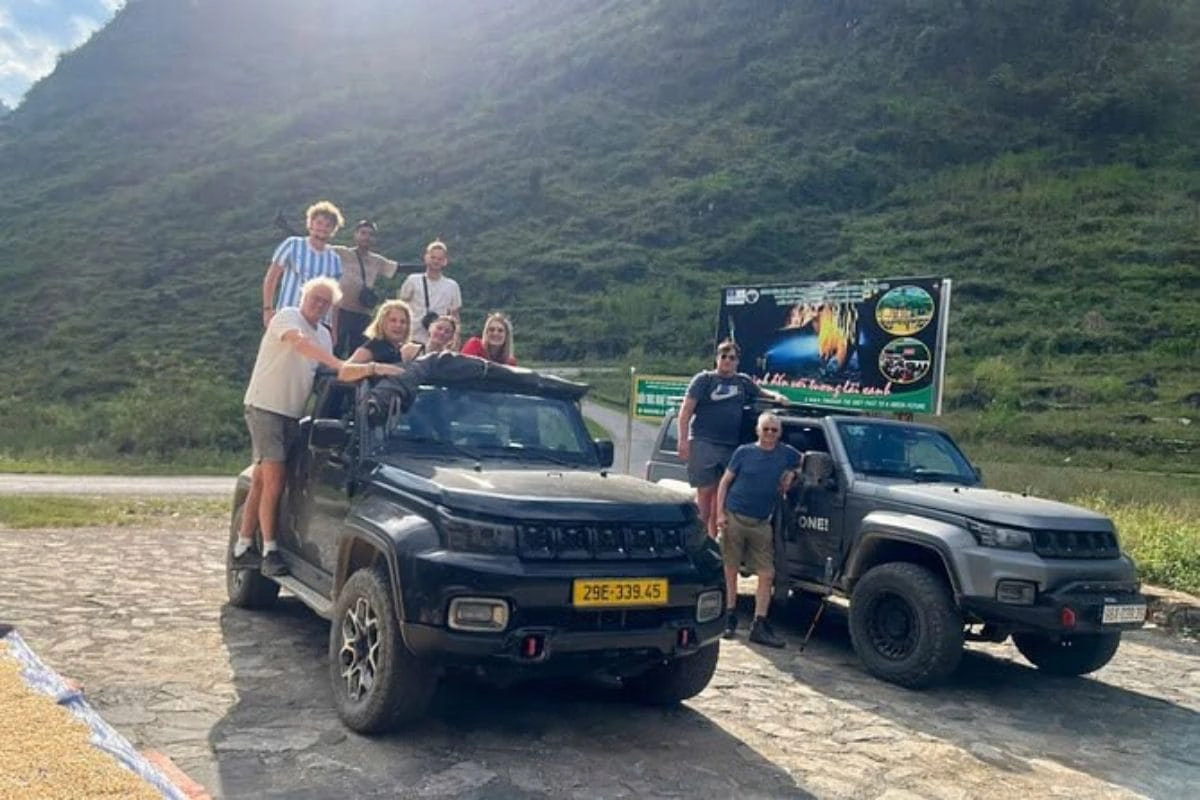
Choosing the Right Vehicle for Your Adventure - Source: Pinterest
Vehicle selection has a big impact on the overall experience. Here is a quick comparison of the most common options available for a Ha Giang tour by car.
|
Vehicle Type |
Capacity |
Best For |
Estimated Cost |
|
Modern SUV (4–5 seats) |
3–4 passengers |
Couples, small groups, comfort seekers |
Higher end |
|
Open-air Soviet Jeep |
3–5 passengers |
Photography lovers, adventurers |
Mid-range |
|
Limousine Van (9–12 seats) |
6–10 passengers |
Large families, budget-conscious groups |
Split cost |
|
Shared group tour |
Mixed |
Solo travelers, budget travelers |
Most affordable |
Soviet Jeep tours deserve a special mention. These vintage Russian military vehicles, fully open on the sides, have become iconic in Ha Giang. They are slower and less cushioned than modern SUVs, but they offer an unbeatable photography experience and a uniquely adventurous atmosphere. If you are not prone to motion sickness and want a more immersive experience, a Jeep tour is worth considering.
Motion sickness note: The Ha Giang Loop involves constant bends and elevation changes. If you or anyone in your group is sensitive to winding roads, choose a modern air-conditioned SUV and bring anti-nausea medication just in case.
>> Read more: Step Into the Wild North with a Ha Giang Trekking Tour | Joytime
4. Travel Costs and Booking Tips
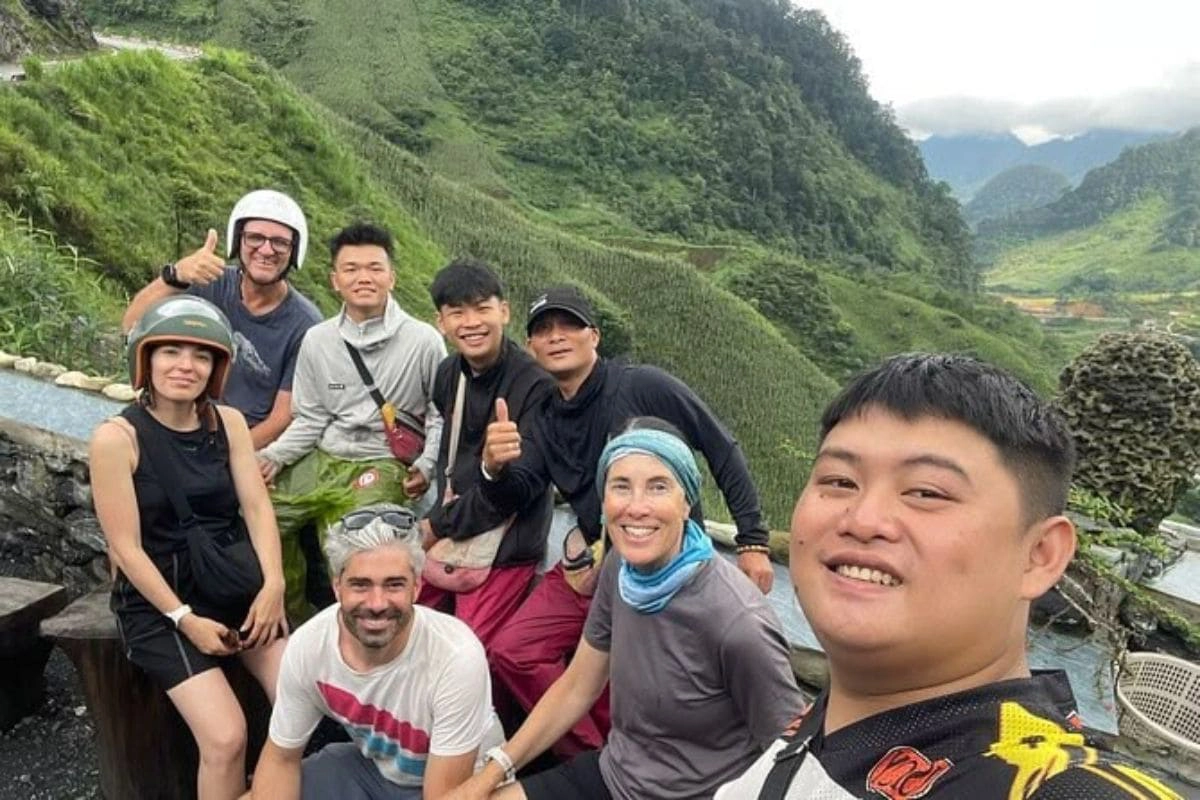
Travel Costs and Booking Tips - Source: Pinterest
A Ha Giang tour by car is generally more expensive than a self-guided motorbike trip, but the added comfort and safety make it a worthwhile investment for many travelers. Here is a general breakdown of what to expect in 2025–2026.
|
Tour Type |
Duration |
Approx. Cost per Person |
|
Shared group car tour |
3 days / 2 nights |
USD 80–130 |
|
Private SUV tour |
3 days / 2 nights |
USD 200–350 (full car) |
|
Private Soviet Jeep tour |
3 days / 2 nights |
USD 150–250 (full Jeep) |
|
Private car tour |
4 days / 3 nights |
USD 280–420 (full car) |
Most packaged tours include accommodation, a professional driver or guide, and some meals. Entry fees to specific sites (such as boat rides on the Nho Que River) are typically paid separately on-site.
Booking tips:
-
Book early during peak season: Ha Giang is most popular from September to November (buckwheat flower season) and from March to May (rape flower season). Tour slots and guesthouses in Dong Van fill up weeks in advance during these months.
-
Choose local operators: Ha Giang-based agencies and drivers generally have better route knowledge, stronger relationships with local guesthouses, and more flexibility to adjust plans on the go compared to big-city operators.
-
Clarify what is included: Before confirming, ask whether the price covers accommodation, meals, guide fees, and entry tickets, or only the vehicle and driver.
-
Check driver credentials: For mountain driving, experience matters. Ask your operator how long their drivers have been running the Ha Giang Loop specifically.
If you are searching for a memorable Ha Giang tour by car, this travel style offers the perfect balance between adventure, safety, and comfort. From dramatic mountain passes to peaceful ethnic villages, Ha Giang delivers one of Vietnam’s most breathtaking road trip experiences. Explore more Vietnam travel guides, mountain adventures, cultural journeys, and local tour experiences with Joytime Travel Agency for a smoother and more enjoyable trip.
|
Joytime Travel Agency - Travel JOY, TIMEless Vietnam Safe, Seamless, Satisfying, Sustainable Follow us for travel tips, local insights, and exclusive offers:
|

Danish Nguyen
Danish Nguyen is a renowned travel blogger in Vietnam with over 5 years of experience sharing unique travel experiences. With a passion for exploring new places, Danish captures incredible moments and provides readers with valuable tips to discover the beauty of his homeland.