









Opera House Hai Phong: Discover a French Heritage Gem
Opera House Hai Phong is one of the city’s most distinctive historic landmarks, known for its French-inspired architecture and central location. Built during the colonial period, the theater reflects an important stage in Hai Phong’s cultural development. With Joytime Vietnam Travel, visitors can better plan a city-center itinerary that combines the opera house with nearby attractions while learning more about its history, design, and role in local cultural life.
1. Hai Phong Opera House Overview
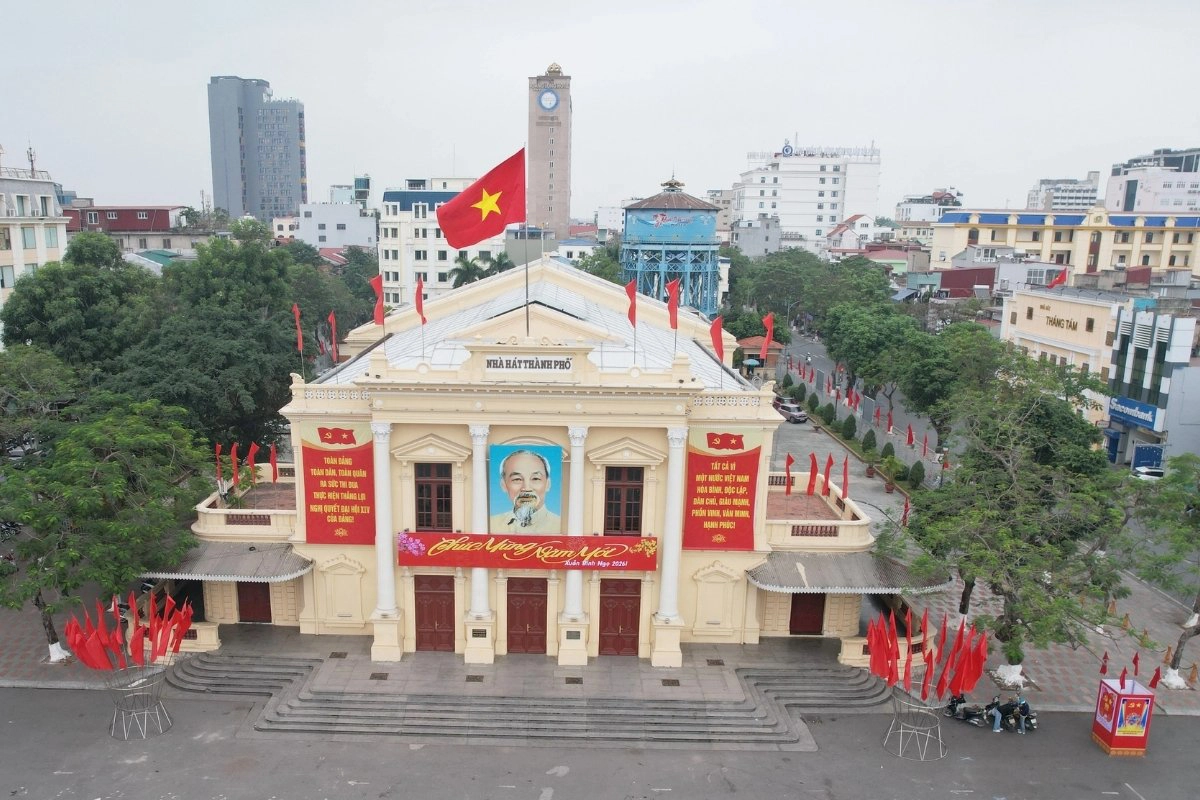
Hai Phong Opera House heritage - Source: Dan tri
Hai Phong Opera House stands at the heart of the city’s historic center and has remained an important civic and cultural landmark for more than a century. Beyond its role as a performance venue, the building is closely tied to several major events in Hai Phong’s modern history.
1.1. Location of Hai Phong Opera House
Hai Phong Opera House is located at 28 Tran Hung Dao Street, Hong Bang Ward, facing the large City Theatre Square in central Hai Phong. Its position places it within the city’s historic urban core, where many streets and public spaces developed during the French colonial planning period.
The broad square in front of the theater also functions as an important public gathering space. Large celebrations, cultural programs, commemorative events, and New Year activities are regularly organized around this area, so the opera house remains part of everyday city life rather than functioning only as a preserved monument.
1.2. History of Hai Phong Opera House
The opera house was built during the period when the French were reshaping central Hai Phong into a colonial port city. Local tourism records date its construction to 1904–1912, on land that had previously formed part of the old An Bien market area.
Several important events later became associated with the theater and its square:
- August 23, 1945: A mass rally was held here to announce the establishment of the revolutionary administration in Hai Phong.
- November 20, 1946: The opera house became the site of fierce fighting as Vietnamese forces defended the city against French troops.
- May 13, 1955: The square hosted celebrations marking the complete liberation of Hai Phong.
- 2005: The building was recognized as a city-level historical resistance site.
- 2015–2016: It received national recognition as an Architectural and Artistic Relic.
These layers of history explain why the opera house serves both as an active cultural venue and as a physical record of Hai Phong’s transformation from a colonial port into a modern Vietnamese city.
>> Explore more: What to Do in Hai Phong: The Ultimate 2026 Travel Guide
2. Architecture of Opera House Hai Phong
The architecture of Opera House Hai Phong combines a formal European theater layout with elaborate decorative details. Its exterior is strongly Baroque-influenced, while the interior uses Corinthian columns, vaulted forms, painted ceilings, and ceremonial spaces to create a more theatrical atmosphere.
2.1. French Colonial Exterior
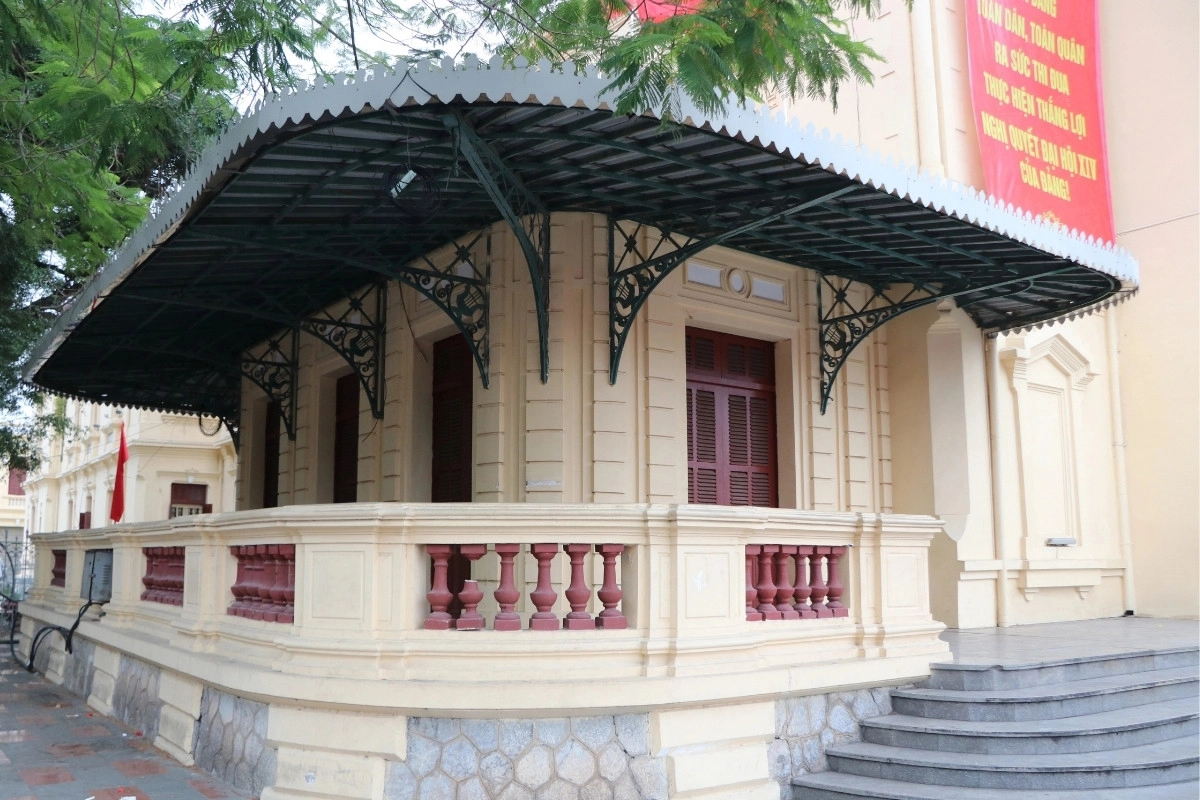
French colonial architecture - Source: Dan tri
The façade is arranged symmetrically around the main entrance, giving the building the formal appearance typical of French civic architecture from the early 20th century. Four tall Corinthian-style engaged columns divide the central section vertically, while curved lines, molded reliefs, and layered cornices soften the otherwise monumental composition.
Several exterior details are worth noticing:
- Lyre motif: A representation of the lyre appears on the façade, directly referencing music and theatrical performance.
- Baroque decoration: Curved forms, ornamental reliefs, and projecting architectural details create depth across the façade.
- Numerous openings: The building was designed with around 100 doors and windows, helping ventilate and illuminate the large theater structure.
- Side verandas: Covered spaces extend from both sides of the building; historically, these sections accommodated functions such as ticket sales and refreshments.
Rather than copying one architectural style exactly, the exterior combines Baroque theatricality with classical column proportions and several softer curved forms. This mixture gives Hai Phong Opera House a distinctive appearance compared with simpler French administrative buildings elsewhere in the city.
2.2. Interior Design and Main Auditorium
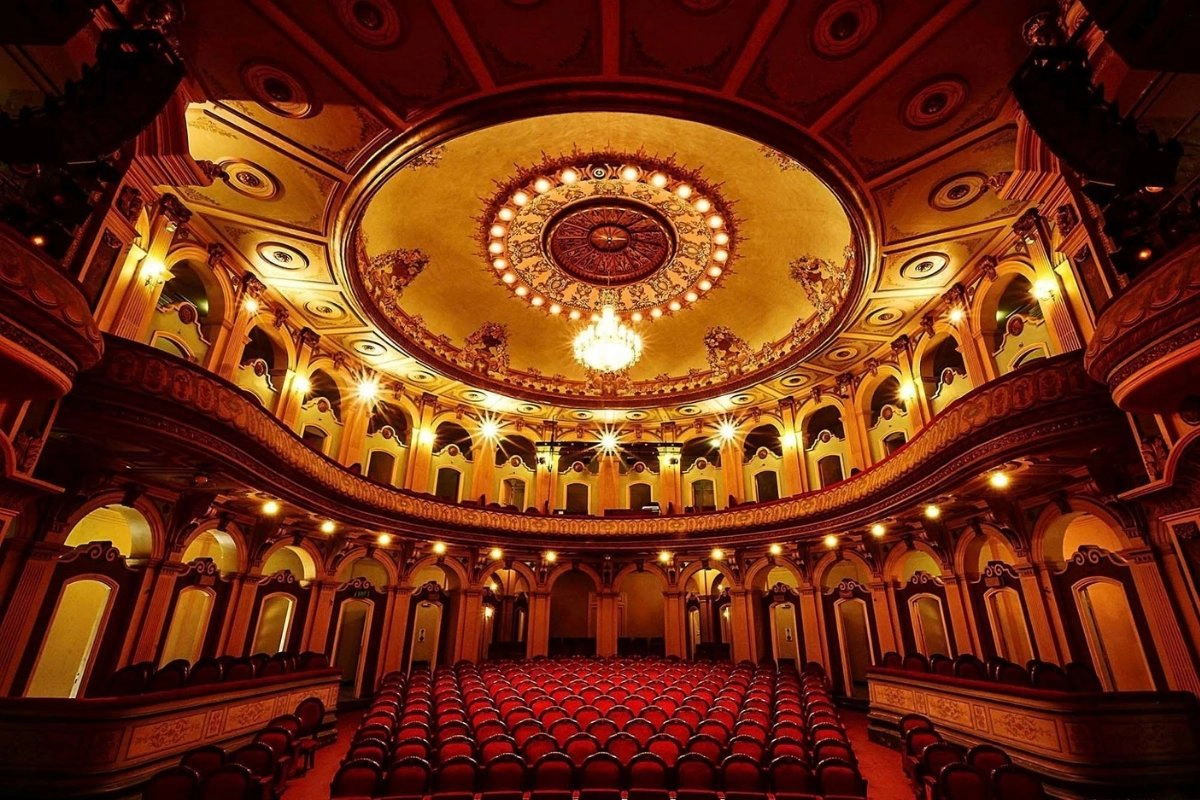
Inside Hai Phong Opera House - Source: Hoang Tuan Anh
Inside, the building is arranged across two main floors. From the entrance foyer, two wooden staircases rise toward the upper level, while traditional wall lamps, chandeliers, decorative painting, and formal reception rooms reinforce the character of a European theater rather than an ordinary public hall.
The most important interior features include:
- Main auditorium: Seating is arranged on two levels facing a large central stage.
- Corinthian columns: Decorative columns frame the auditorium and visually connect the lower level with the upper gallery.
- Vaulted ceiling: The curved ceiling increases the sense of height while also helping distribute sound through the performance space.
- Painted decoration: Floral compositions on the ceiling incorporate names of major European composers and playwrights, including Mozart, Beethoven, Schubert, Molière, and Corneille.
- Central chandelier: A large chandelier forms the visual focus of the auditorium beneath the decorated ceiling.
- Mirror Room: Located upstairs, this ceremonial room features classical French-style wall paintings and has traditionally been used for receptions and important functions.
The auditorium is therefore the most detailed space to observe inside Opera Hai Phong. Its layered seating, columns, painted vault, stage, and lighting were designed as one coordinated composition, allowing architecture, acoustics, and decoration to support the theater’s original performance function.
>> Explore more: Red Flowers Pavilion Hai Phong: Menu and Dining Guide
3. Visiting Opera Hai Phong
A visit to Opera Hai Phong requires little preparation, but traffic conditions and the time of day can noticeably affect the experience. Planning these two factors in advance is especially useful for travelers following a tight city itinerary.
3.1. How to Get to Opera House Hai Phong
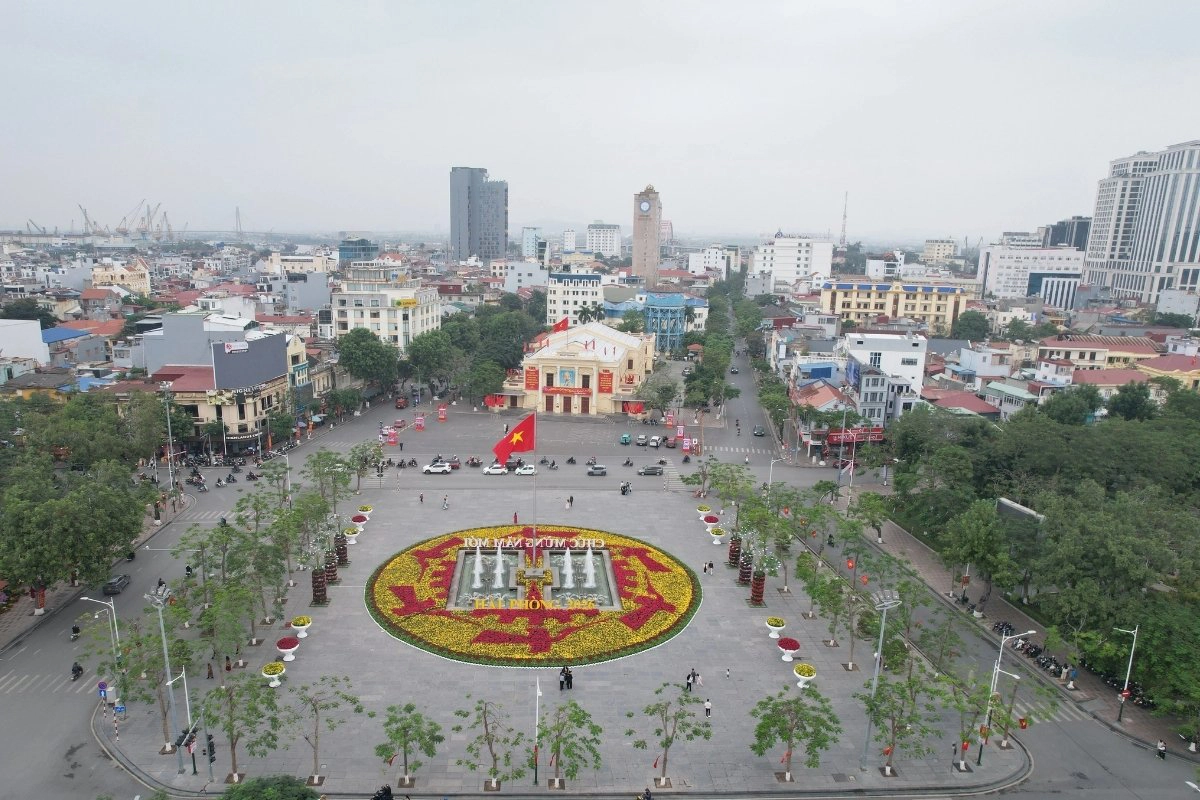
Getting to Hai Phong Opera House - Source: Dan tri
If you arrive in Hai Phong by train, Hai Phong Railway Station is one of the easiest starting points. The station lies within roughly 800 m of the opera house area, so most travelers can walk there in around 10–15 minutes rather than taking a taxi. Hai Phong’s official downtown walking route also connects the station area with several central attractions around the theater.
Other practical approaches include:
- From Cat Bi International Airport: The airport is about 5 km from central Hai Phong. A taxi or ride-hailing car is the simplest option, generally following the Lê Hồng Phong corridor toward the city center. Allow roughly 15–20 minutes, with extra time during peak traffic.
- From Hai Phong Railway Station: Walk from Luong Khanh Thien Street toward the central flower-strip area and continue to the theater. For travelers with light luggage, walking is usually faster than arranging another short transfer.
- From Tam Bac Lake: Follow the central urban strip toward Le Chan Statue and the City Theatre area. This forms part of Hai Phong’s established downtown walking route and allows several central landmarks to be combined without using a vehicle between every stop.
- By private car or motorbike: More useful when the opera house is one stop in a wider Hai Phong tour. Park near the central area where permitted and continue the nearby section on foot rather than moving the vehicle between closely spaced attractions.
On Friday and Saturday evenings from 18:00 to 24:00, temporary traffic restrictions currently apply around Quang Trung, Hoang Van Thu, Tran Hung Dao, and the theater pedestrian zone. During these hours, arrange your drop-off outside the restricted streets and walk the final section.
3.2. Best Time to Visit and Take Photos
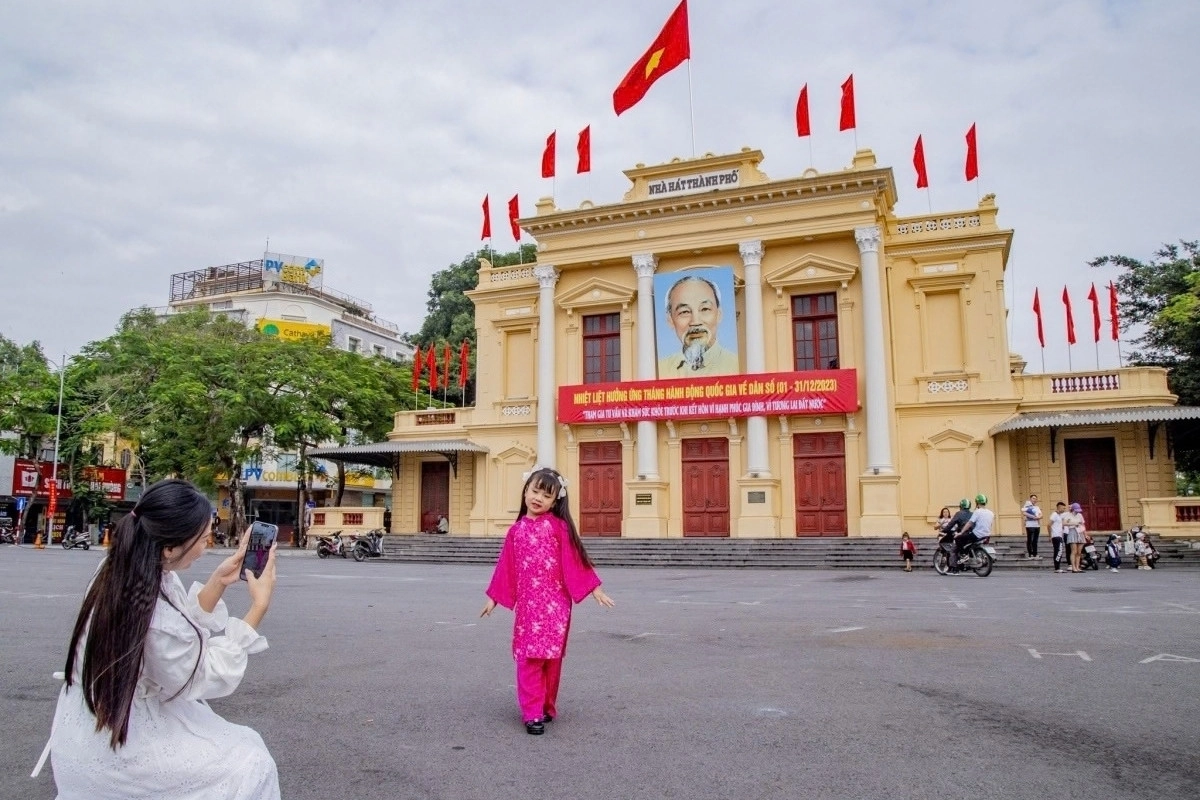
Best time to visit Hai Phong Opera House - Source: kenh14.vn
The best time depends on whether you want a quiet architectural setting or a livelier city atmosphere. For clear photographs with fewer people, 07:00–08:30 is the most practical window, while 16:30–18:00 provides softer light for portraits and casual sightseeing.
Different periods create noticeably different conditions:
- 07:00–08:30: Best for uncluttered photos before the central area becomes busier.
- 16:30–18:00: Softer sunlight makes outdoor photography more comfortable and reduces harsh midday contrast.
- Around sunset: Suitable for capturing the transition from daylight to evening illumination.
- Friday and Saturday after 18:00: Better for street-life photos, when the pedestrian zone, food stalls, and cultural activities bring more movement into the area.
Travelers visiting Hai Phong in autumn can also use best time to visit Vietnam october to plan weather-sensitive activities elsewhere in their Vietnam itinerary.
If photography is the main purpose, avoid arriving during large public events unless you want crowds in the frame. Temporary stages, seating, barriers, or lighting equipment may occupy part of the open area around the theater.
>> Explore more: Indian Kitchen Hai Phong: Best Indian Restaurants to Try


4. FAQs About Opera House Hai Phong
4.1. Is There an Entrance Fee for Hai Phong Opera House?
Visiting the exterior and City Theatre Square is free. If you enter the auditorium for a ticketed performance, concert, or special program, you will need to purchase a ticket. Prices vary by event and seating category, as the opera house does not currently publish one fixed sightseeing admission fee.
4.2. Can Visitors Enter the Opera House Without a Performance?
Not always. The auditorium is primarily used for performances, ceremonies, and scheduled cultural events, so visitors cannot assume that the interior is open for casual walk-in sightseeing. If seeing the interior is important, check the theater’s event schedule or contact the performance office before visiting.
4.3. What Attractions Are Near Hai Phong Opera House?
Several attractions can be reached on foot from the opera house:
- Hai Phong Flower Quán: Immediately beside the theater, recognizable by its five traditional flower pavilions.
- Le Chan Statue: Around a 5-minute walk along the central flower-garden strip.
- Tam Bac Lake: Roughly 10 minutes on foot, suitable for continuing the walk toward the old downtown area.
- Hai Phong Museum: About 10–15 minutes away, with exhibitions covering the city’s history and development.
>> Explore more: Hai Phong Harbor: A Guide to the City’s Port and Waterfront
With its historic character, elegant architecture, and convenient position in the city center, Opera House Hai Phong is an easy landmark to include in a short cultural itinerary. A visit here works especially well when combined with nearby downtown attractions, allowing travelers to explore more of Hai Phong on foot. For a smoother experience, Joytime Vietnam Travel can help you arrange transport, timing, and suitable stops around the city.
|
Joytime Travel Agency - Travel JOY, TIMEless Vietnam Safe, Seamless, Satisfying, Sustainable Follow us for travel tips, local insights, and exclusive offers:
|

Danish Nguyen
Danish Nguyen is a renowned travel blogger in Vietnam with over 5 years of experience sharing unique travel experiences. With a passion for exploring new places, Danish captures incredible moments and provides readers with valuable tips to discover the beauty of his homeland.